Contractors entering 2026 face a legal environment that is growing more complex by the month, driven by shifting immigration enforcement, tariff uncertainty, a booming — yet volatile — data center market and the rapid spread of artificial intelligence across construction operations.
As projects become larger and more technically demanding, attorneys say builders must pay closer attention to contract language than ever before to protect margins, timelines and long-term risk exposure.
“Whether they’re confronting immigration, tariffs, the opportunities — and risks — of the data center construction boom or how artificial intelligence is winding its way into every aspect of business, builders need to make sure their contracts can meet today’s shifting legal landscape,” attorneys told Construction Dive.
At the top of the list is immigration enforcement, which attorneys say is already having tangible effects on jobsite labor availability during President Donald Trump’s second term.
“ICE raids and I-9 audits have severely impacted crews,” said Trent Cotney, construction team leader for Adams & Reese in Tampa, Florida. “Nobody wants illegal workers, but as you remove the potential workforce, whether voluntarily because they’re leaving or involuntarily because they’re being detained and deported, it shrinks the total number of workers available.”
.webp)
As a result, contractors are seeing rising labor costs, as remaining workers command higher wages in a tighter market.
Cotney said his clients are reporting labor cost increases ranging from 4% to 10%, driven largely by workforce shortages tied to immigration enforcement. To offset those pressures, he urges contractors to negotiate stronger contract language upfront.
“I’m always a big advocate of including a price escalation provision in your contract,” Cotney said. “It’s simple and it will work regardless of what the basis is for escalating the price. I’ve used it during hurricanes. I’ve used it during COVID. I’ve used it during fires. I’ve used it and it works.”
In addition to cost escalation clauses, contractors should protect schedules as well, said Carol Sigmond, a partner in the Infrastructure Group at Nossaman’s New York City office.
“What happens if I can’t get enough labor in a particular area?” Sigmond said. “I need a time extension because I need everybody to recognize I can’t control the labor market.”
Tariffs imposed during Trump’s second term present another layer of uncertainty, particularly as a pending U.S. Supreme Court decision could determine whether those levies are constitutional. If overturned, contractors and owners could be entitled to billions of dollars in rebates.
“People are starting to try to adjust for that both ways,” Sigmond said. “In other words, if there are new tariffs, what do they do? And what do they do if the tariffs go down?”
From a contract standpoint, attorneys say it’s critical to clearly define who absorbs tariff-related costs — and who receives any refunds.
“Owners are starting to ask the contractors, if these costs go away, can they get their money back?” Sigmond said. In response, contracts are increasingly including rebate clauses that spell out repayment obligations.
Still, Sigmond warned that refund chains could quickly become complicated, involving importers, contractors and owners all seeking compensation.
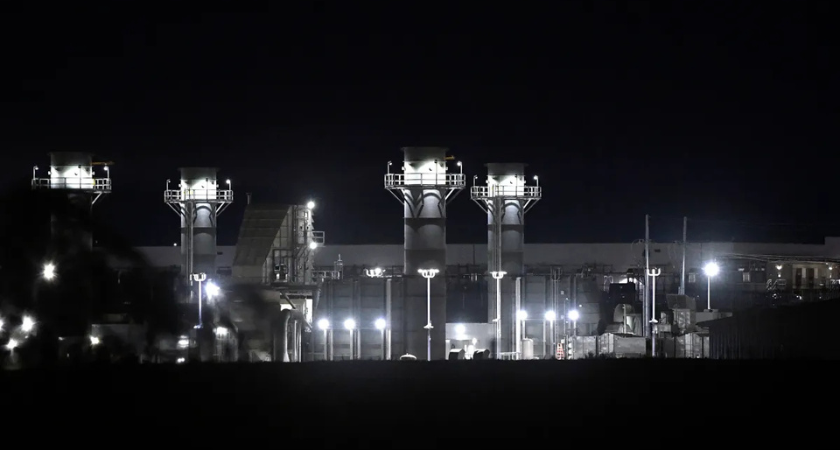
With global data center investment projected to reach $3 trillion by 2030, attorneys say contractors have ample opportunity to capitalize on demand fueled by AI and cloud computing.
“Right now, there’s money to be made,” Cotney said. “If you’re a contractor, it’s definitely worth pursuing.”
However, attorneys caution that data center contracts often carry unique risks, particularly if financing dries up or projects stall amid fears of an AI-related market correction.
To mitigate exposure, contractors are advised to closely scrutinize termination for convenience clauses — provisions that allow one or both parties to exit a contract with limited notice.
“Traditional termination for convenience means typically you’re entitled to all your costs and reasonable profit and overhead on what you did to date, but not future profit and overhead,” Cotney said. “With these that I’ve been seeing, it’s more you’re only entitled to certain costs. They’re very specific and the owner is entitled to back-charge things for incomplete work.”
.webp)
Sigmond added that early warning signs of financial trouble often appear before a project collapses.
“Usually the first sign that you’ve got a problem is they start to fight about change orders or they start to slow the payments down,” Sigmond said. “Make sure if you’re seeing those triggers, you’re reacting appropriately.”
That includes enforcing payment milestones, confirming bonding protections and filing liens within contractual deadlines, typically 90 days.
As building systems grow more complex, contractors are increasingly being asked to provide guidance beyond their original scope — sometimes stepping into roles traditionally reserved for architects or engineers.
“You’ve got contractors that are having to become architects, engineers and lawyers all at the same time,” Cotney said. “The reason that has occurred is that the systems we use for construction have become more complicated.”
To protect themselves, attorneys recommend clearly defining not just what contractors will do, but what they will not do.
“If you’re not engaging in design, why not have a design waiver that says if you’re providing suggestions in that area, that’s all they are, suggestions,” Cotney said. “You want to put something in there that says a design professional must sign off on these before it becomes the Bible.”
Artificial intelligence is now touching nearly every part of construction, from scheduling to estimating, and attorneys say contractors must proactively manage how it’s used.
“If you don’t think your team members are using AI, they are,” said Nate Simon, founder of Simon Law in Lexington, Kentucky. “The question isn’t whether AI will be part of construction, it’s whether you’re using it intentionally or letting it happen without guardrails.”
While attorneys caution against using AI to draft full construction contracts, Simon said the technology excels at targeted tasks.
“Summarizing an existing contract into plain English so your project team can actually use it; Helping draft a notice letter when you already know the deadline and the delivery requirements; Comparing two versions of a subcontract to see what changed in the redline,” Simon wrote via email. “These are tasks where AI saves time and you can catch mistakes because you know what right looks like.”
Still, AI does not replace legal judgment.
“Understanding what a clause does is different from deciding whether to accept it, price it or push back on it,” Simon said.
Cotney added that some contractors are now incorporating AI disclaimers directly into contracts to avoid liability tied to preliminary estimates or automated scheduling tools.
“We had to develop a contract provision that basically says, to the extent that artificial intelligence is used for purposes of scheduling or preliminary estimates, the customer cannot rely on those until such time as boots on the ground have determined whether those field measurements are accurate.”
Originally reported by Joe Bousquin, Senior Editor in Construction Dive.
.png)


.png)