PIERRE, S.D. — A proposal aimed at helping South Dakota’s largest airports fund major expansion projects cleared a legislative hurdle Thursday, as Senate Bill 76 passed unanimously out of the Senate Commerce and Energy Committee.

The measure, first introduced following Gov. Larry Rhoden’s December announcement supporting state assistance for airport construction, underwent revisions that helped ease concerns among lawmakers and housing advocates.
Senate Bill 76, after a little tweaking, eased the minds of those in the Senate Commerce and Energy Committee.
Initially, the bill would have redirected earnings from a housing infrastructure fund into the state’s revolving economic development fund to provide loans for airport projects. That proposal raised red flags among housing supporters who argued the state continues to face significant housing shortages.
“I’m here to testify in favor of returning the earnings to the housing infrastructure fund and keep it going into the future because we still have a lot of unmet housing needs across the entire state,” Julie Johnson, a lobbyist for Homes for South Dakota, said.
Under the amended version, the housing fund will retain its earnings, addressing those concerns while still allowing airport projects to move forward through structured state-backed loans.
If enacted, Senate Bill 76 would make qualifying airports eligible for loans of up to $15 million at zero percent interest. Repayment would occur over a 20-year period.
“These are public infrastructure projects. This is different than maybe working with a business in South Dakota. So, these are things that benefit the entire state regardless of who you are, just like roads, bridges, and so forth,” Bill Even, the Commissioner of the Governor’s Office of Economic Development, said.
Eligibility would be limited to airports located in metropolitan areas with populations of at least 125,000. That threshold excludes airports in Pierre and Watertown but includes facilities such as Sioux Falls Regional Airport and Rapid City Regional Airport.
Both airports are in the midst of significant capital expansion efforts. Sioux Falls is undertaking a $51.5 million project, while Rapid City is pursuing a larger $110 million expansion. Local funding sources and federal support from the FAA cover portions of those costs, but local leaders say a funding gap remains.
“It takes a lot of work to get a major project like this off the ground. And it really is a multi-leg stool to build a big project like this; they really want to see partnerships in this,” Patrick Dame, the Executive Director of the Rapid City Regional Airport, said.
Dame noted that Rapid City’s airport has experienced rapid growth, adding more than 100,000 passengers over the past two years and reaching approximately 400,000 travelers annually. Meanwhile, Sioux Falls saw 1.5 million passengers pass through its airport in 2025 alone.
Officials argue that airport infrastructure upgrades are essential to maintaining economic competitiveness. Airports serve as gateways for tourism, business travel, medical access and freight operations — particularly in geographically isolated areas.
For example, Rapid City is often described as one of the most isolated metro areas in the lower 48 states, making air travel especially critical for regional connectivity.
The Sioux Falls and Rapid City airports plan to repay the proposed loans through parking revenues and passenger facility charges, ensuring the financial burden does not fall on the state’s general fund.
The debate over Senate Bill 76 underscores a broader policy tension between infrastructure expansion and housing investment. While airport leaders stress the economic return on expansion projects — which generate billions of dollars annually in economic activity — housing advocates remain cautious about diverting funds away from residential development needs.
Lawmakers ultimately opted for a compromise that preserves the housing fund’s earnings while still enabling airport financing through the state’s economic development framework.
Senate Bill 76 passed out of committee unanimously, signaling bipartisan support at this stage of the legislative process. The bill will now advance for further consideration in the full Senate.
State economic officials say expanding airport capacity could help accommodate rising tourism, business relocation and workforce mobility — all of which are central to South Dakota’s long-term growth strategy.
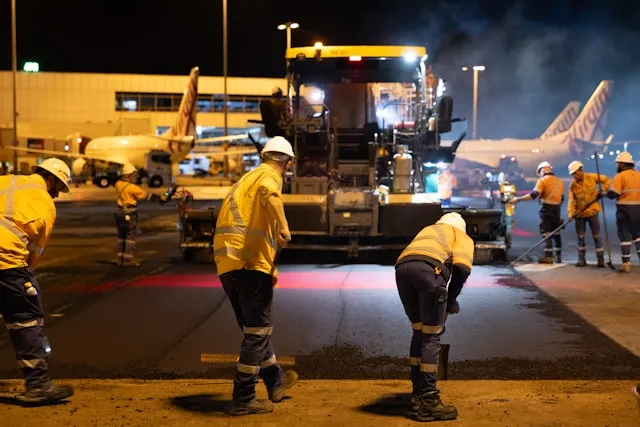
Construction projects of this scale also generate temporary construction jobs and longer-term operational benefits. Improved terminal space, expanded gates and upgraded passenger amenities can attract additional airline service, creating ripple effects throughout the hospitality and service sectors.
As lawmakers continue to weigh the bill, supporters emphasize that the zero-interest loan structure is designed to foster partnership between the state and local airport authorities, without permanently reallocating housing dollars or increasing taxes.
The proposal reflects an ongoing effort at the Capitol to balance fiscal caution with strategic infrastructure investment in one of the fastest-growing regions of the state.
Originally reported by Grant Green in Dakota News Now.