The U.S. Army Corps of Engineers (USACE) continues to play a central role in strengthening military readiness across Texas, delivering large-scale construction projects that blend historic preservation, environmental stewardship and modern innovation. Led by the Fort Worth District, the Corps’ military construction program supports some of the nation’s largest and most strategically important installations.
.jpg)
Texas’ role in military infrastructure dates back to World War II, when installations such as Fort Hood and Dyess Air Force Base, both established in 1942, rapidly expanded to support training and logistics for U.S. forces. During that period, the Corps designed and built airfields, barracks, railheads and supply depots, laying the foundation for the state’s enduring importance to national defense.
Preserving that legacy remains a priority as facilities are modernized to meet current mission needs.
“There are a lot of historic buildings at joint Base San Antonio, and Fort Sam Houston in particular,” said Daryl Flaggs, a program manager with the Fort Worth District’s Southern section for the military branch. “We work with the Texas State Historic Preservation Office to ensure we maintain or preserve the exterior components of a building while modernizing the interior.”
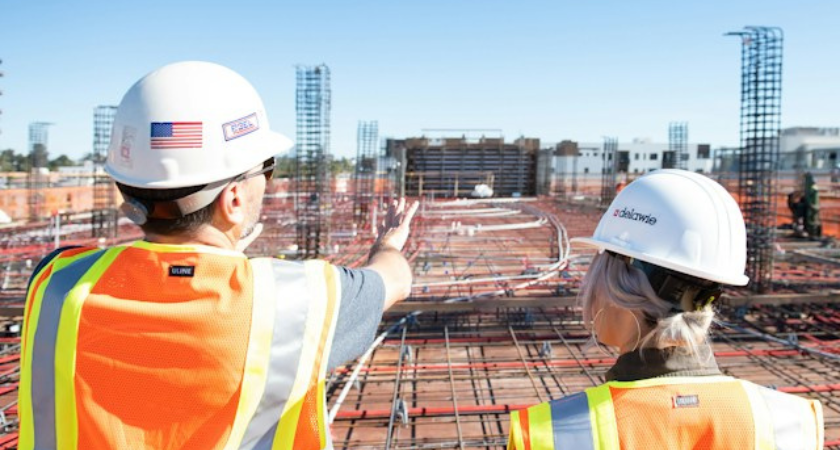
Military construction in Texas presents unique challenges due to the state’s extreme weather conditions, which range from scorching heat and heavy rainfall to hurricanes and occasional freezing temperatures. With 12 Army and Air Force installations spanning a vast geographic footprint, projects must be designed to withstand these conditions while accommodating expanding operational needs.
.jpg)
As new barracks, motor pools and parking facilities are built, the Corps is also investing heavily in drainage and runoff mitigation.
“There’s an issue everywhere you put more pavement,” said Amanda Fuller, chief of Fort Worth District’s Eastern Section for the military branch. “But we work with environmental specialists to ensure we have enough green spaces and drainage to accommodate the new runoff.”
Environmental stewardship remains a core focus of the district’s work. At Fort Hood, stormwater systems help reduce erosion, while habitat restoration initiatives protect sensitive species. Renewable energy projects, including solar installations, are helping installations move toward net-zero energy goals.
“Fort Hood has a tree replacement policy in place,” said Fuller. “If we take down a large elm for a project, we have to replace it with 10 new trees. The Department of Public Works is always a part of our project delivery team to ensure we are meeting or exceeding local environmental standards.”
Beyond readiness, military construction projects deliver significant economic benefits to surrounding communities. While prime contracts may be awarded nationally, local subcontractors frequently perform a substantial portion of the work, supporting regional employment and small businesses.
.jpg)
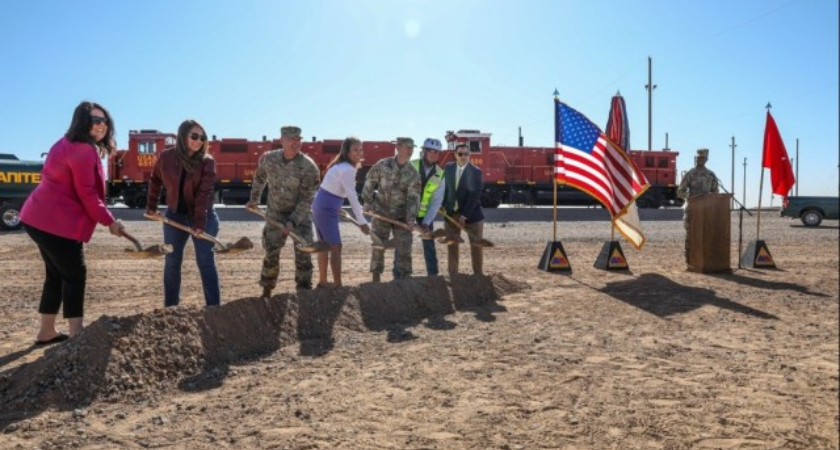
“A lot of the subcontractors for many of the projects on Fort Bliss are local,” said Peter Matar, chief of Fort Worth District’s Southwest Section for military branch. “Some of the painting contractors or some of the ones doing the landscaping and sidewalks are hired from the El Paso area.”
Over the past 15 years, the Fort Worth District has built four medical centers and multiple clinics, establishing itself as a leader in military healthcare construction. The district is also testing new construction technologies, including 3D printing, to improve efficiency and adaptability.
“The district is leading the way with the design and construction of a major Veterans Administration health care center on Fort Bliss as well as new construction in Dallas and San Antonio,” said Matar. “We are also constructing ten 3D printed buildings on the installation.”
At Joint Base San Antonio, projects include child development centers, dormitory complexes and what is described as the largest kennel facility in the world, all integrated into limited site footprints.
“The main focus is to ensure we are meeting our customers’ expectations,” said Flaggs. “This means getting the right people on the right projects to ensure they remain on time and on budget.”
As new military construction demands emerge, the Fort Worth District remains focused on delivering for today’s missions while innovating for the future, with a continued emphasis on people, performance and partnerships. The Corps’ long-standing presence in Texas underscores its commitment to readiness, resilience and responsible growth across the state’s military installations.
Originally reported by Patrick Adelmann in Army.