A bipartisan group of lawmakers has introduced new federal legislation aimed at accelerating the construction of housing near public transportation, a move supporters say could help address the nation’s persistent affordability crisis.
Sen. John Curtis (R-Utah) and Sen. Lisa Blunt Rochester (D-Del.) unveiled the Build Housing, Unlock Benefits and Services Act, or Build HUBS Act, on Jan. 14. Both senators serve on the Senate Committees on Environment and Public Works and Commerce, Science, and Transportation, giving the proposal a foothold in key infrastructure policy circles.
.webp)
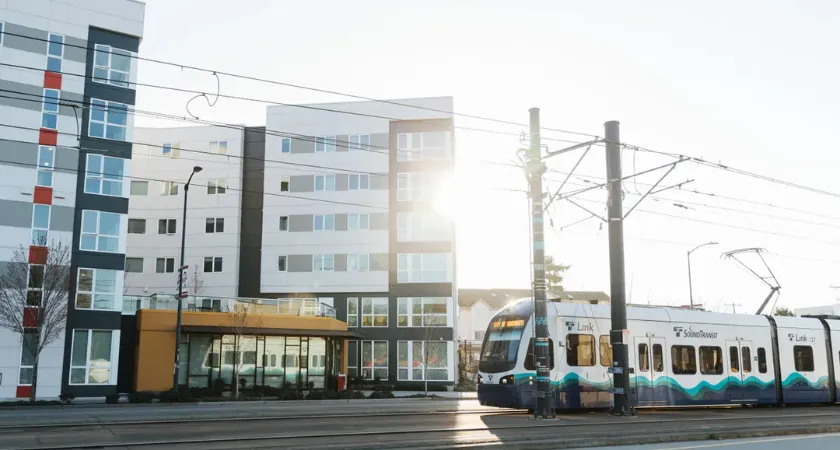
The measure would modify existing federal infrastructure loan programs to make it easier for the Department of Housing and Urban Development and the Department of Transportation to jointly support transit-oriented development, commonly known as TOD. Lawmakers say the changes would help channel more investment into mixed-use neighborhoods located near rail stations, bus rapid transit corridors and other mobility hubs.
The bill has already drawn endorsements from major industry and planning organizations, including the National Apartment Association, the National Association of Affordable Housing Lenders and the National Association of Home Builders.
Urban planners and housing advocates have long argued that building near transit reduces traffic congestion, lowers household transportation costs and creates more sustainable communities. According to a press release from Blunt Rochester’s office, dense and walkable development can also spur economic revitalization while improving access to jobs and essential services.
Federal policy has moved in that direction in recent years. The 2021 Infrastructure Investment and Jobs Act amended both the Transportation Infrastructure Finance and Innovation Act and the Railroad Rehabilitation and Improvement Financing program to include certain TOD projects as eligible investments.
Yet supporters say those tools have not delivered their full promise. Gaps in program authorizations and lengthy federal review processes have slowed many proposals before they reach construction.
Backers of the new bill say it is designed to remove those roadblocks while preserving federal oversight. Among its provisions, the legislation would:
Supporters say the package would help communities make better use of publicly owned land around stations and leverage billions in prior transportation investments.
.webp)
“The Build HUBS Act helps us maximize transportation investments, makes better use of public land, and empowers local leaders to use existing infrastructure programs more effectively to build housing where it matters and makes sense,” said Curtis in the release.
In the House of Representatives, the measure is being carried by Rep. Laura Friedman (D-Calif.) and Rep. Mike Lawler (R-N.Y.). It has been referred to the House Transportation and Infrastructure Committee, where hearings are expected later this year.
Blunt Rochester framed the proposal as a critical tool in confronting rising rents and home prices across the country.
“Taking on our housing affordability crisis means using all the tools at our disposal,” said Blunt Rochester in the release. “Investing in transit-oriented development will have a positive impact on housing affordability, local economies, and quality of life.”
If enacted, the Build HUBS Act could influence thousands of projects over the next decade, particularly in fast-growing metropolitan regions where land near transit remains underutilized. Developers say clearer federal rules would reduce risk and attract private capital that has been sitting on the sidelines.
Advocates also note that prioritizing low- and moderate-income housing near transit could expand opportunity for essential workers who are increasingly priced out of urban cores. By tying housing policy more closely to transportation funding, the bill reflects a growing recognition that the two challenges are inseparable.
The proposal arrives as cities nationwide struggle with limited housing supply, aging infrastructure and pressure to reduce greenhouse-gas emissions. Supporters believe concentrating growth around transit can help address all three issues at once.
Originally reported by Julie Strupp, Senior Editor in Construction Dive.