Kansas City’s long-debated plan to redevelop the Country Club Plaza is reaching a critical juncture, as city leaders consider sweeping changes to the district while confronting the departure of one of its most prominent employers. Lockton Companies’ decision to relocate its headquarters to Leawood has added new urgency—and frustration—to ongoing redevelopment discussions.
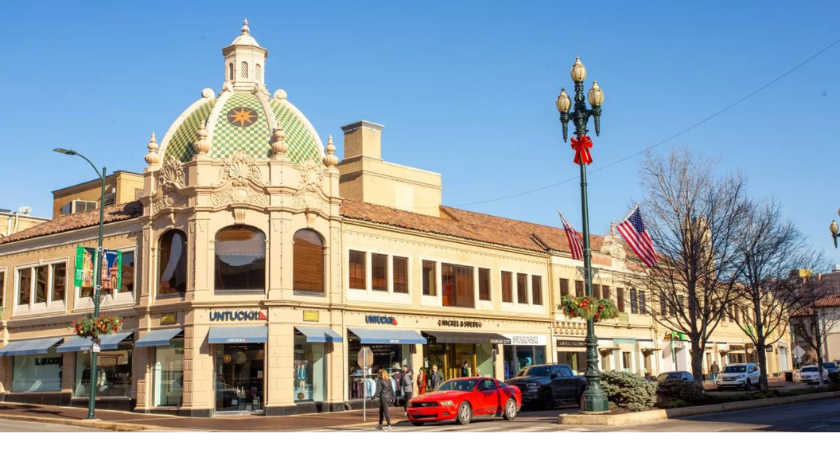
The Plaza, purchased roughly 18 months ago by Texas-based Gillon Property Group, has struggled for years with declining sales, vacant storefronts and mounting financial pressure. In 2023, the property’s previous ownership defaulted on nearly $300 million in debt before Gillon acquired the landmark shopping district for a reported $176 million. Now, the new owners are proposing a $1.4 billion overhaul intended to stabilize the Plaza and position it for long-term viability.
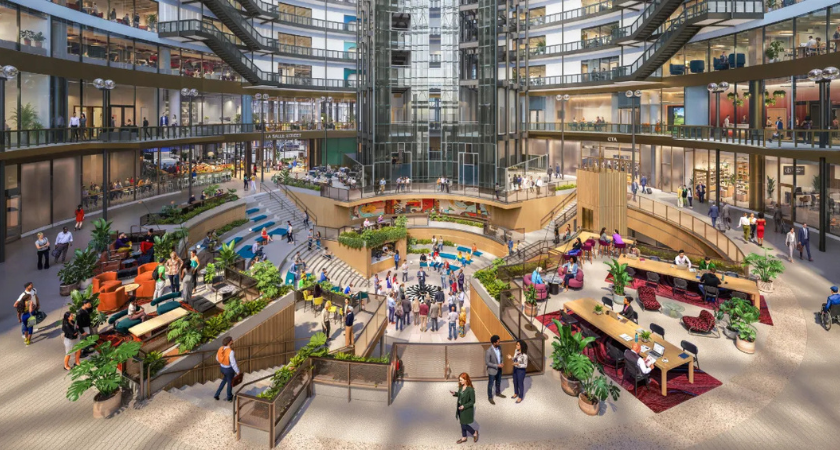
Kansas City Council is expected to review revisions to the Plaza’s Master Planned Development plan in the coming weeks. The updated proposal would allow significantly taller buildings, hundreds of new apartments, two boutique hotels, expanded office and retail space, and a new public square. Improvements to pedestrian and bicycle infrastructure are also included, with an emphasis on encouraging more foot traffic throughout the district.
“This is the most robust MPD that we’ve seen in any of our tenure,” City Plan Commission Vice Chair Tyler Enders said before the commission’s unanimous Dec. 17 vote recommending the plan to City Council. “And it’s warranted. It’s a site that people care about. It’s an important site economically, culturally, historically. … There is much more opportunity for discussion.”
Gillon Property Group has argued that increased density is essential to reviving the Plaza’s commercial health. Company representatives say adding residents, hotel guests and office workers would help attract retailers and restaurants to long-vacant storefronts.
“You are incentivized today to stay at your home and order Uber Eats or Amazon hour-delivery,” Dustin Bullard, vice president of partnerships and place with Gillon, said at a Dec. 3 City Plan Commission meeting. “And so how do we create places so that you want to get out of your house?”
Still, the proposal has drawn resistance from preservation advocates, nearby neighborhoods and professional organizations, particularly around building height. While the original plan included structures as tall as 200 feet, revisions approved by the City Plan Commission reduced several buildings along Ward Parkway to a maximum of 120 feet. Even so, concerns remain that taller buildings could fundamentally alter the Plaza’s character.
“We are so excited about the majority of the improvements (Gillon) wants to bring to the Plaza,” said West Plaza resident Hannah Holland at the Dec. 17 meeting. “However, we also know that the main concern of (Gillon) is not the historical significance or the gratification of Plaza residents — their number one priority is their bottom line. I believe it is the responsibility of our representatives in the CPC and City Council to know the line between rejuvenation and greed.”
Historic KC President Vicki Noteis acknowledged Gillon’s collaborative approach but cautioned against increasing building heights that could create a physical barrier between the Plaza and surrounding neighborhoods.
“It’s going to create a ring around the Plaza,” Noteis said before the latest changes, “that caters to a more elite community that would come in there, that they would then become the new patrons of the Plaza. They get all the great views, they get the preferred parking, and it’s like, well, what’s happening to Kansas City’s Plaza?”
Architects echoed similar concerns. Speaking on behalf of the Kansas City chapter of the American Institute of Architects, Dominique Davison said modest height increases across the district would better preserve its human scale.
“At a five- or six-story height, you can still look at your outdoor window and recognize the faces of people on the sidewalk below,” Davison said. “This humanizes us and allows for a stronger sense of community in neighborliness, rather than allowing for us to be anonymous and invisible in our glass towers.”
Kansas City Councilmember Johnathan Duncan, whose district includes the Plaza, said the proposed buildings remain conceptual and would require additional approvals before moving forward.
.jpg)
“What most people want to ensure is that the Plaza remains the Plaza,” Duncan said, “that you’re not going to remove the Classic Cup and replace it with some glass monstrosity. And I think largely, their development plan does that.”
Under the revised plan, Gillon would be required to preserve many historic facades even as some buildings are demolished, incorporating those elements into new construction. The approach, often referred to as a “facade-ectomy,” has already been used successfully elsewhere in Kansas City.
As city leaders debate the Plaza’s future, Lockton Companies’ announcement on Dec. 19 that it will relocate its global headquarters to Leawood underscores the stakes of the redevelopment effort. Lockton had been considered a potential anchor tenant for a planned 275-foot office tower on the Plaza’s western edge.
"Lockton is an exceptional Kansas City firm with outstanding leadership and outstanding people," Mayor Quinton Lucas said in a statement Friday. "I wish them continued success.
"I am only disappointed by the misplaced confidence many of us had in the one-time Missouri-Kansas Border War Truce, which was well in effect when negotiations supporting this move began. Regionalism cannot be one sided. The region will only thrive when we look to grow the pie, not rearrange pieces on the chess board."
Despite the setback, city officials and developers maintain that increasing density is critical to the Plaza’s long-term sustainability and tax-generating potential.
“Density is important for the long-term health of the district,” Bullard said at the Dec. 3 meeting. “Leasing decisions are oftentimes not just made on the vibes or the feel of the space. They’re made with spreadsheets and back-end math.”
Duncan added that while resistance is expected, carefully planned growth could ultimately strengthen the Plaza’s future.
“We have to have density,” he said. “And if that density comes in a very intentional, deliberate way, in keeping with the stylistic elements of what people identify as the Plaza, I think the initial shock will fade.”
Originally reported by Josh Merchant in KCUR.