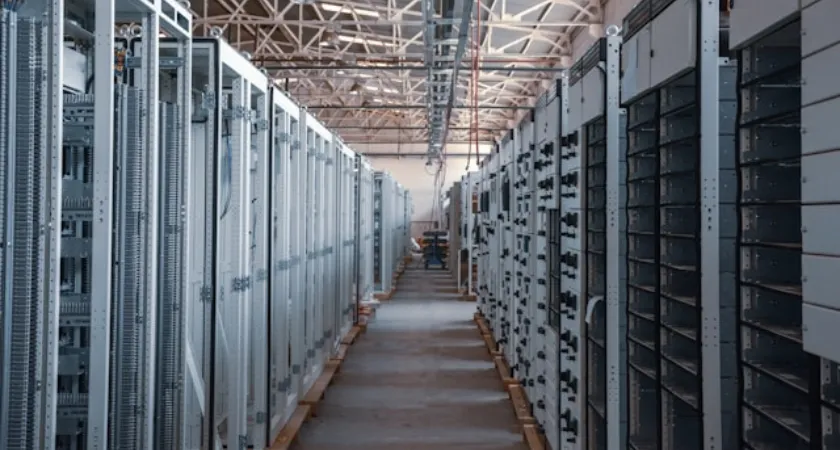
Data center construction was one of the strongest drivers of momentum in the building industry in 2025 — and contractors say the market is setting up to remain a dominant opportunity in 2026, fueled by AI demand and massive investment commitments.
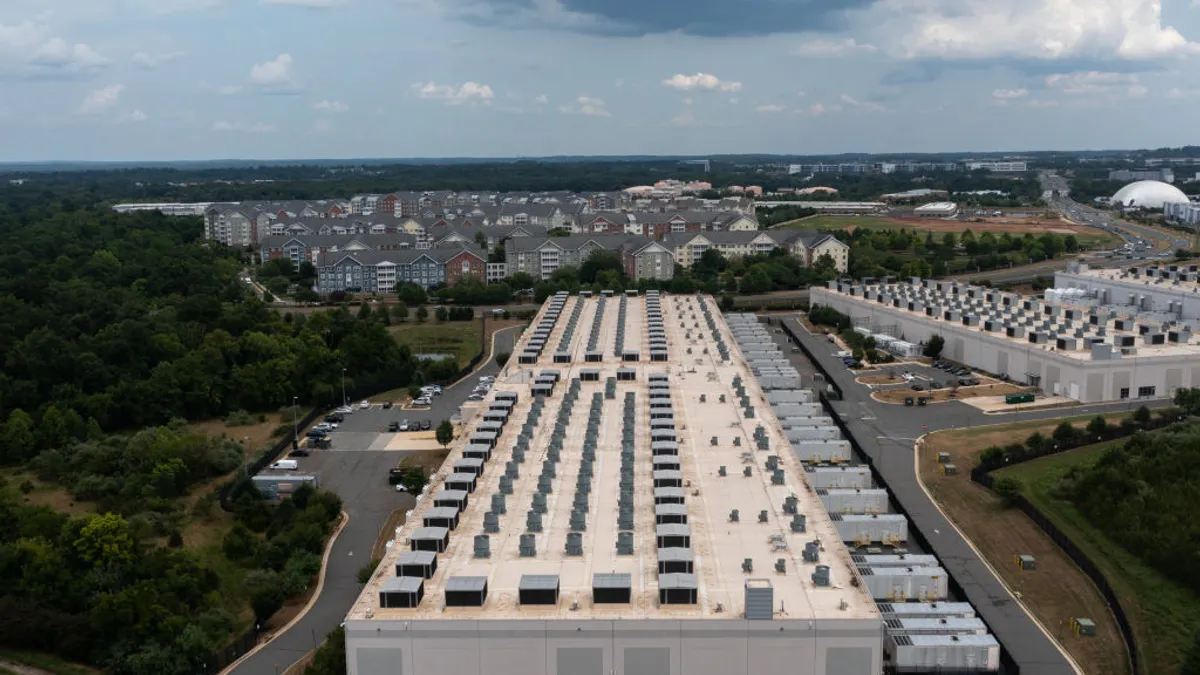
Industry observers point to last year’s wave of corporate commitments, including a major initiative by tech firms that pledged hundreds of billions of dollars for U.S. data center development. Those announcements, along with expanding project pipelines in multiple states, helped keep contractors busy even as other segments of construction remained uneven.
With credit analysts now projecting trillions in global spending tied to data center growth and AI capacity, builders across the country are positioning themselves to capture the next stage of the infrastructure boom.
While the largest contractors may be best positioned to pursue the biggest multibillion-dollar builds, industry experts say the broader data center expansion also opens the door to many other firms — including civil, utility and specialty contractors supporting everything around the facility.
“As the U.S. works to expand grid capacity to support energy-intensive AI workloads, a significant share of related work is occurring around the data center rather than within the building footprint, creating opportunities for smaller civil, utility, and specialty firms to participate.”

Macrina Wilkins, senior research analyst at Associated General Contractors of America, said AI is shifting construction in two ways: driving demand for new facilities and transforming how contractors operate.
“You have it reshaping how contractors are estimating, how they’re doing their scheduling, how they’re managing projects,” Wilkins said. “But it’s also driving demand for data centers, construction, substations, electrical infrastructure.”
Industry groups say data centers and power-related projects are among the strongest projected sectors for 2026, while expectations elsewhere remain more cautious amid economic uncertainty.
Technology providers and construction leaders say the scale of data center development is creating a “picks and shovels” environment — where firms don’t necessarily need to build the data centers themselves to benefit from the boom.
Ryan Kunisch, vice president of global product for Oracle, said the opportunity extends far beyond the major owners and top-tier builders leading the biggest projects.

“You have a small set of large owners who are really driving the demand, whether it’s the utility companies or the data center owners themselves,” Kunisch said. “But really, the bottom of that pyramid [is a] huge opportunity for the trades, even for, as I mentioned, the logistics to accomplish some of these massive projects.”
That downstream demand includes roads, utility upgrades, substations, energy projects and logistics work required to support construction and long-term operations. Even contractors that are not traditional data center builders may find opportunities through infrastructure support and regional civil work.
Despite strong projections and new construction pipelines, some contractors remain cautious about becoming overly dependent on one sector — especially as concerns persist about a possible AI bubble and a potential pullback in investment.
“A major pullback in investment [and] in valuations on AI and data centers could obviously have a very significant impact on [builders].”
Will Senner, senior VP of preconstruction for Skanska USA Building and leader of its data solutions team, warned that firms with portfolios heavily tied to data centers could face major disruption if market conditions reverse.
“If there are companies out there who have become overly reliant on data centers and it’s become a very significant portion of their portfolio, I think a major pullback in investment, in valuations on AI and data centers could obviously have a very significant impact on their business,” Senner said. “Hopefully, [they’d] be in position to be able to pivot to other market sectors and other project types.”
At the same time, industry observers say many believe AI-backed infrastructure is likely to remain a core trend, even if the pace of investment stabilizes or shifts over time.
Oracle’s Kunisch said the long-term sustainability of the boom will depend on real-world performance, measurable outcomes and demonstrated value.
“The proof will be in the pudding, so to speak,” Kunisch said. “Meaning that as we start to document the return on investment, look at efficiencies, find areas to avoid the use of AI or even dial back the overarching panacea of promise and get to some real metrics, I think you’ll start to see stabilization in all of this.”

Beyond creating a new construction cycle, AI is also becoming a larger part of how contractors estimate projects, plan schedules, manage risk and reduce administrative burdens.
Builders say the technology is being explored as a response to persistent workforce challenges, labor shortages, and the increasing complexity of managing projects across remote and near-urban environments.
Contractors also say AI tools are becoming more accessible — not just for large firms with big IT budgets, but for everyday users in operations teams.
“I think one of the really exciting, but also potentially challenging, components of this AI transformation is the ability to enable everyday users in the business to develop their own solutions,” Senner said. “A lot of these tools are becoming more and more low code or no code, meaning you don’t have to be a data scientist to quickly create your own AI tool or AI agent.”
Industry groups say they are also trying to ensure smaller and mid-size contractors are not left behind as AI-driven tools become more common across the construction tech stack.
.webp)
“If we’re not moving together as an industry, then we’re not moving forward,” said Sarah Gallegos, senior director of the building division and construction innovation at AGC. “We can’t leave the small- to mid-size contractors behind.”
Chris Love, AGC’s vice president of association and industry innovation, said adoption will likely remain gradual, but could accelerate as major construction software platforms expand AI-driven features.
“There are always going to be people that are more on the bleeding edge, but I think as more of the traditional companies see that and see the success they’re having, and worry about being left behind, I think we’ll continue to see adoption,” Love said.
For contractors, 2026 may be defined by two parallel changes: a continued surge in data center construction and a steady shift toward technology-driven operations.
Some builders will pursue multibillion-dollar data center campuses directly. Others will tap into the wider ecosystem of supporting infrastructure, power upgrades and civil work surrounding these sites. And as AI expands, firms of all sizes may increasingly look to automation, analytics and new digital tools as a way to scale operations, reduce friction and compete in a market shaped by speed, data and demand.
Originally reported by Matthew Thibault, Reporter in Construction Dive.



.png)