The global dry construction market is on track for sustained growth, with valuation expected to climb from US$ 95.8 billion in 2025 to US$ 154.6 billion by 2035, expanding at a 4.9% compound annual growth rate over the forecast period, according to a new report from Astute Analytica.
.jpg)
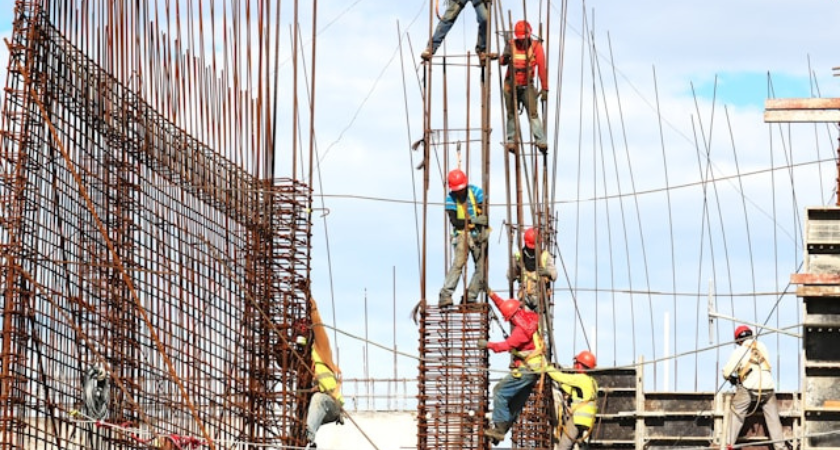
Industry momentum is being fueled by worsening labor shortages and tightening environmental regulations. In the United States alone, the construction sector faced a shortfall of 501,000 workers in 2024, with average wages rising to USD 38.30 per hour, prompting developers to shift away from labor-intensive wet masonry toward faster, factory-built wallboard systems.
This transition is already reshaping global construction practices. Prefabricated housing now accounts for 26.1% of Germany’s market, while factory-based production has compressed project delivery timelines to as little as 35 days, making traditional wet construction increasingly uneconomical for dense urban development.
Major manufacturers are backing this shift with significant capital investments. Saint-Gobain committed USD 235 million to expand its Palatka, Florida facility, while Knauf announced an USD 86 million investment to build a third gypsum plant in Egypt in late 2024. These expansions align with the dry construction market’s efficiency advantages, including the use of 95% less water compared to conventional methods — a critical benefit as regions adopt zero-discharge and water conservation mandates.
Renovation activity is also accelerating adoption. Europe’s EUR 1.2 trillion Renovation Wave is driving demand for dry lining systems that allow buildings to remain occupied during retrofits. As a result, dry construction is increasingly viewed not as an alternative technique, but as a core standard for delivering cost-effective, sustainable and regulation-compliant infrastructure.
Astute Analytica’s latest market assessment highlights a structural transformation underway in the global construction industry, as dry construction methods move into the mainstream. Once considered a niche solution, dry construction systems are now being embraced for their speed, scalability and compliance with modern sustainability standards.
.jpg)
Labor constraints remain a central driver. Chronic workforce shortages across North America and Europe have made labor-intensive masonry approaches less viable, particularly as wages continue to climb. Developers are responding by adopting prefabricated panels and modular wall systems that significantly reduce on-site labor requirements while improving schedule certainty.
Environmental compliance is reinforcing this shift. Dry construction’s minimal water consumption — up to 95% less than wet methods — positions it as a preferred solution in water-stressed regions and jurisdictions enforcing zero-discharge construction targets. This advantage is becoming increasingly important as governments tighten environmental oversight.
On the supply side, manufacturers are expanding capacity to keep pace with demand. Saint-Gobain’s Florida expansion alone is expected to double production while creating 110 permanent full-time jobs, and Knauf’s new gypsum facility will add 60 million square meters of annual capacity to the regional market.
Regionally, Asia Pacific leads the market with a 34.92% share, while residential applications dominate at 56.23%, reflecting strong housing and urbanization trends. Supporting frameworks account for the largest share by type, and plasterboard remains the leading material segment.
Looking ahead, technological integration is expected to further accelerate growth. Emerging trends include 3D printing combined with prefabricated panels, smart walls embedded with IoT sensors, and hybrid systems blending timber and steel framing. While challenges remain — including moisture vulnerability during storage and inconsistent standards for hybrid materials — the sector’s trajectory points firmly toward long-term expansion.
By 2035, dry construction is expected to be firmly established as the preferred method for fast, sustainable and resource-efficient building worldwide.
Originally reported by AstuteAnalytica India Pvt. Ltd. in Yahoo Finance.