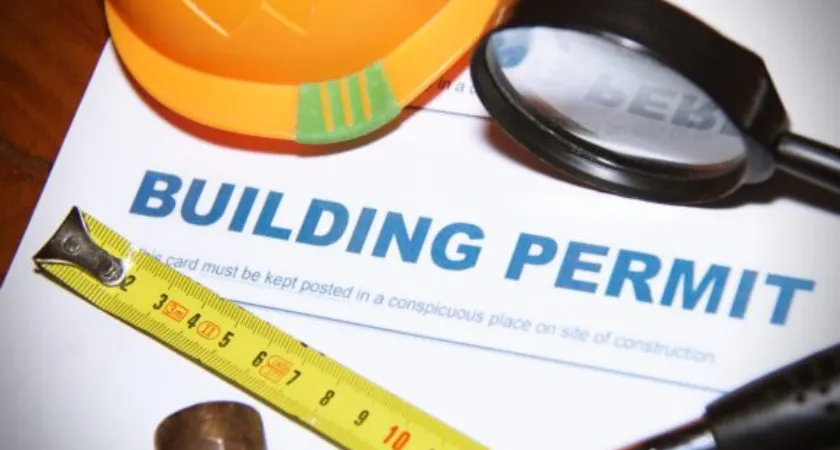
Spending a few thousand dollars on home repairs may soon involve fewer regulatory hurdles in Florida. A bill approved Wednesday by a Florida House of Representatives subcommittee would eliminate permit requirements for certain residential construction projects costing less than $7,500, a move supporters say could reduce red tape but critics warn may limit oversight and inspections.
House Bill 1049, sponsored by state Rep. Tiffany Esposito, R-Fort Myers, would prohibit local governments from requiring building permits for work projected to cost under $7,500 on a single-family home. The bill includes exceptions for structural, electrical, and plumbing work, which would still require permits regardless of cost. Contractors performing exempt work would also be required to maintain records of their projects.
.webp)
Permit requirements currently vary widely across Florida, with many counties and cities imposing thresholds based on square footage or project type. In some jurisdictions, permits are required for projects covering more than 120 square feet, including fences and outdoor sheds. Other counties mandate permits for heating and air conditioning work exceeding $5,000, while Miami-Dade County allows exemptions for most minor projects valued under $500.
“This bill is aimed at things like decks, fencing, home improvements – not major construction projects,” Esposito said at the House Industries and Professional Activities Subcommittee Wednesday.
Esposito told lawmakers she settled on the $7,500 threshold after discussions with industry stakeholders, but the proposal has drawn concern from local governments and county officials, particularly regarding inspection authority and construction quality.
Roofing work, a persistent concern for Florida property insurers, may fall into a gray area under the bill’s language, as it is unclear whether all roofing projects would be classified as structural. Critics warn that exempting certain projects from permitting could allow substandard work to go uninspected.
Courtney Mooney, associate director of public policy for the Florida Association of Counties, said the bill could prevent local governments from inspecting work even when homeowners request it.
.webp)
“You can’t do an inspection without a permit,” Mooney said. She added that the association hopes to work with Esposito to address those issues as the bill advances through the legislative process.
Lawmakers also raised questions about whether the proposal would override local authority, a growing trend in Florida and other states. Esposito confirmed that the bill would preempt local governments’ ability to impose stricter permit requirements.
The subcommittee did not extensively address how the legislation could affect the insurance industry. Industry observers note that insurers are unlikely to pursue subrogation claims tied to small-dollar projects, particularly since many homeowners insurance deductibles exceed $7,500. However, unpermitted and uninspected work could contribute to larger wind or water damage claims years later if poor workmanship worsens future losses.
House Bill 1049 does not include provisions related to homeowners’ associations, meaning HOAs would still be able to require municipal permits for projects valued under $7,500, lawmakers said.
The bill would also waive permit requirements for backup home power systems, including generators and whole-house battery installations, provided the work is completed by a licensed contractor or utility company.
Esposito’s proposal received near-unanimous approval from the subcommittee on Wednesday, following approval last week by the House Intergovernmental Affairs Subcommittee. The bill now advances to the full House State Affairs Committee for further consideration.
Originally reported by William Rabb in Insurance Journal.



.png)