The Mexican government is set to begin construction of the long-awaited Playas de Rosarito desalination plant at the end of March, advancing one of the most strategic water infrastructure projects in Baja California. The initiative aims to strengthen water security for the fast-growing border region, where shortages have increasingly threatened households, industry and cross-border economic activity.
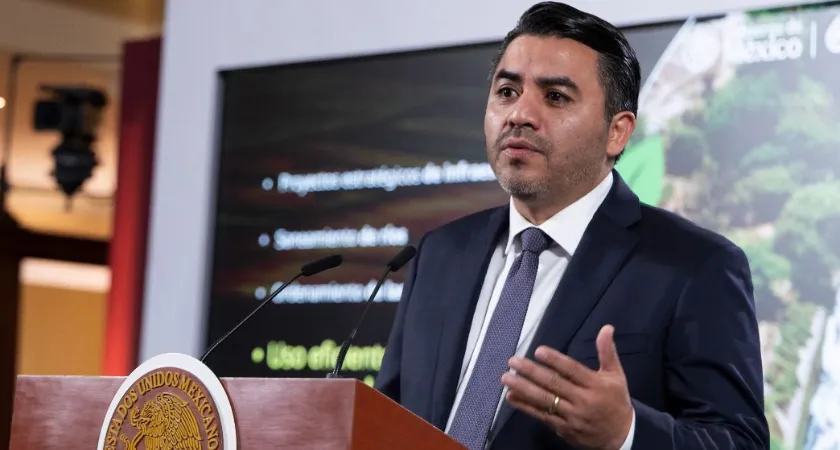
The combined investment from federal and state sources will exceed 14.6 billion pesos (US$840 million), according to Efraín Morales, general director of the National Water Commission (Conagua). Of that total, roughly 10 billion pesos will come from federal funds, underscoring the priority status granted to the project within Mexico’s broader hydraulic strategy.
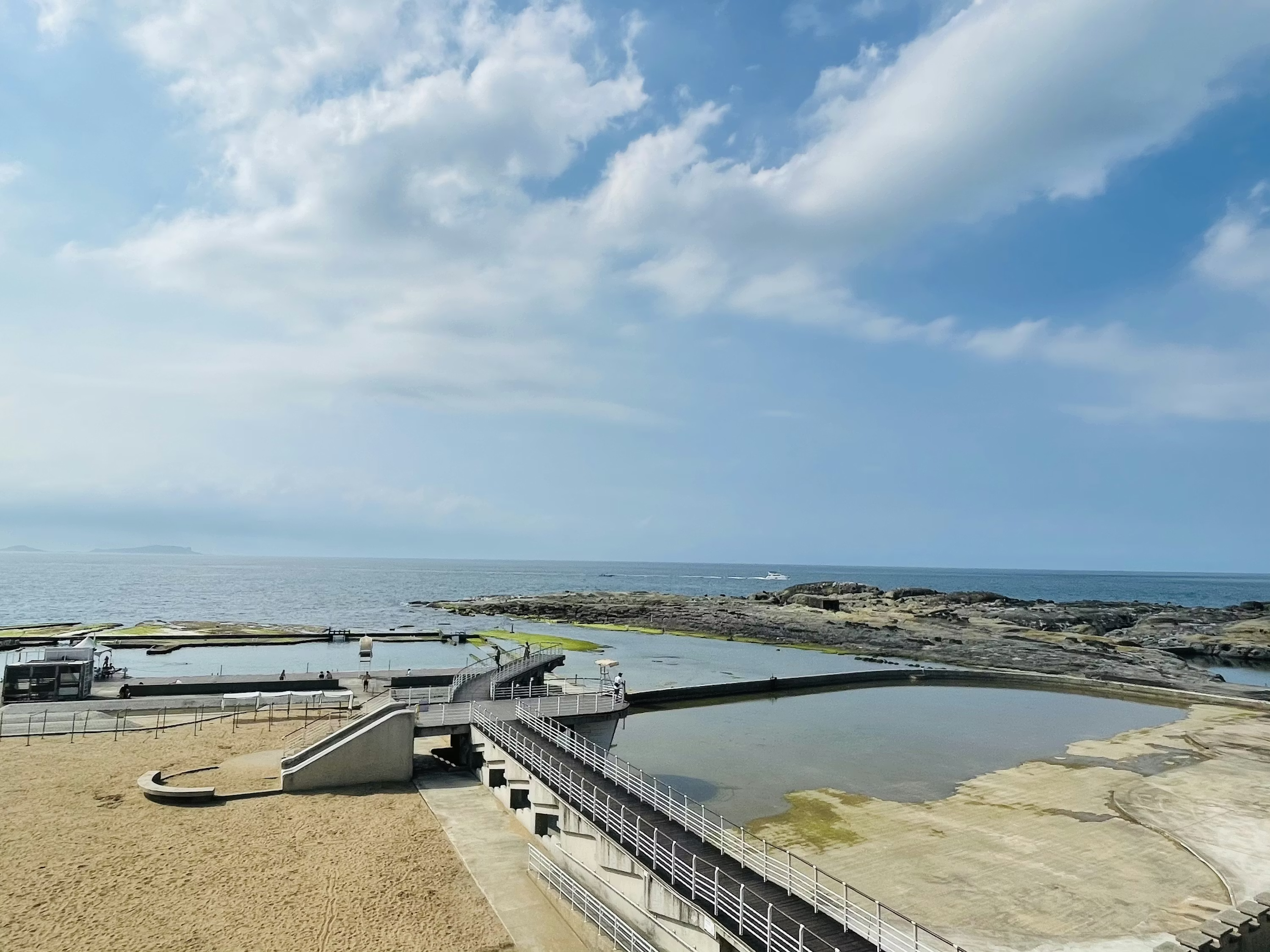
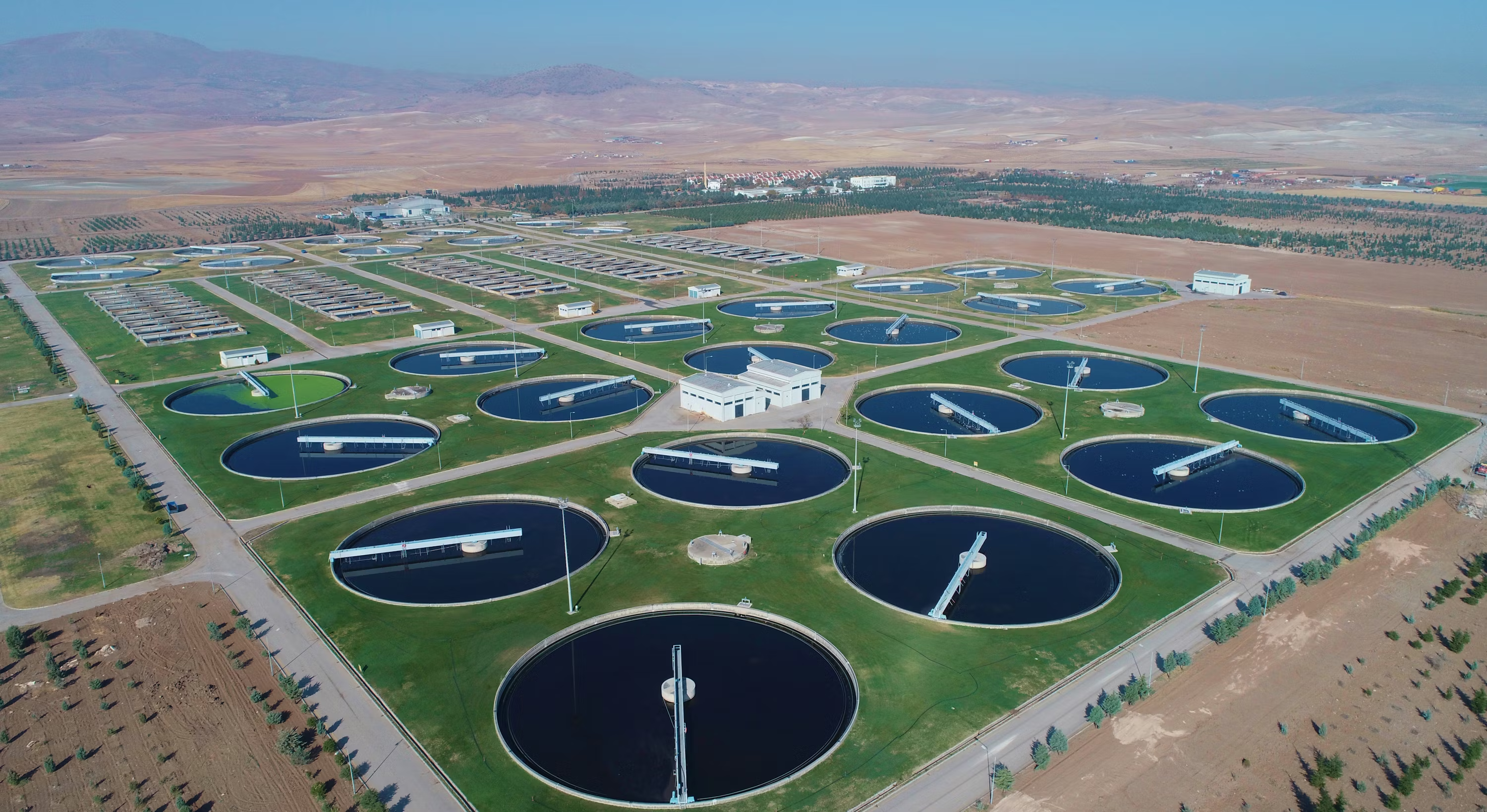
The facility forms part of the National Water Plan and is being promoted as the largest and most modern desalination plant in Latin America. Once operational, it will have a production capacity of 2,200 liters per second, enabling authorities to increase potable water availability by up to 45% for the cities of Tijuana and Playas de Rosarito—two urban centers that have faced chronic supply constraints.
Conagua will oversee construction of the plant itself, while the Baja California state government will be responsible for complementary infrastructure required to distribute the water across municipal networks.
“This work is going to start at the end of March, beginning of April, already with construction. We have already carried out very important work for the projects. And it will be completed in 2029,” said the official.
Beyond desalination, federal authorities are advancing parallel initiatives to reduce pressure on the Colorado River basin and modernize agricultural consumption. A key component is the modernization of Irrigation District 014 Río Colorado, where 5 billion pesos will be invested to upgrade more than 10,000 hectares of farmland.
These improvements are expected to recover up to 30% of the water currently used in agriculture, part of which will be redirected for urban consumption. The irrigation program is scheduled to conclude in 2028, a year before the desalination plant enters service.
Sanitation infrastructure is also receiving attention. Morales outlined progress in the recovery of the Tijuana River, which includes new collectors, pumping stations and upgrades to treatment systems at the Arturo Herrera and La Morita plants. These works represent an additional 1.7 billion pesos in investment and are expected to be finalized in 2027. They complement the recently inaugurated San Antonio de los Buenos treatment facility.
At the community level, Baja California used the Social Infrastructure Fund (FAIS) to channel 340 million pesos in 2025 into 122 drinking water, sewerage and sanitation projects across the state’s seven municipalities. Officials confirmed that the program will continue throughout 2026, prioritizing underserved neighborhoods.
Overall, Morales emphasized that federal and state investments in Baja California’s hydraulic infrastructure now exceed 16.7 billion pesos, reflecting an unprecedented push to secure long-term supply.
The Rosarito project has a complicated history. It was originally canceled in 2020 by then-governor Jaime Bonilla amid contractual disputes, leading to an international arbitration process initiated by Consolidated Water. The plan was later revived by Governor Marina del Pilar, and in November 2024 President Claudia Sheinbaum formally endorsed its reactivation after the arbitration case was dismissed.
This renewed political support has allowed federal authorities to accelerate technical studies, environmental permitting and financial structuring so that construction can finally begin this spring.
Experts view the desalination plant as transformative for northern Baja California, where population growth, industrial expansion and climate variability have outpaced traditional water sources. By creating a drought-resilient supply independent of the Colorado River, the region could stabilize investment in manufacturing, tourism and housing.
The government also expects the project to generate thousands of direct and indirect jobs during construction and to stimulate the development of new distribution pipelines, reservoirs and pumping systems across the metropolitan area.
With completion scheduled for 2029, the Rosarito facility is positioned to become a cornerstone of Mexico’s long-term adaptation to water scarcity along its northern border.
Originally reported by Bnamericas.