Years of delays, faulty construction work, and ballooning project costs have pushed New York City parents to a breaking point as frustrations mount over how the School Construction Authority (SCA) manages critical school improvements. What began as routine accessibility upgrades at a Brooklyn elementary school has escalated into a citywide conversation about accountability, oversight, and the SCA’s ability to meet its obligations amid an $18 billion mandate to expand school capacity.
.jpg)
At Red Hook’s P.S. 15 — where more than 62% of students have disabilities — a new entrance ramp intended to improve accessibility remains unfinished four years after construction began. Parents say the $11 million project, which also included window and exterior work, has instead left conditions worse than before construction started.
“For that to be happening in an underserved community, it’s really a problem,” said Katina Rogers, a Brooklyn parent and president of District 15’s parent education council.
The P.S. 15 ramp represents only one example of widespread issues plaguing SCA-managed projects. According to interviews with parents, a former student, and multiple elected officials, families across the city have experienced everything from repeat construction failures to years-long delays and a lack of clear communication from the agency.
Despite the scale of its responsibilities — including managing improvements for thousands of schools and overseeing a massive expansion to reduce class sizes — the SCA has struggled with vacancies and leadership gaps. For nearly two years, Mayor Eric Adams did not appoint the authority’s third trustee, leaving the governing board incomplete until April. The agency currently has more than 90 unfilled jobs, many requiring specialized technical licenses.
Parent leaders fear these staffing gaps are slowing the agency’s ability to deliver essential projects. Recent public data shows that 57% of capital improvement projects in 2024 were not completed on time, raising alarm about the SCA’s effectiveness as the state’s class size reduction law places additional pressure on the system.
Examples of failures extend across all boroughs:
“They do kindergarten graduations there,” said Queens parent Shirley Lee. “How is that safe?”
Another parent, Christine Huang, added, “We were never able to get a straight answer for why nothing was being done.”
Following publication, SCA officials clarified that the P.S. 21 auditorium repairs had not been scheduled because the school ultimately redirected funds to purchase technology equipment instead.
Across the city, parents say they are left without information or leverage. Community Education Councils — volunteer boards advising on local school needs — have repeatedly passed resolutions calling for more oversight, a public dashboard to track construction progress, and clearer communication from the SCA.
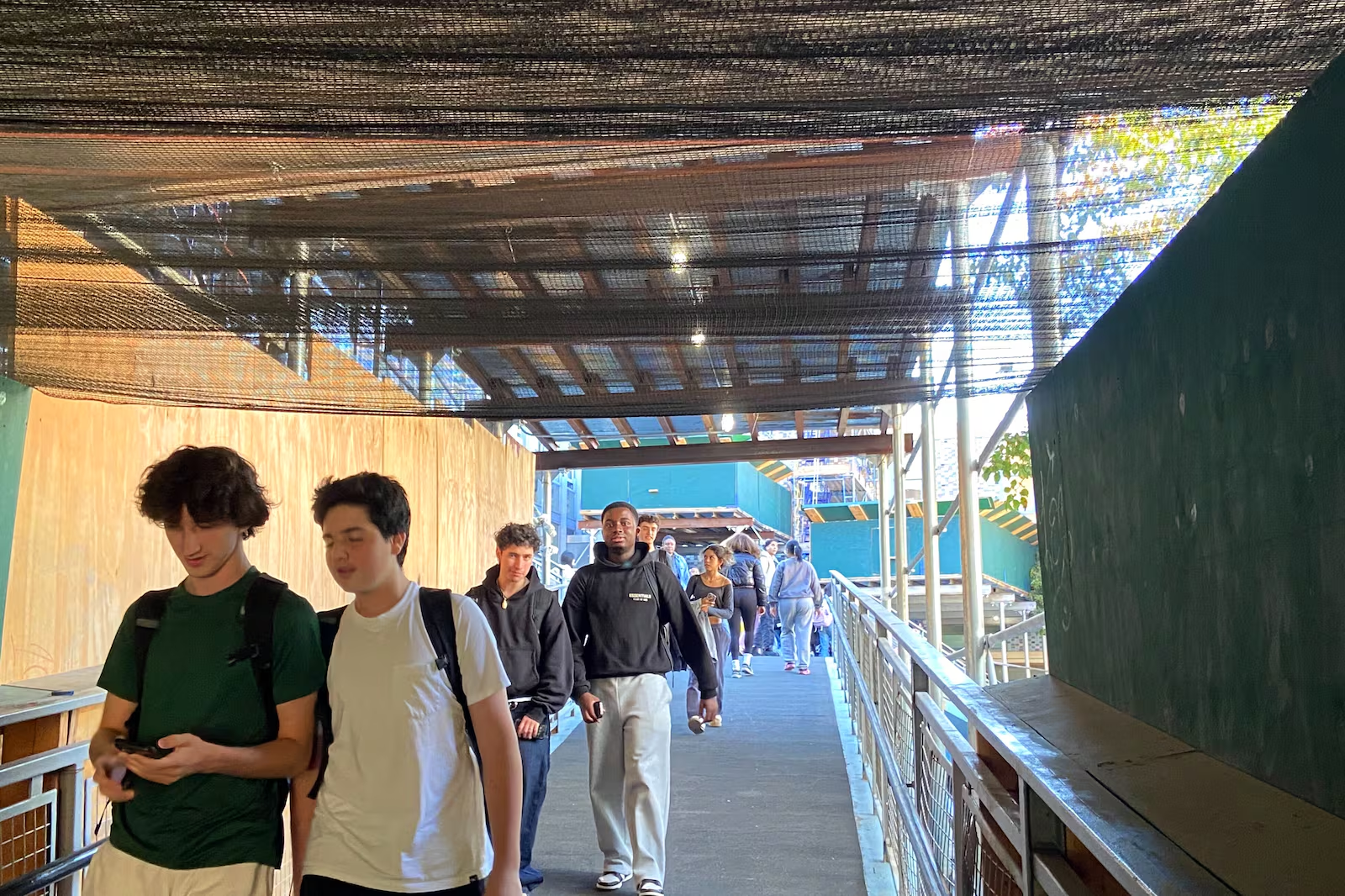
Manhattan parent leader Noah Harlan said that repeated ramp closures at NEST+m on the Lower East Side have created safety concerns during dismissal for the school’s 1,600 students.
“When the ramps are closed, [the students] are all forced into the same areas, and it’s not ideal to have 12th graders and kindergarten students all transiting the same space,” he said.
Council members have also expressed frustration. Council member Vickie Paladino said she has allocated roughly $15 million to school projects since 2022 but lacks visibility into how the funds have been used. Education committee chair Rita Joseph said she plans to convene a City Council hearing next year, noting:
“We will continue to push to make sure that there’s transparency, accountability, and fiscal responsibility as well.”
The SCA says it is working to address concerns. Construction spokesperson Kevin Ortiz said the agency “works diligently to complete this work as efficiently and unobtrusively as possible, while maintaining the highest standards of safety for students and staff.” He said delays often arise from “the discovery of additional repair needs or unforeseen field conditions that impact the project’s scope and timeline.”
Still, parents say reforms can’t wait. Red Hook’s District 15 council has proposed community listening sessions, while Manhattan’s District 3 wants the SCA to create a dedicated coordination team to improve communication with school communities. The agency says it is evaluating ways to engage earlier and create “realistic and flexible” project plans.
For now, families say they continue navigating unsafe conditions, confusing timelines, and projects that drag on for years. The uncertainty has led many to lose faith in the agency’s ability to deliver the improvements schools desperately need.
Originally reported by Ananya Chetia in Chalk Beat.