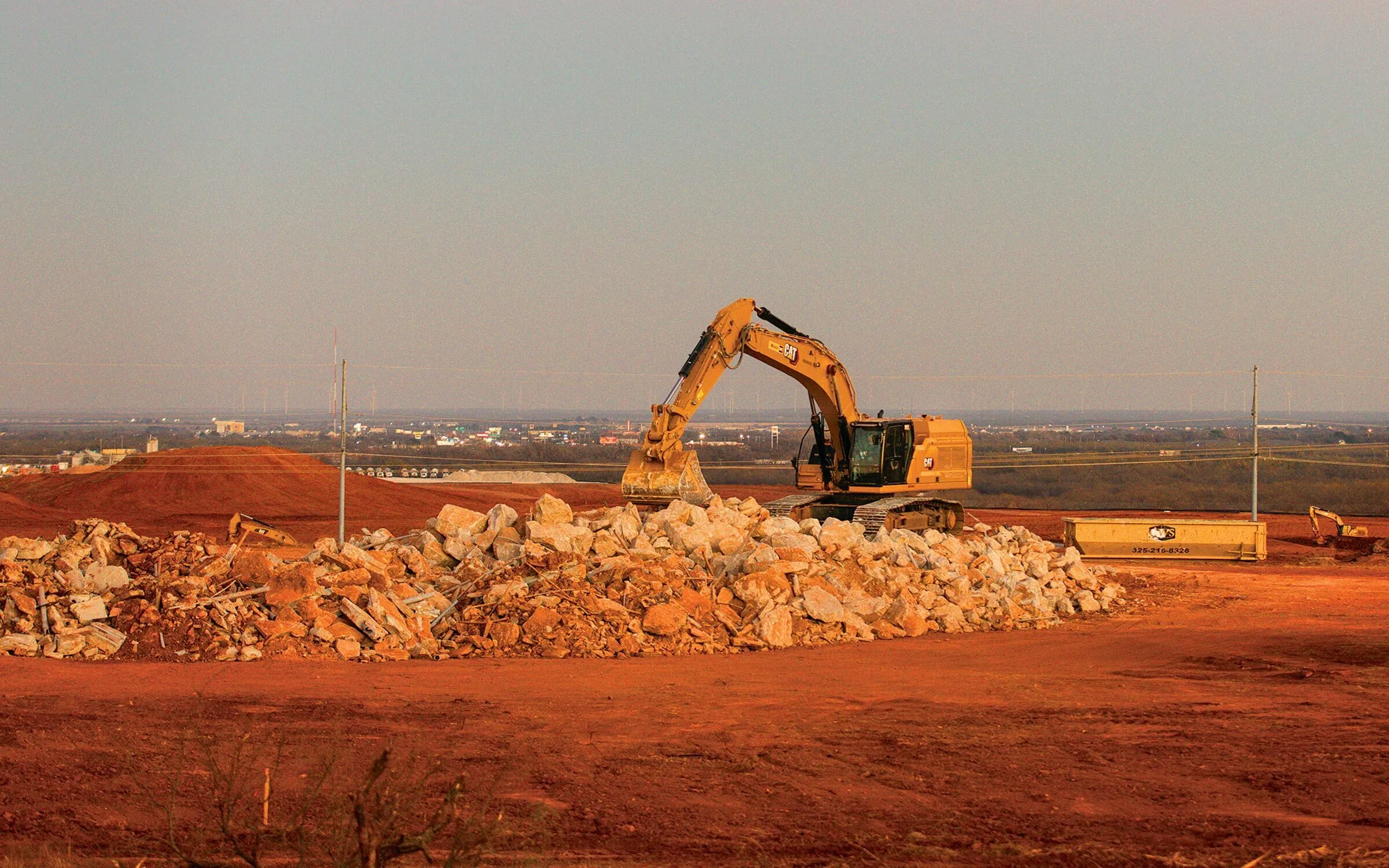
A massive artificial intelligence data center under construction just outside Abilene is expected to reach completion by the end of the year, marking a major milestone in a nationwide expansion of AI infrastructure — and a moment of cautious anticipation for local residents.
The four-million-square-foot complex, spread across more than 1,000 acres, will serve as the home base for Stargate, part of a $500 billion national AI buildout backed by OpenAI and Oracle. Once finished, the facility will rank among the largest data center developments in Texas.
.webp)
Christopher Collins, a contributor to Texas Monthly, said Abilene’s geographic and economic characteristics made it an attractive location for such a large-scale project.
“One is when you look at Abilene, we’re a mid-sized city in West/Central Texas. There’s no big cities around us,” he said. “We’re not a suburb of anything. And that means there’s a lot of wide open, undeveloped space. If you want to build a massive data center, that’s something you’re going to want.”
Beyond land availability, the region offers access to multiple energy sources, including natural gas, solar, and wind power — a critical factor for energy-intensive AI operations.
“The third reason, which is very important, is that the City of Abilene and Taylor County, they both agreed to a lucrative tax agreement with the Stargate developers, evading 85% of the property taxes over 10 years,” he said. “That’s a lot of savings for a $3.5 billion project. So I’m sure that also had a significant role in their decision to come here.”
Local reaction to the project has been mixed. While city leaders and economic development officials have largely welcomed the investment, some residents remain uncertain about its long-term value.
“Some people are, I think they’re waiting to see, is this going to help us or not?” Collins said. “Certainly in the short term, there’s been a lot of sales tax revenues coming in. Those are up by double-digit margins at some points.
There’s 6,000 workers here, give or take. That number fluctuates, but they’re shopping, they’re buying groceries, they’re getting their hair cut, they’re doing all that sort of stuff.”
Once operational, the facility is expected to support about 300 permanent jobs — a figure Collins compared to employment levels at a large retail supercenter.
“The local economic development corporation says that they’re estimating a $4 billion economic impact over the next two decades, but they refuse to elaborate on how they came up with that figure, or what their methodology is.” he said. “So it’s hard to know if that may be wildly inflated.”
Construction activity has already disrupted daily life in nearby neighborhoods, and some residents worry those issues could persist.
“Road conditions and traffic have definitely become sort of a nightmare for people who live in the immediate vicinity of where the project is,” he said. “It’s drastically affecting their commute to work. There have been reports of traffic collisions, of vehicles being run off the road.”
Environmental and infrastructure concerns are also top of mind as the facility prepares to come online.
“They’re worried about pollution that may come from burning gas to power the thing,” he said. “Also how much water is this thing going to use? The developers say it won’t use a whole lot compared to other data centers, but it will still use some. And how much power is this going to use?”
As construction nears completion, Collins said the true test will be whether the long-term benefits outweigh the tax incentives and community disruptions.
“Will this really turn out to be a good bet for the city of Abilene? In the past, we’ve had a pretty good track record of luring in industries and businesses and other things,” he said. “That’s really helped our economy and informed our city as well as our universities and things.
But we’ve also had some bets that haven’t paid off where we’ve put a lot of money and time into things that ended up where our pockets were empty at the end. So that’s what I’m gonna be looking for.”
Originally reported by Sarah Asch in Texas Standard.