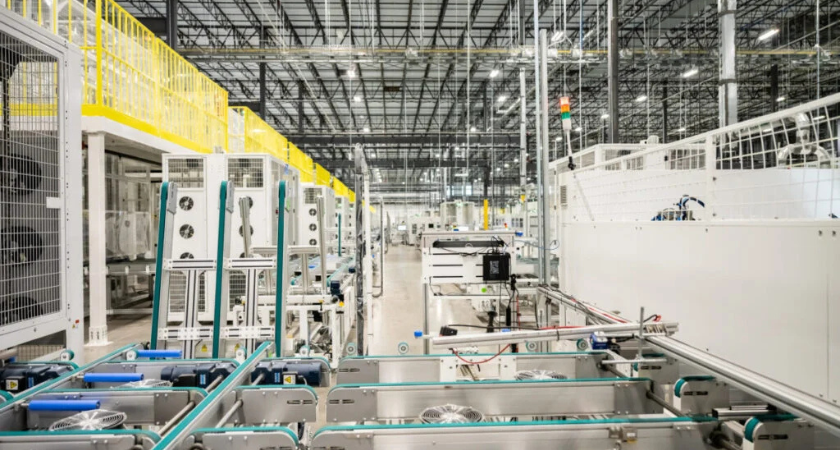
U.S. solar manufacturer T1 Energy has officially started construction on the first phase of its new cell manufacturing facility in Texas, marking a major step forward for domestic solar production and supply chain integration.
.jpg)
The facility, known as G2 Austin, represents a US$400–425 million investment and will initially deliver 2.1GW of annual solar cell manufacturing capacity. T1 expects the site to begin commercial operations by the end of 2026. The plant will produce tunnel oxide passivated contact (TOPCon) solar cells, a high-efficiency technology increasingly favored in global solar markets.
T1 has also outlined plans to significantly expand the site. Through a second construction phase, the company intends to scale total capacity at G2 Austin to 5.3GW and noted that output “could be expanded if demand for cells increases,” signaling flexibility to respond to market growth.
Cells produced at the Texas facility will be used in modules assembled at T1’s G1 Dallas module manufacturing plant. That facility was acquired from Trina Solar last December as part of the company’s transition from its former identity as Freyr Battery into a pure-play solar manufacturing business.
The move into cell manufacturing builds on strong recent demand for T1’s products. In the third quarter of this year alone, the company sold 725MW of solar modules, generating sales volume of approximately US$200–210 million. Adding in-house cell production further deepens T1’s reliance on U.S.-based manufacturing and reduces exposure to overseas supply chains.
To support this strategy, T1 has secured multiple domestic supply agreements. In August, the company signed a deal with Corning to source polysilicon and wafers from Corning and its subsidiary, Hemlock Semiconductor, including material produced at a Michigan facility. In October, T1 followed with an agreement to source steel module frames from U.S. tracker manufacturer NEXTPower.
T1 chairman and CEO Dan Barcelo said these agreements, combined with the new Texas cell plant, will help create an “integrated US polysilicon solar supply chain.”
“Solar is the most scalable, reliable, and low-cost energy available today, and I look forward to the future of American solar running through Rockdale, Texas,” added Barcelo.
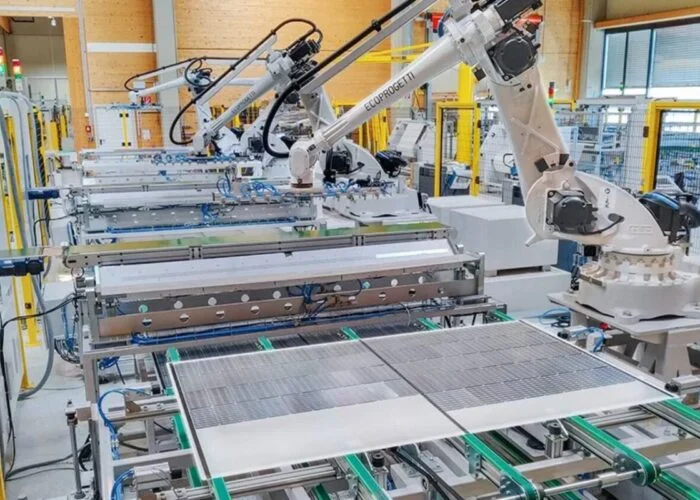
The start of construction at G2 Austin comes as U.S. solar manufacturers push to expand domestic capacity for wafers and cells, historically among the weakest links in the American solar supply chain. T1 praised the Trump administration’s “pro-growth economic and trade policies,” a reference to tariffs and trade investigations aimed at limiting reliance on imported solar components.
The company has previously voiced support for the U.S. Department of Commerce’s Section 232 investigation into polysilicon imports. In July, T1 said the probe “will result in strengthening US energy security and boosting American advanced manufacturing,” by shaping how tariffs and trade policies apply to imported polysilicon.
Still, uncertainty around the final Section 232 ruling continues to weigh on the industry. While U.S. module manufacturing capacity has expanded rapidly, domestic polysilicon production has lagged. Solar Media Market Research estimates that by the end of 2025, the U.S. will face an 18GW shortfall in polysilicon capacity relative to annual module manufacturing needs — a gap that would require imports, potentially targeted by stricter trade rules.
T1’s partners expressed confidence that the company’s investments and supply agreements can help narrow that gap.
“Corning is proud to supply G2 Austin with wafers that will power the next chapter in American-made solar technology,” said AB Ghosh, vice-president of solar at Corning, chairman and CEO of Hemlock Semiconductor.
“This is exactly the kind of investment in technology we hope to see continue in the US,” added Dan Shugar, founder and CEO of NEXTPower.
Together, the Texas cell plant, domestic sourcing deals and growing module sales position T1 Energy as a central player in the effort to build a resilient, end-to-end U.S. solar manufacturing ecosystem.
Originally reported by JP Casey in PV Tech.