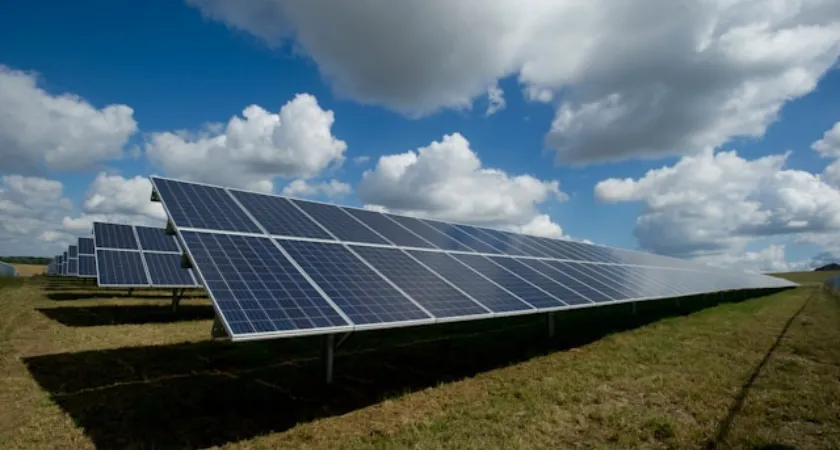
TotalEnergies has secured two long-term Power Purchase Agreements (PPAs) with Google to deliver 1GW of solar capacity to the tech giant’s growing network of Texas data centres. The 15-year agreements will provide 28TWh of renewable electricity, marking one of the largest corporate clean-energy commitments in the United States and setting the stage for a significant wave of construction activity across the state.
The power will be generated from TotalEnergies-owned projects currently under development. The Wichita solar site will supply 805MWp, while Mustang Creek will contribute 195MWp, with construction on both facilities scheduled to begin in the second quarter of 2026.

These agreements build on a separate 1.2GW portfolio recently secured by Clearway, a California-based renewables developer in which TotalEnergies holds a 50% stake. Together, the projects will support Google operations across the ERCOT, PJM, and SPP electricity markets, reinforcing the company’s strategy to match rising data-centre demand with new clean generation.
The Wichita and Mustang Creek developments are expected to create several hundred construction jobs, ranging from civil works and electrical installation to specialist solar engineering. TotalEnergies said the projects will also deliver long-term tax revenues for local communities, supporting schools and public services throughout the life of the assets.
The company already operates a 10GW gross portfolio of onshore solar, wind, and battery storage in the United States, including 5GW in Texas’ ERCOT market and 400MW in the Northeast PJM region. Those projects provide a blueprint for how the new Google-backed facilities are likely to be delivered, both in terms of construction methods and supply-chain partnerships.
Marc-Antoine Pignon, Vice President Renewables US for TotalEnergies, said: "We are pleased to sign these agreements to supply renewable electricity to Google in Texas, representing the largest renewable PPA volume ever signed by TotalEnergies in the United States.
This highlights TotalEnergies' strategy to deliver tailored renewable energy solutions that support the decarbonisation goals of digital players, particularly data centres. Through this PPA, TotalEnergies is also addressing the challenges of land availability and power supply for data centres by enabling large-scale colocation opportunities."
Google says access to reliable, low-carbon electricity has become a core requirement as artificial intelligence and cloud computing drive unprecedented power demand. Large-scale solar paired with storage is increasingly viewed as the most viable route to meet that growth without overloading regional grids.

Will Conkling, Director of Clean Energy and Power at Google, said: "Supporting a strong, stable, affordable grid is a top priority as we expand our infrastructure. Our agreement with TotalEnergies adds necessary new generation to the local system, boosting the amount of affordable and reliable power supply available to serve the entire region."
For construction firms, the trend represents a durable pipeline of work. Solar mega-projects require extensive site preparation, transmission interconnections, substation builds, and long-term operations facilities. Industry analysts expect contractors with expertise in EPC delivery, high-voltage electrical work, and modular installation to see the greatest opportunities.
TotalEnergies continues to expand integrated energy offerings that combine solar, onshore and offshore wind, combined-cycle gas, and battery storage to deliver firm power for corporate customers. As of October 2025, the group reported more than 32GW of installed renewable capacity worldwide and aims to produce over 100TWh of net electricity by 2030.
The Google agreements add to a growing roster of corporate offtakers that already includes Airbus, Amazon, Microsoft, Merck, Orange, Saint-Gobain, STMicroelectronics, LyondellBasell, Air Liquide, Data4, SWM, and Sasol.
By locking in long-term PPAs, both supplier and customer gain price certainty, while local economies benefit from new employment and infrastructure investment. Analysts say such contracts are becoming a critical financing tool that unlocks large-scale construction across the renewable sector.
Originally reported by Steven Downes in Construction Digital.