The Trump administration appears to be moving toward the demolition of four historically significant federal buildings in Washington, D.C., a move that critics say is unfolding outside of required statutory review processes and could permanently reshape the city’s architectural landscape.

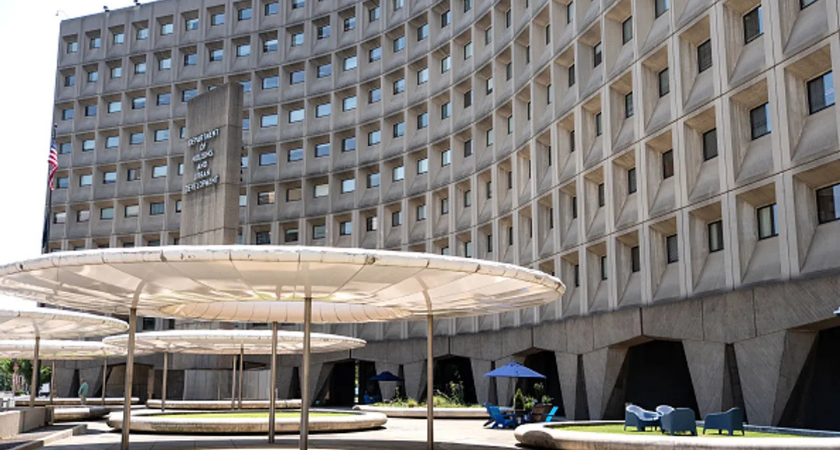
According to a declaration submitted this week to a federal judge, former General Services Administration official Mydelle Wright claims the White House is already deep into the contractor selection process for tearing down four architecturally notable buildings: the Robert C. Weaver Federal Building, the Wilbur J. Cohen Federal Building, the GSA Regional Office Building and the Liberty Loan Building.
Government attorneys pushed back on those claims during the hearing, arguing the declaration relies on hearsay and that the administration is operating within established channels. “It is wrong,” Principal Deputy Assistant Attorney General Adam Gustafson and Deputy Chief Marissa Piropato said in their response, according to CNN. They added that GSA is “evaluating those assets not for demolition but for disposal — meaning conveyance out of federal ownership,” and that the agency is following the required process.
The dispute comes amid growing legal challenges from historic preservation advocates, who are also seeking to block plans to paint the Eisenhower Executive Office Building, a landmark structure adjacent to the White House. Preservationists argue that the renovation could permanently damage the building’s granite facade and bypass federally mandated review requirements.
The four buildings identified in Wright’s declaration are widely considered examples of New Deal–era and post-World War II brutalist architecture, a style characterized by heavy concrete forms and utilitarian design. Critics argue these structures represent an important chapter in America’s architectural and civic history.
“These are ‘gems of America’s architectural history and its collective heritage,’” Judith Levine, a civil liberties advocate and author, said in The Guardian. “They are not Trump’s to dispose of, like battered file cabinets or obsolete computers.”
Earlier this year, President Trump issued an executive order calling for federal buildings to emphasize classical architecture, explicitly criticizing modernist and brutalist designs. “The Federal Government largely replaced traditional designs for new construction with modernist and brutalist ones,” the executive order said. “The Federal architecture that ensued … was often unpopular with Americans.”
In her declaration, Wright said the White House has not followed the legally required role of GSA under the National Historic Preservation Act and the National Environmental Policy Act. “As far as I am aware, GSA has not conducted processes to comply with NHPA Section 106 or 110(f) or with NEPA for this undertaking for any of the four buildings,” she said.
Instead, Wright alleged that the White House has independently solicited bids or is finalizing bid packages to “analyze and recommend for demolition” of the four buildings.
“For the first time of which I am aware,” Wright said, “a President is personally involved in facilitating end-runs around the agency’s obligations to the buildings that are our national heritage, and who in the agency is going to tell him ‘No?’”
Gregory Werkheiser, a partner at Cultural Heritage Partners and one of the attorneys behind the lawsuit seeking to halt the Eisenhower Building renovation, echoed concerns about GSA’s authority over recent projects. He said he has little confidence the agency is controlling the scope of work being directed by the White House.
GSA “doesn’t have the president’s actions under control,” Werkheiser said at the hearing, according to Bloomberg Law.
The buildings cited in the dispute are also included on a GSA list of federal properties the agency has deemed obsolete or underutilized and suitable for disposal. That list triggered widespread backlash earlier this year due to its potential impact on local real estate markets and the inclusion of historically significant structures.
U.S. District Judge Dabney Friedrich, who presided over the hearing, asked attorneys from both sides to be prepared to reconvene soon. Any ruling would determine whether the White House can proceed with painting the Eisenhower Executive Office Building before completing the statutory review process, which requires expert analysis and public input.
Originally reported by Robert Freedman in Construction Dive.