Job openings across the U.S. construction sector have dropped to what analysts describe as an “extraordinarily low” level, marking another contraction point for an industry that continues to shrink heading into the end of 2025.
.jpg)
According to new analysis from Associated Builders and Contractors (ABC), federal labor data shows a sharp decline in available construction positions in October. While the full dataset requires subscription access, ABC’s review highlights a trend that has accelerated throughout the year: employers are scaling back hiring as project pipelines soften, interest rates remain elevated, and market confidence weakens across several subsectors.
The findings add to a growing list of indicators pointing to a cooling construction economy. Nonresidential spending has already edged into negative territory this fall, and multiple national contractors have reported slowed onboarding, hiring freezes, or targeted layoffs. The October job figures further underscore that slowdown.

ABC’s characterization—that job openings are at an “extraordinarily low” point—aligns with the broader industry sentiment that 2025 has become one of the most challenging years for workforce demand since the pandemic recovery. While the sector traditionally faces cyclical shifts, the depth of the decline suggests a prolonged correction rather than a short-term fluctuation.
The analysis arrives amid additional workforce data showing reduced month-to-month hiring momentum, continued declines in open positions, and tighter labor market conditions affecting specialty trades. Many firms have adjusted staffing expectations as backlogs shrink and new project starts become more selective.
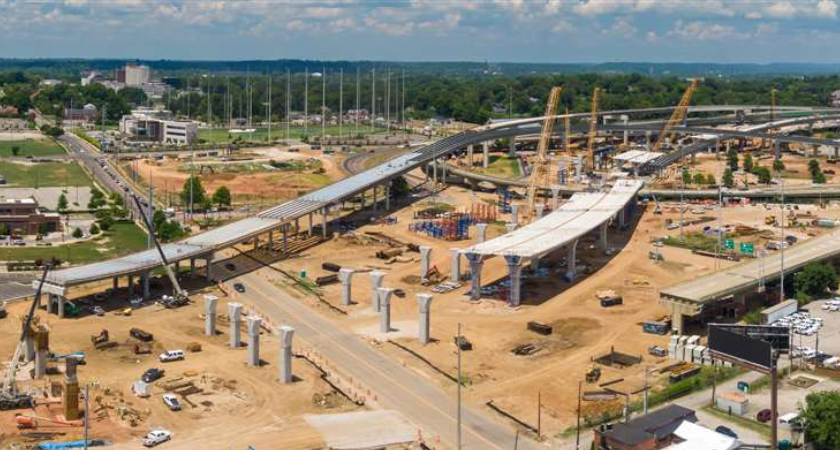
A photo provided with ABC’s analysis shows freeway construction underway in downtown Birmingham, Alabama—symbols of ongoing infrastructure commitments that contrast with the sector’s cooling labor demand.
Although the full insights from Construction Briefing require a PLUS membership, the headline findings serve as another warning sign for an industry confronting higher costs, slower public approvals, and delayed private-sector investment. Combined, these factors have reshaped hiring strategies and reduced the need for additional workers heading into 2026.
Originally reported by Neil Gerrard, Senior Editor in Construction Briefing.