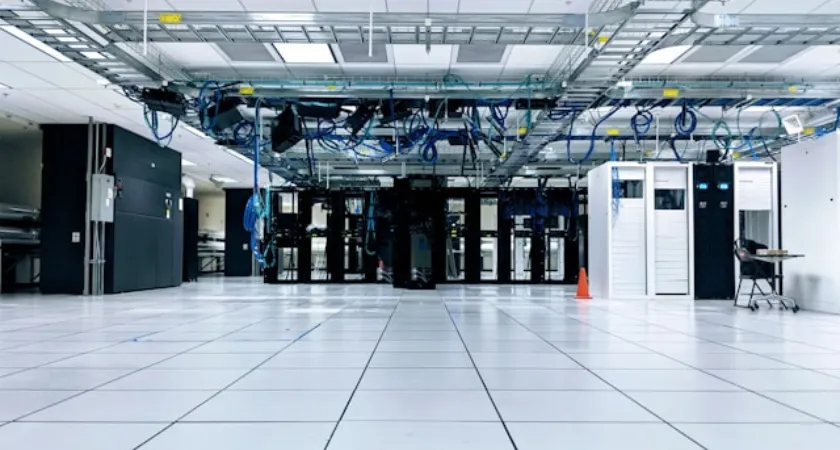
At least four Wisconsin communities quietly entered nondisclosure agreements to shield billion-dollar data center proposals from public view, according to a Wisconsin Watch investigation — fueling growing backlash and prompting new legislation aimed at banning secrecy agreements statewide.
Massive data center developments, often driven by global technology giants, have increasingly reshaped local economies and infrastructure demands. But in Wisconsin, several of the state’s largest projects advanced for months — and in some cases more than a year — with little to no public disclosure.
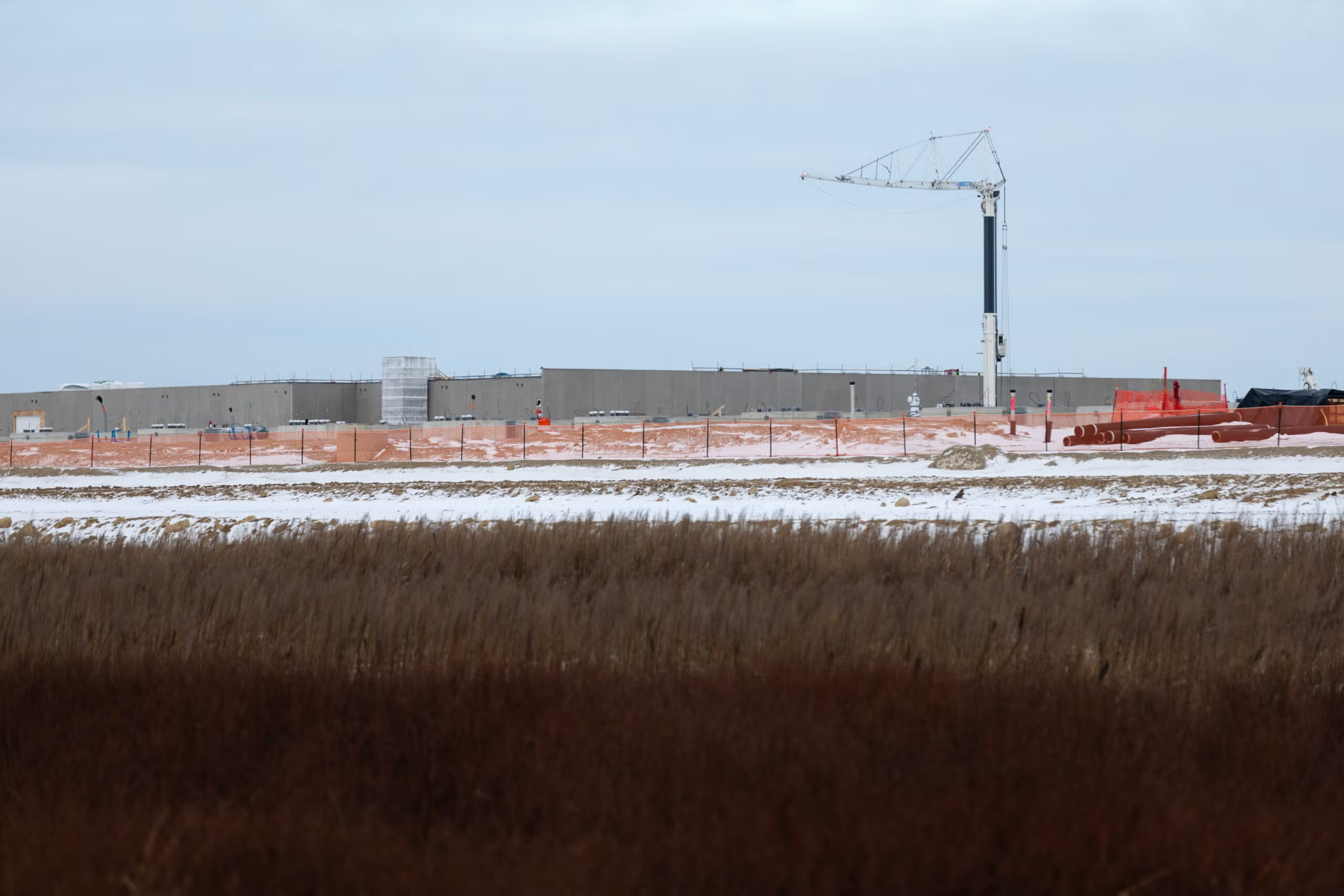
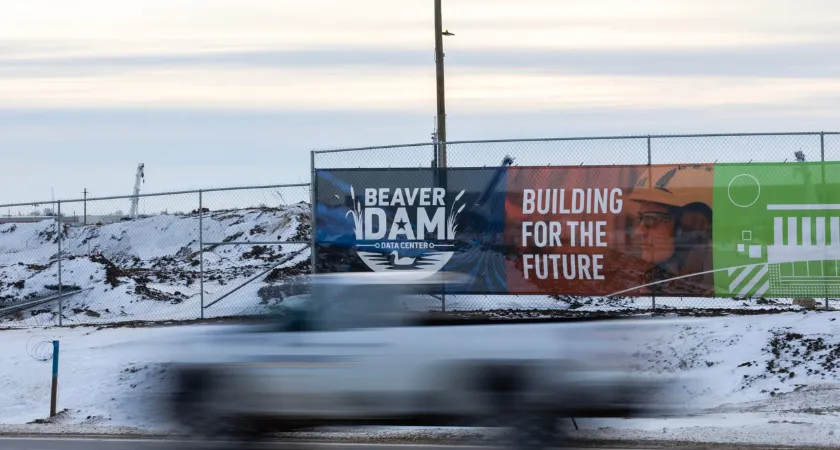
A striking example unfolded in Beaver Dam, a city of about 16,000 residents, where a $1 billion, 520-acre data center project tied to Meta moved forward largely out of sight. Officials acknowledged that confidentiality agreements were a central reason the development went unnoticed for so long.
“In a city that lists ‘communication matters’ atop its core values,” officials nonetheless “took steps to keep the project hidden for more than a year.”
Meta, the trillion-dollar parent company of Facebook and Instagram, is now building a data center campus covering more than 350 acres — a footprint comparable to 12 football fields — with construction expected to be completed in 2027.
Beaver Dam is not alone. Wisconsin Watch identified seven major data center projects statewide with a combined estimated value exceeding $57 billion. In four cases — Beaver Dam, Menomonie, Kenosha and Janesville — local governments signed nondisclosure agreements that limited what could be shared publicly. Secrecy also characterized the remaining three projects, even where formal NDAs were not used.
The lack of early disclosure has sparked concerns over public input on developments that significantly affect land use, energy systems, taxes, water resources and the environment.
“As soon as community leadership is contemplating, even entertaining it, I think they need to make the public aware,” said Prescott Balch, a retired tech executive advising residents in communities facing data center proposals. “Even if it makes it harder, that’s the right way to do it. And nobody is doing it that way.”
In Beaver Dam, the city’s economic development arm — the Beaver Dam Area Development Corp. — signed a nondisclosure agreement in December 2023 with a shell company called Balloonist LLC. The agreement referenced only a vague “project,” with no mention of Meta or a data center.
The NDA barred officials from revealing not just the details of discussions, but “the existence of the project” itself.
Trent Campbell, the organization’s leader, said the agreement was signed “very early, almost in the introductory period of that project,” adding that major developments often require “different levels of confidentiality for different purposes.”
Over the following year, city officials approved key steps behind closed doors, including a predevelopment agreement and the creation of a tax incremental financing district — actions that made no public reference to a data center.
Not until February 2025 did officials publicly acknowledge a “potential data center project,” and Meta’s involvement was not confirmed until December 2025.
“I know the opponents currently disagree, but I think the city acted in as transparent a way as they could,” Campbell said.
Public reaction was swift. Responding to Meta’s announcement on Facebook, one resident wrote: “We would have been honored to have the opportunity to decline this.”
Other communities followed similar paths. Menomonie signed an NDA in early 2024 and later altered zoning definitions to accommodate data centers before publicly announcing a $1.6 billion proposal. Kenosha entered an NDA with Microsoft months before reports identified the company’s involvement. Janesville signed an NDA after issuing a request for proposals for an $8 billion project.
Meanwhile, Port Washington and Mount Pleasant reported they had not signed NDAs, though residents in both communities have raised transparency concerns. In Port Washington, opposition to a proposed $15 billion data center has escalated to a mayoral recall effort.
NDAs are defended by economic development officials as necessary protections during early negotiations.
“If I’m a company considering making strategic investments, regardless of industry, I don’t want my competition to know where I’m going, what I’m doing, what pace I’m doing it at,” said Tricia Braun, executive director of the Wisconsin Data Center Coalition. “You want to make sure everything is buttoned up and bow tied before that type of information is put into the public realm.”
Even in communities without formal nondisclosure agreements, transparency has been questioned. In DeForest, residents opposed a proposed $12 billion data center by QTS Data Centers after learning that staff and developers had been communicating months before the public announcement.
“They will tell you, they just learned about this project in the last couple of weeks,” Village President Jane Cahill Wolfgram said at a November 2025 meeting.
Emails later showed village staff discussing annexation strategy as early as March 2025. Still, Wolfgram insisted, “As village president, I know of nothing that has been done behind the scenes.”
The state Department of Administration later concluded the annexation was not in the public interest, citing concerns over water and sewer capacity.
Growing public frustration has prompted lawmakers to act. State Rep. Clint Moses, R-Menomonie, recently introduced legislation that would prohibit nondisclosure agreements for data center proposals statewide.
“I’ve never seen such overwhelming opposition from all sides of the aisle,” Moses said. “The earlier the better.”
Similar efforts are underway in Florida, Michigan, New Jersey, Georgia and New York, reflecting a national reckoning over transparency in data center development.
Balch, who has helped organize opposition to data centers in his own community, said early disclosure is essential.
“At some point, you need to realize this is not a normal thing and we need to look out for the residents,” he said.
Originally reported by Tom Kertscher in WPR.