Wisconsin’s construction industry is poised for another year of high activity in 2026, driven by large-scale data center developments, major highway expansions, energy infrastructure upgrades and a growing slate of housing and mixed-use projects across the state.
After a busy 2025 that saw dozens of projects break ground, contractors and developers are preparing for billions of dollars in additional work as projects advance or enter new phases next year. Data centers remain the dominant investment category, reflecting national trends tied to artificial intelligence and cloud computing, while transportation, energy and residential construction continue to play a major role statewide.
.jpg)
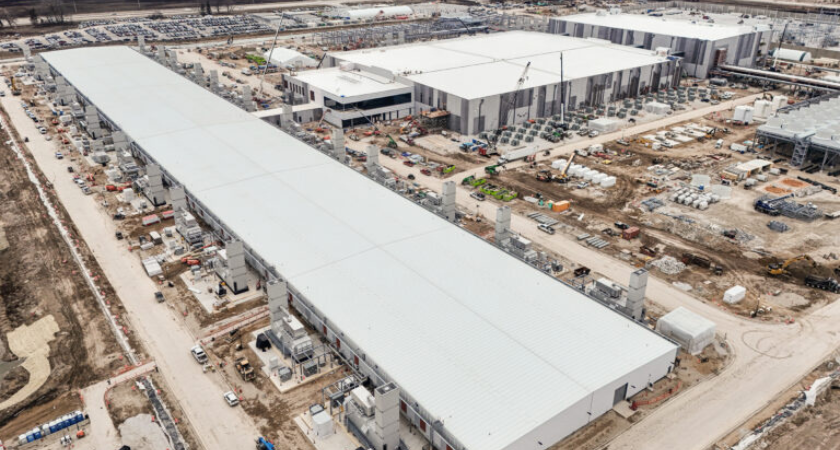
Large-scale data center construction continues to define Wisconsin’s commercial construction outlook. Microsoft’s Mount Pleasant campus remains one of the state’s largest projects, with the company investing approximately $7.3 billion across two facilities. Construction on the first $3.3 billion data center is nearing completion, with operations expected to begin in early 2026, while work continues on a second $4 billion advanced artificial intelligence facility announced in September.
Meta is also advancing a $1 billion, 500-acre data center campus in Beaver Dam. Built by Mortenson, the campus is expected to exceed 700,000 square feet and support more than 1,000 construction workers at peak activity, with operations beginning in 2027. The campus will be powered by 100% clean and renewable energy and designed to meet LEED Gold certification standards.
In Port Washington, Vantage Data Centers is leading development of the “Lighthouse” campus, a 2,000-acre artificial intelligence-focused project backed by OpenAI and Oracle. The project will deliver up to one gigawatt of AI capacity and employ more than 4,000 construction workers at peak. The campus is expected to be completed in 2028 and will rely entirely on local union labor.
Transportation infrastructure will remain a major source of construction activity in 2026. The $1.74 billion Interstate 94 East-West project in Milwaukee County is moving into its most intensive phase, expanding a 3.5-mile stretch of highway and replacing aging interchanges originally built in the 1960s.
In northeast Wisconsin, the $1.2 billion reconstruction of Interstate 41 between Oshkosh and De Pere is also advancing. The project includes widening the highway, rebuilding interchanges and improving overpasses along roughly 23 miles of roadway.
In Madison, construction continues on John Nolen Drive, a multi-year project that will reconstruct the causeway and six bridges while calming traffic and enhancing access to the Lake Monona waterfront.
.jpg)
Wisconsin’s energy sector will see significant construction activity in 2026 as utilities work to meet rising demand from data centers and manufacturing facilities. In Kenosha County, construction is expected to ramp up on the Paris Natural Gas Plant, a $300 million project featuring seven fast-start reciprocating internal combustion engines.
At Oak Creek, We Energies is converting its coal-fired power plant to natural gas, a project with a combined cost exceeding $700 million when paired with a liquefied natural gas storage facility. Together, the Paris and Oak Creek projects are expected to employ as many as 5,000 workers over several years.
Commercial real estate redevelopment and housing construction remain active across Wisconsin’s urban centers. In downtown Milwaukee, Northwestern Mutual’s $500 million North Office renovation is nearing completion, transforming a former office tower into a modern workspace for more than 1,000 employees.
Nearby, developers plan to convert the former 100 East office building into 373 apartments, including 75 units affordable to households earning up to 100% of the area median income. The $165 million redevelopment is expected to wrap up in 2027 or early 2028.
Madison’s State Street Campus Garage project combines a rebuilt parking structure with a 12-story student housing tower, while Mortenson continues work on the $240 million Nature and Culture Museum of Wisconsin, which is slated to open in early 2027.
Suburban markets are also seeing sustained development. Pabst Farms in Waukesha County continues to expand as a master-planned community with new mixed-use, health care and retail projects. In Bayside, the OneNorth development is entering a new phase that includes additional apartments, a grocery store and a health and fitness center.
“From the outset, our vision for OneNorth has been to create a vibrant, mixed use destination that feels authentic to the community, walkable, social and easy for everyday life,” said Scott Yauck, president and CEO of Cobalt Partners, in a statement. “This next phase brings OneNorth’s promise into even sharper focus: an elevated living and working environment surrounded by exceptional amenities that people use on a daily basis.”
With billions of dollars in investment spanning technology, infrastructure, energy and housing, Wisconsin’s construction pipeline for 2026 reflects both strong demand and long-term economic confidence. As these projects move forward, they are expected to generate thousands of construction jobs while reshaping communities across the state.
Originally reported by Ethan Duran in The Daily Reporter.