Early coordination among owners, designers, contractors and trade partners can influence construction costs, schedules, safety and operational performance, particularly on technically complex projects.
DPR Construction has outlined lessons from several New Jersey projects, emphasizing the importance of involving procurement, fabrication, installation and operational specialists before major design and construction decisions are finalized.
The approach focuses on aligning project delivery strategies with owner objectives, evaluating construction constraints early and maintaining continuity between planning and field execution.
At an active life sciences campus, the project team needed to expand production capacity without disrupting ongoing operations. The work also addressed long-term campus resilience and sustainability requirements.
Before vertical construction began, critical utilities were relocated beneath planned building footprints. Integrated 3D and 4D models were used to assess construction sequencing, material movement, access routes and campus circulation.
The program delivered three buildings totaling more than 157,000 square feet, involved removing more than 50,000 cubic yards of soil and included the installation of 60 geothermal wells. Campus operations continued throughout the work.
A separate project at the Biologics Development Center in Rahway involved early collaboration with a structural steel specialist to evaluate a modular steel approach.
Fabrication requirements, transportation limitations, safety considerations and erection sequencing were reviewed before the design was finalized. The selected approach resulted in $500,000 in cost savings and a 45% reduction in the building structure schedule compared with traditional methods.
DPR also applied offsite fabrication to address space limitations and trade congestion during a mission-critical suite build-out.
Approximately 3,000 linear feet of soffit production was transferred to an offsite fabrication environment. Custom jigs and standardized details supported production consistency, while labelled components were delivered according to installation sequences.
The soffits were manufactured in six days without safety incidents.
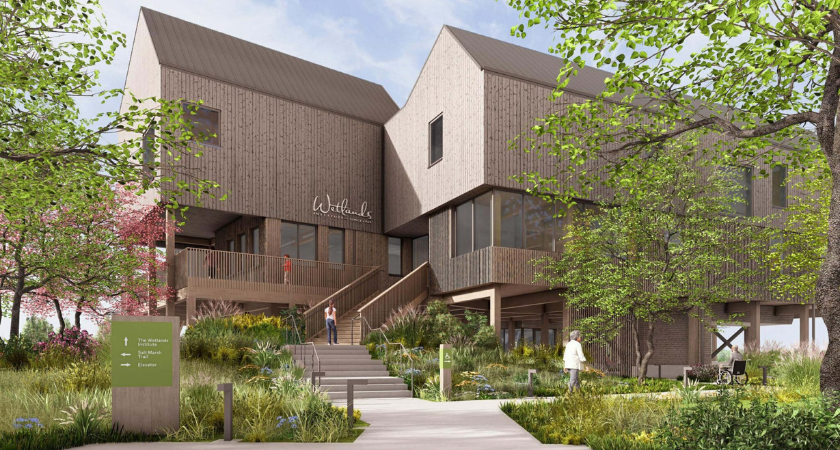
On an 80,000-square-foot corporate headquarters project in Mercer County, DPR's self-perform team used virtual design and construction shop drawings, multiple mock-ups and custom fabrication jigs to coordinate the installation of more than 30,000 square feet of wood siding comprising over 1,500 boards.
The process included predrilling boards to limit splintering and updating shop drawings as dimensions changed during trade coordination. These measures helped maintain installation accuracy and architectural design requirements.
The New Jersey projects illustrate how early technical input and coordination across design, procurement and construction can address project constraints before they affect field operations.
For owners and general contractors, the examples highlight the value of evaluating prefabrication, digital modelling and self-perform capabilities against specific project requirements rather than adopting them as standalone strategies.
Maintaining communication between planning teams and field personnel can also help protect design intent, improve installation coordination and support more predictable project delivery.
Source: DPR Construction.