A major redevelopment initiative in Grand Rapids is set to convert a long-standing industrial property into a mixed-use neighbourhood with housing, commercial space and employment opportunities.
The 13-acre-plus site at 655 Godfrey Avenue SW has a history of industrial use dating to the 1890s, including furniture manufacturing, spring and wire production, warehousing and railroad operations. Environmental assessments identified petroleum, metals and chlorinated solvents in the soil and groundwater.
To support site remediation, the Michigan Department of Environment, Great Lakes, and Energy (EGLE) awarded a $1 million Brownfield Redevelopment Grant. The funding will support additional environmental assessments, contaminated soil removal and installation of a vapor venting system.
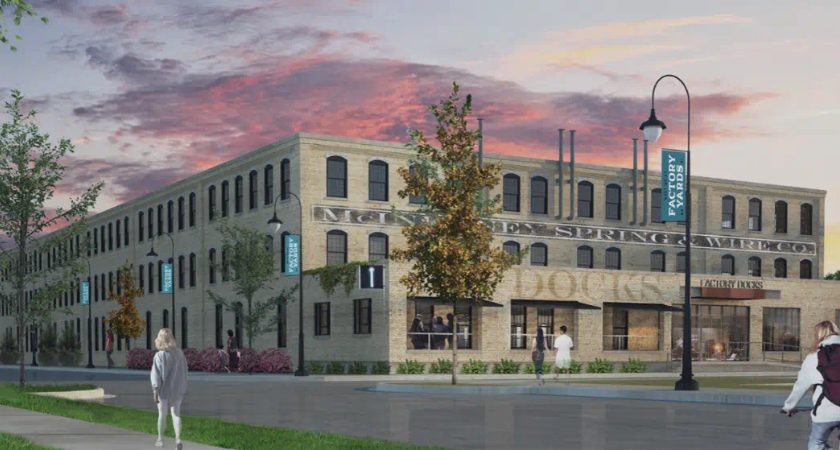
The first phase of the $146 million Factory Yards project will focus on renovating three existing industrial buildings. The planned redevelopment includes a three-storey residential building, a three-storey mixed-use building with housing and commercial space, and a hospitality building. An outdoor plaza is also included.
The initial phase is expected to create at least 200 rental units, with affordability provisions:
The development is also expected to provide 31,600 square feet of commercial space, 100 full-time jobs and 100 part-time jobs.
The project has received additional public-sector support. The City of Grand Rapids is backing the redevelopment through an Obsolete Property Rehabilitation Act tax credit estimated at $8.2 million over 12 years. The Michigan Economic Development Corporation has also approved $103 million in Transformational Brownfield Plan funding.
Beyond the buildings, an easement through the southern portion of the property will connect the Oxford Trail to Roberto Clemente Park. The connection is intended to improve pedestrian access and integrate the redeveloped site with the surrounding community.
Factory Yards combines environmental remediation with housing, commercial development and public-realm improvements. The project is expected to help address contaminated industrial land while supporting new housing supply, employment and further investment along the Grand River corridor. First-phase construction is expected to finish in summer 2027.
Source: Michigan Govt.