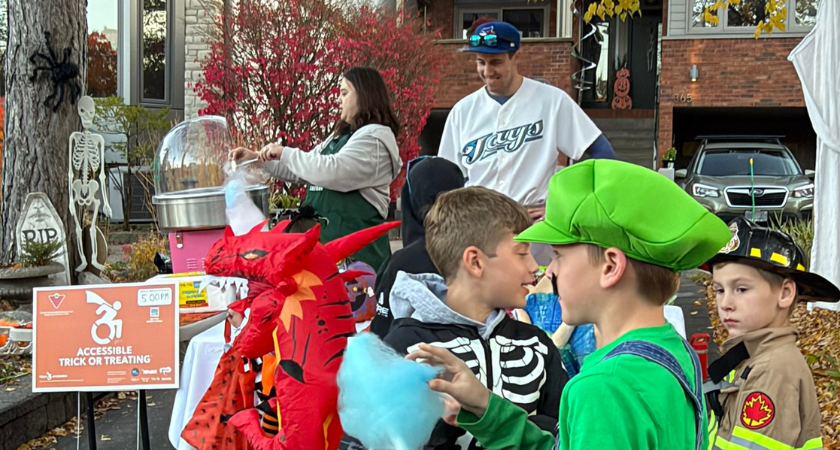
Creating accessible neighbourhood experiences was the focus of a Halloween community event in Toronto, where Greenwin Cares joined Treat Accessibly for Halloween on Erskine on October 31.
Treat Accessibly encourages residents to make trick-or-treating more welcoming for children with disabilities. Traditional Halloween activities can present barriers, including stairs and sensory challenges, that may prevent some children from participating alongside their peers.
The initiative encourages homeowners to establish treat stations in accessible locations and display free lawn signs to let families know they are welcome. It also promotes sensory-friendly experiences and allergy-safe treats.
These measures are intended to reduce common barriers and make neighbourhood Halloween celebrations more accessible to children and their families.
Greenwin Cares Director Lily W. and Community Project Specialist Melissa G. participated in the Erskine event by setting up a cotton candy machine outside a resident's home and distributing treats to children in the neighbourhood.
The event was supported by Greenwin's affordable housing and social impact leadership, which helped connect the team with the initiative. A participating resident also provided an accessible trick-or-treating space and welcomed the Greenwin Cares team.
The event included an example of how sharing information about accessible Halloween activities can encourage families to explore new community experiences. One child, who had previously visited a neighbourhood candy slide each Halloween, learned about a participating street nearby on Keewatin and visited it during this year's celebrations.
Greenwin Cares' participation highlights the role of property management organisations and residents in supporting inclusive community activities. Accessible treat stations, sensory-friendly arrangements and allergy-aware options offer practical ways to help more children participate in neighbourhood celebrations.
For Canada's residential property sector, initiatives such as Treat Accessibly also demonstrate how local community engagement can extend beyond housing services to support more welcoming neighbourhood environments.
Source: Greenwin.