Dallas Fort Worth International Airport's planned Terminal F expansion will require modifications to existing transportation infrastructure while maintaining passenger connections across the active airport. The project highlights the engineering and construction coordination needed to increase terminal capacity without interrupting essential airport operations.
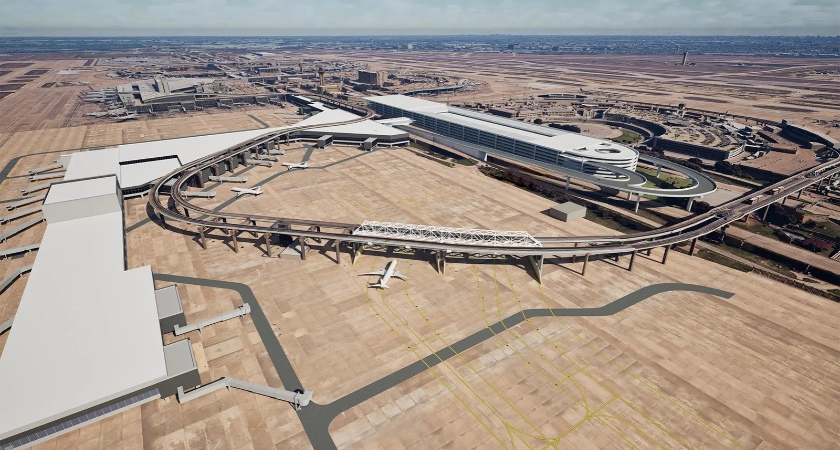
Jacobs has been selected by Dallas Fort Worth International Airport (DFW) to lead the design of modifications to the airport's Skylink automated light rail system. The work forms part of the Terminal F Expansion Project and will accommodate infrastructure requirements associated with up to 16 additional gates.
DFW serves more than 87 million passengers annually and relies on Skylink to connect passengers between its terminals. Maintaining the system's operation during construction is a central requirement of the modifications.
The design scope includes alterations to existing Skylink guideway bridge spans, requiring coordination of structural engineering, bridge modifications and construction activities within an operating airport environment.
The planned modifications will accommodate two parallel taxi lanes beneath the light rail infrastructure. These lanes will connect the future Terminal F facilities with DFW's existing taxiway network.
Jacobs will work alongside the Innovation Next+ construction joint venture to develop design solutions that address construction sequencing, operational requirements and safety. The approach is intended to coordinate construction activities while preserving Skylink service throughout the work.
The project requires careful planning because modifications to existing structural infrastructure must be integrated with airport operations and the surrounding airside transportation network.
The design strategy also focuses on extending the useful life of existing infrastructure while limiting disruption to airport operations and passenger movement.
The DFW development demonstrates the complexity of expanding major airport facilities where existing transportation systems must remain operational. Integrating new terminal capacity with established airside infrastructure requires coordination among designers, construction partners and airport operators.
For construction stakeholders, the project highlights the importance of design-build collaboration, structural engineering and phased construction planning when working in active transportation facilities.
Jacobs' selection also adds another airport infrastructure assignment to its transportation portfolio, with the design work supporting DFW's planned expansion while retaining the functionality of its existing automated passenger transportation system.
Source: jacobs.