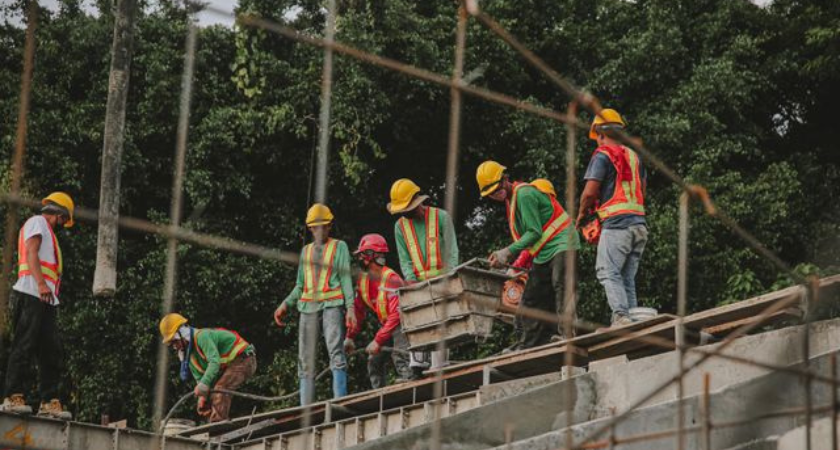
The Saskatchewan Heavy Construction Association (SHCA) will bring heavy construction professionals together in Regina in December for two days of technical presentations, industry discussions and trade show activities focused on improving construction practices and infrastructure delivery.
The 2026 Infrastructure Summit and Trade Show is scheduled for Dec. 9-10 at the Delta Hotels by Marriott. The programme will cover several issues affecting the sector, including workplace safety, construction technology, pavement durability and infrastructure planning.
Kevin Rempel will deliver the opening keynote, titled “The Safety Shift – Leading Without Ego.” His presentation will examine how personal reactions, assumptions and fear can influence workplace decisions, with an emphasis on clearer leadership and greater accountability.
Roadway durability will also feature prominently. Haithem Soliman, PhD, will discuss winter-resistant roadways, while Kamal Hossain, PhD, will examine how climate change affects pavement performance. The Asphalt Institute will lead a session on understanding pavement distress, helping attendees identify and better understand pavement deterioration.
Brad Belvin of SAKAI will present “Compacting with Oscillation: Basics, Benefits and Better Results.” The session will explain how oscillatory compaction differs from conventional vibration and explore its potential effects on productivity, pavement density and surface smoothness across different asphalt mixes and lift thicknesses.
Infrastructure planning and project delivery will be addressed through sessions led by Bryon Willoughby. Topics will include using short-term schedules to reduce project timelines and costs, as well as approaches to identifying and managing problem projects.
The summit provides Saskatchewan's heavy construction industry with an opportunity to exchange technical knowledge and examine practical approaches to recurring challenges. Discussions on pavement performance, compaction methods, safety leadership and project scheduling could help contractors and infrastructure stakeholders improve construction quality, manage risks and deliver projects more efficiently.
Source: Sask Heavy.