Walk any expo hall this year, and you'll see "AI" on nearly every booth. Most contractors feel two things at once. Curiosity about what it could do. And fatigue from hearing about it nonstop.
Kathryn Schneider helps contractors cut through that noise. She is the Director of Consulting at Forvis Mazars, a global professional services and CPA firm. Her focus is the technology side of construction: helping contractors get more out of the tech stack they already have, take advantage of automation and AI, and do more with less.
She has spent most of her career in construction technology, and she has been deeply involved in CFMA, including serving on a chapter board. Her message is practical, not hype: AI only works as well as the data and the culture underneath it.
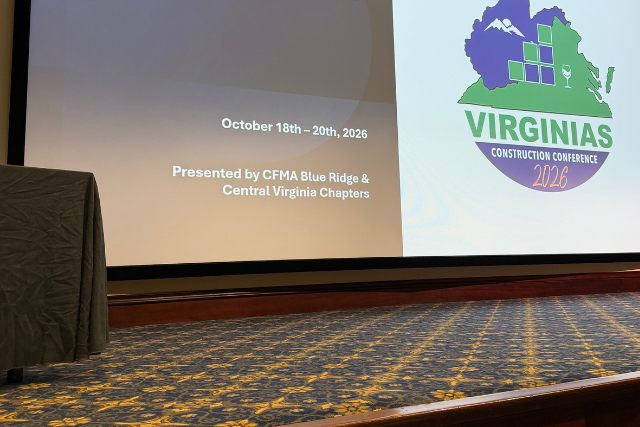
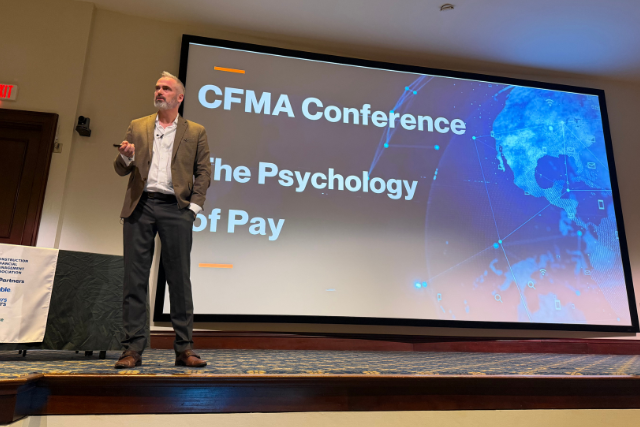
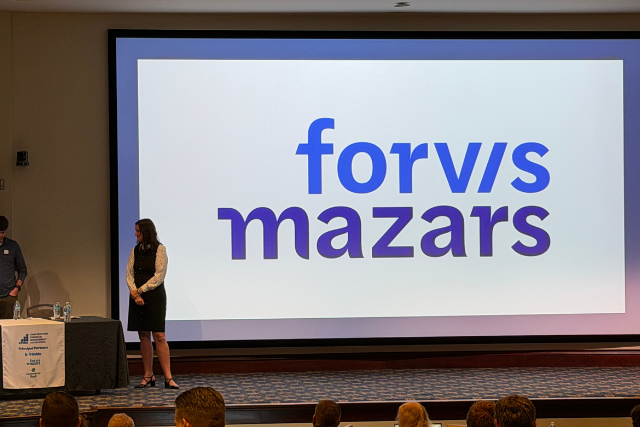
On October 19, at the CFMA Virginia conference in Roanoke, Kathryn took the stage for the last session of the day: The Contractor's AI Playbook. Alongside a contractor CFO, she walked through how firms are adopting AI, putting governance in place, and building the culture that helps employees embrace new tools.
At the conference, Caroline Raffetto, the editor of Constructionowners.com, sat down with Kathryn for a live, in-person episode of CO Pod to talk about where AI is actually making a difference and what contractors need to get right first.
Caroline: Is this your first time at the conference? What do you think so far?
Kathryn Schneider: It's my first time at this conference and my first time in Roanoke. It's a beautiful hotel and a beautiful place. The conference has been excellent.
I loved the energy this morning, and some of the sessions on softer skills. In construction, we tend to lean toward the harder skills, so that's been a welcome change. There's been a lot of great networking, too.
Caroline: Tell me a little about you, what you do, and how you help contractors.
Kathryn Schneider: I'm in business consulting at Forvis Mazars. We're a global CPA and professional services firm. My focus is the technology side of construction.
I help contractors navigate what they already have and optimize their tech stack. Then I help them figure out how to take advantage of automation and AI, and keep doing more with less. That's been my focus for the last few years.
Caroline: That's such a hot topic right now. Your session was the last of the day, and everyone was actually paying attention. Tell me about it.
Kathryn Schneider: I think we're all a little exhausted by the concept of AI. What made our session great was having a CFO on stage with me. We looked at it through their lens. How are they starting to adopt it? How are they making sure the right governance is in place?
You also need the right culture. You need an innovation culture to help your employees embrace these tools. Then we looked at where it's really making a difference, whether that's preconstruction, executing on jobs, or the back office in finance and HR.
It's taking some of that low-value work off people's hands so they can focus more strategically.
Caroline: Every time I walk the expo hall, I see AI plastered on every company out there. Where are you seeing AI really make a difference for contractors?
Kathryn Schneider: Initially, it's been focused on personal productivity. A lot of people get started with something like, "I have to prepare that board presentation. How can AI get me started so I can fill in the gaps?" Or, "How do I manage my schedule better and make sure nothing falls through the cracks?"
Now we're seeing a big shift toward agents, where we allow AI to do work on our behalf. Think about construction workflows like AP or lien waivers. There's a lot of paper passing back and forth between subcontractors and GCs, a lot of emails, a lot of digging out of your inbox. Leveraging AI there can be huge.
Someone brought up another great use case. One contractor built an HR agent. They have a very diverse workforce spread across job sites all over the country, and people often have basic questions. So they built an agent loaded with their policies and procedures. Now employees just ask it questions instead of tracking down HR.
Caroline: I feel like I need that. But there's so much technology out there. What happens when that tech doesn't talk to each other?
Kathryn Schneider: Great point. A lot of this is grounded in data and where that data lives. If you want to use the power of AI and these agents, you have to get a hold of your data and decide what you'll allow AI to access.
We're seeing many contractors move toward a data warehouse or data lake. That way, they control where the data lives and can secure it. Going back to that HR agent, they made sure everything they put into it wasn't confidential. They weren't exposing anything, so they were comfortable letting employees access it.
Get your data in order. It's not a fun task. When we started down this journey at Forvis Mazars, we spent about a year getting our data where it needed to be before we could put a large language model on top of it.
Then I always say, start small. Don't try to solve your biggest problem first. Find something small that touches only a little data. Tackle that, and then build from there.
Caroline: Starting small is great advice for owners and leaders managing change, whether it's getting crews to clock in on their phones or use AI. We've seen people be hesitant.
Kathryn Schneider: A lot of it comes down to the culture of the firm and the owners. You set the tone at the top, but what actually makes things happen is the boots on the ground. So how do you build an innovation culture and get people excited?
I have a great example. One construction owner holds a 20-minute toolbox talk every Friday, all focused on AI. People from every part of the firm share what they did that week. It builds energy. It builds innovation. Culture is a huge piece of success.
Caroline: It's so fun seeing a people industry like construction become more technologically advanced. We've never seen this before. It's the new frontier.
Kathryn Schneider: Moving to the cloud 15 or 20 years ago was the last big shift. Suddenly you weren't tethered to your desk. Technology let people work remotely and from the job site while still accessing information.
Now AI is taking that further. A foreman in the field can log a daily report through a phone conversation. You can capture images of your job site and, sitting back at the office, see everything those images captured. It's amazing what it's been able to do.
Caroline: That brings it back to your point about data. Get the data in order first, then use AI to improve it and make decisions.
Kathryn Schneider: Exactly. Governance is the foundation. Data is next. Then look at what you're trying to do. Are you trying to streamline a process?
Figure out the outcome first, before you figure out what piece of technology you're going to use and how you're going to do it.
Caroline: Anything else you'd like to share from your session or the conference?
Kathryn Schneider: Don't be afraid. Most people start in their personal lives. For me, it was travel planning. And seventh-grade math was no joke, so ChatGPT helped me help my son. Start small, fail fast, and take it on.
I talk about this a lot, and every three months it's amazing how fast things are moving, especially in construction.
Most AI projects don't stall because the tool is bad. They stall because the data is scattered, the systems don't talk, and the team was never brought along. Kathryn's point is that the technology is the last decision, not the first.
That's why the order matters. Start with governance. Then get your data in order: know where it lives, secure it, and decide what AI is allowed to see. At Forvis Mazars, that groundwork took about a year before a large language model ever touched it. Only then pick the outcome you want, and choose the tool that gets you there.
Then start small. Pick one narrow problem that touches a small slice of data, like a lien waiver workflow, AP inbox, or an HR question bot built only on non-confidential policies. Win there, then build bigger.
And don't skip the culture. Leadership sets the tone, but the boots on the ground make it real. A 20-minute AI toolbox talk every Friday, where anyone can share what they tried that week, does more for adoption than any rollout memo.
Don't be afraid of it. Try it in your personal life, start small, and fail fast. The industry is moving every three months, and the contractors who start now will be the ones ready for what comes next.
Kathryn Schneider works in business consulting at Forvis Mazars, where she helps construction companies optimize their tech stack and adopt automation and AI. A longtime construction technology professional and active CFMA member, Kathryn speaks on AI adoption, data governance, and building an innovation culture in construction.