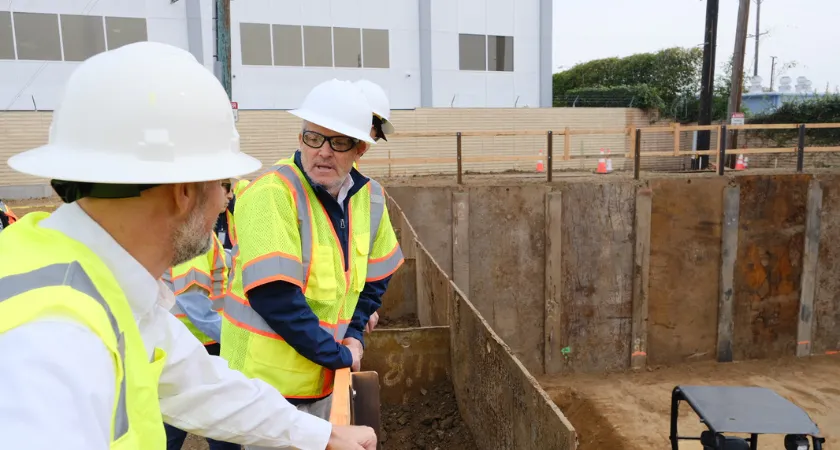
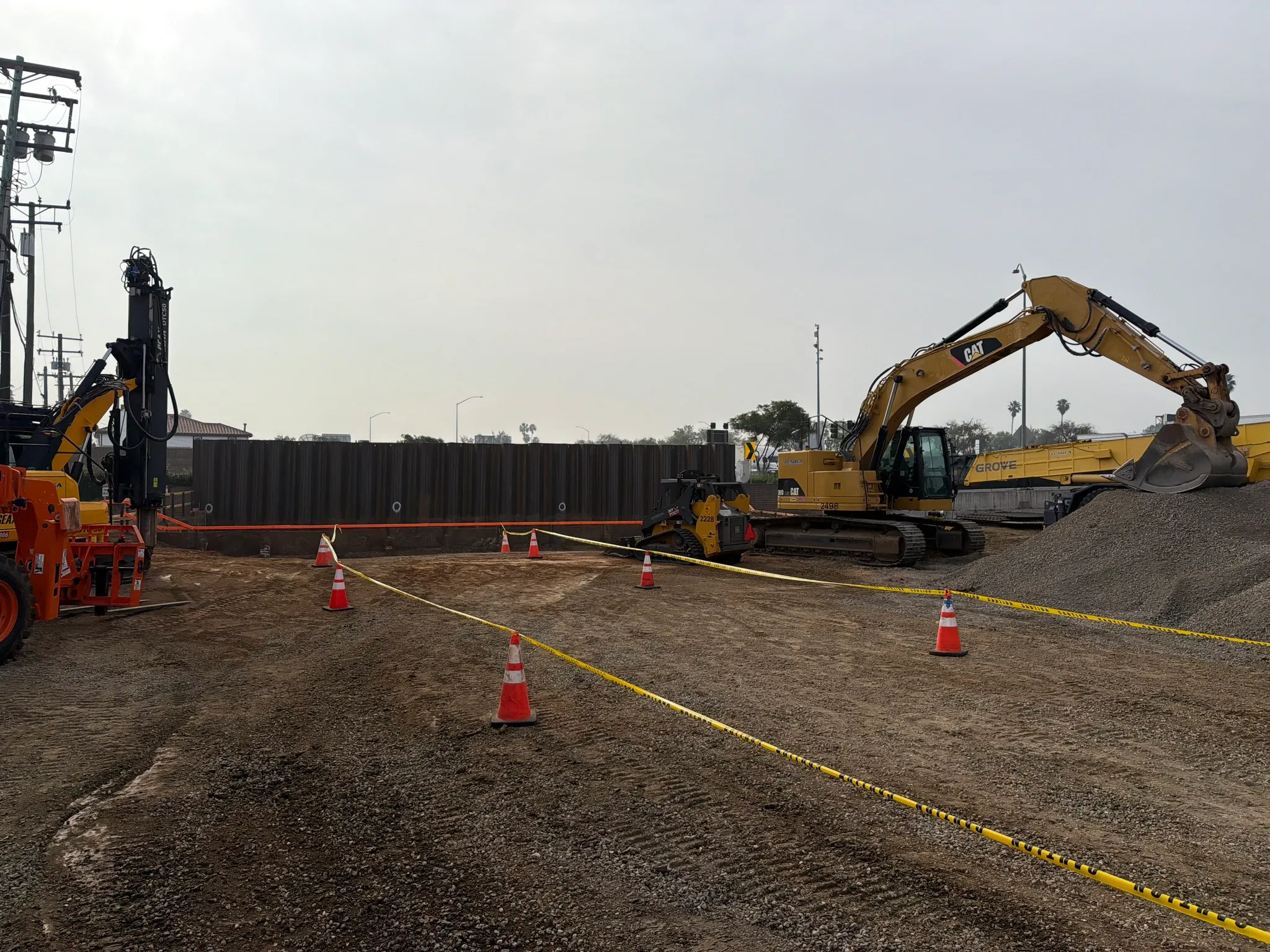
Officials from Los Angeles and Ventura counties gathered this week to mark the start of construction on a $280 million water infrastructure project aimed at protecting Southern California communities from future drought emergencies.
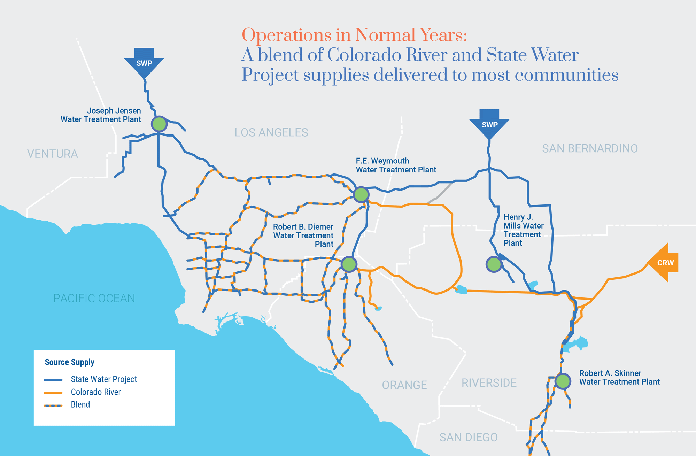
The Sepulveda Feeder Pump Stations Project will enable the Metropolitan Water District of Southern California to reverse the direction of water flows during extreme dry periods. The system will allow imported water from the Colorado River and Diamond Valley Lake to be sent into northern Los Angeles County and southern Ventura County—areas that rely heavily on supplies from the State Water Project in the northern Sierra Nevada.
During the 2020–2022 drought, the driest three-year stretch in California history, deliveries from the State Water Project were sharply curtailed. Many communities were left without enough water to meet typical demand, forcing residents and businesses to adopt strict conservation measures.
“Metropolitan had never before imposed such strong reductions in water use on a portion of our service area,” Metropolitan General Manager Shivaji Deshmukh said. “It was an unprecedented situation sparked by the hotter temperatures and more extreme droughts we are facing as the climate changes.”
The project involves building two new pump stations that will push water uphill through the existing Sepulveda Feeder pipeline, reversing its traditional gravity-based flow when conditions require. Diamond Valley Lake, Southern California’s largest reservoir, will serve as a critical source during emergencies.
Once completed—targeted for early 2029—the system will be capable of delivering up to 22,000 acre-feet of additional water each year to communities dependent on the State Water Project. One acre-foot equals about 326,000 gallons, enough to supply roughly three households for a year. Designers are ensuring the facilities can be expanded in the future with board approval.
“Under normal circumstances, our system largely relies on gravity to deliver water,” Deshmukh said. “Now, we will have the ability to pump more water uphill when needed.”
Metropolitan is using a progressive design-build delivery method for the project, allowing a single team to manage both design and construction. The agency said the approach encourages closer collaboration, reduces risk and accelerates schedules. It is the first time Metropolitan has used this model since receiving legislative authority to adopt alternative contracting methods.
The Sepulveda project is part of a broader program to modernize Southern California’s water network. Four additional infrastructure efforts are underway to move more water from Diamond Valley Lake and the Colorado River into the Inland Empire and San Gabriel Valley. Those companion projects are expected to be finished in 2027.
“When all of these projects are completed, they will deliver water and reliability,” Metropolitan board Vice Chair Nancy Sutley said. “They are a key part of Metropolitan’s climate adaptation strategy.”
Water managers say the new facilities are a direct response to the vulnerabilities exposed during the recent drought. Because the affected regions depend largely on northern California supplies, any disruption in the State Water Project can quickly create shortages.
By adding the ability to draw on the Colorado River and local storage, Metropolitan hopes to prevent a repeat of the emergency restrictions that affected millions of residents earlier this decade. Officials also view the investment as essential preparation for a future marked by more volatile weather patterns and shrinking snowpack.
Construction activity will continue through the rest of the decade, with periodic community updates on traffic, noise and environmental safeguards.
Originally reported by CNN Staff Writer in CNN.