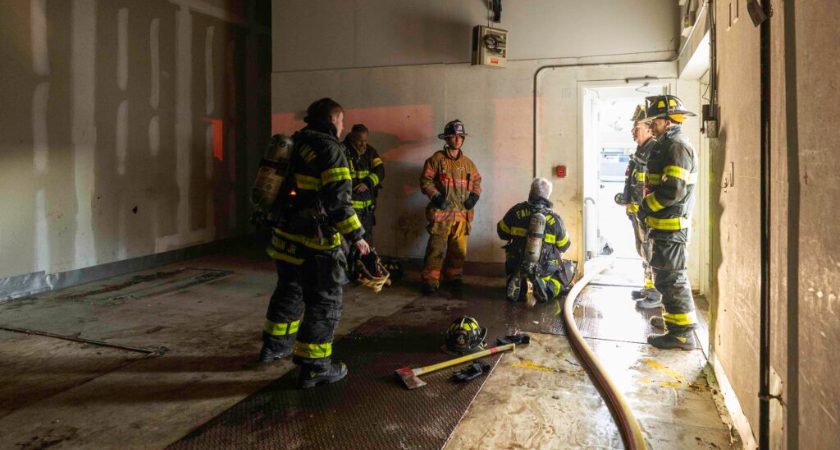
ST. PETERSBURG, Fla. — In a race against time following hurricane devastation, AECOM Hunt has completed a $60 million reconstruction of Tropicana Field’s roof, restoring the stadium in time for the Tampa Bay Rays’ 2026 home opener.
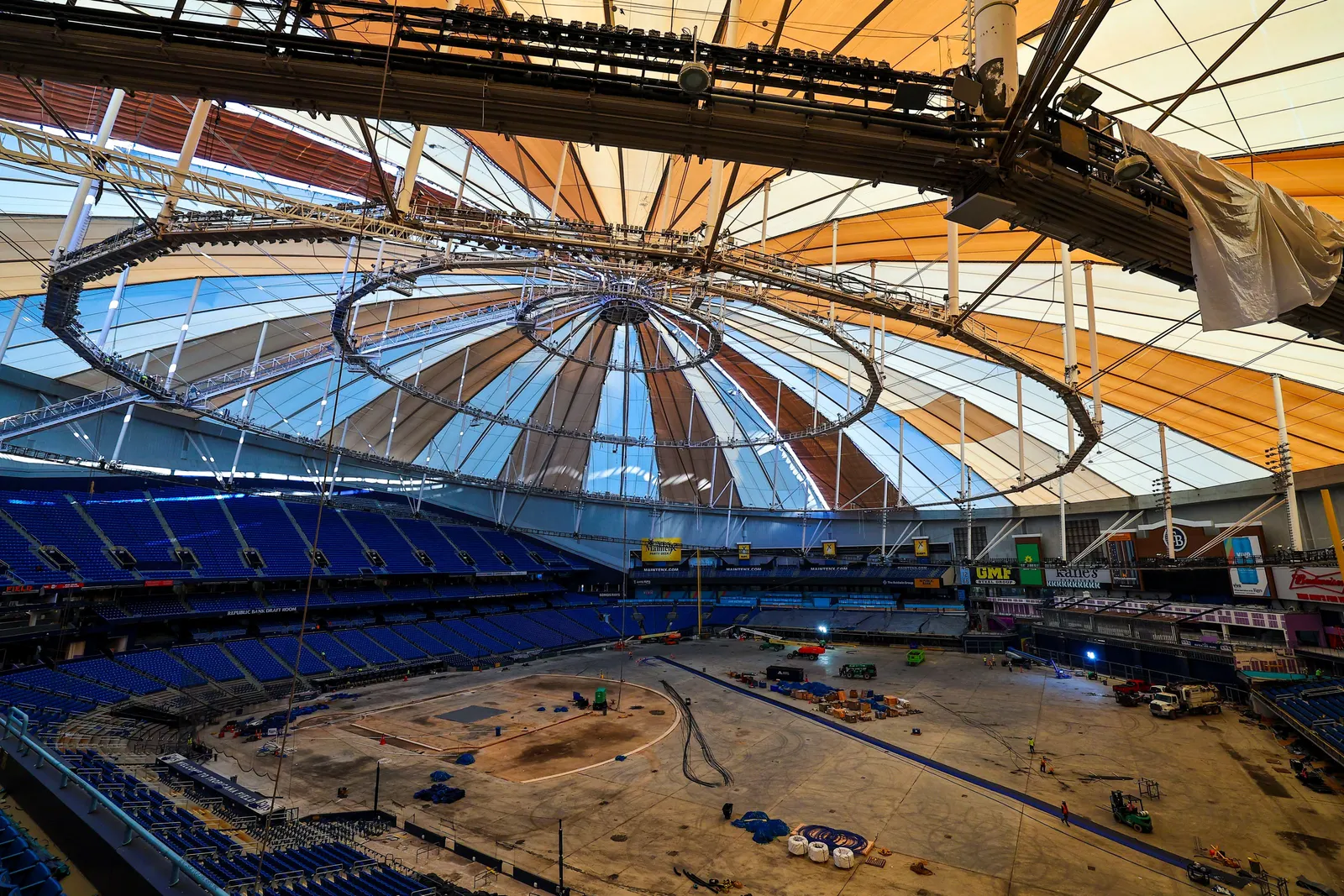
Within days of Hurricane Milton tearing through the region in October 2024, the contractor mobilized teams and resources to assess and begin rebuilding the damaged ballpark. Kenneth Johnson, executive vice president of sports for AECOM Hunt, described the immediate aftermath in stark terms.
“It looked like an atomic bomb went off,” Johnson said.
By the start of the 2026 season, however, the Rays are set to return to a fully restored stadium, thanks to a complex international construction effort that spanned multiple continents and required precise coordination under a tight deadline.
The roof replacement project required extensive collaboration across North America, Europe and Asia. AECOM Hunt, alongside local partner Hennessey Construction, procured approximately 400,000 square feet of fiberglass fabric panels coated in polytetrafluoroethylene. The material is engineered to withstand hurricane-force winds of up to 165 mph.
Manufactured in Germany by Verseidag-Indutex GmbH, the panels were transported to China, where crews assembled and stitched the massive sections to align with the stadium’s existing cable-supported roof system. The finished components were then shipped to Florida for installation.
Crews began placing the new roof in August 2025 and completed the work by November, allowing sufficient time for inspections and approvals ahead of opening day.
The scale and logistics of the project required careful planning and execution, particularly given the size of the panels, which measured up to 360 feet in length.
One of the project’s most significant challenges was ensuring the new roof aligned precisely with the stadium’s original structural geometry. Fortunately, AECOM Hunt’s historical involvement with Tropicana Field proved invaluable.
Operating as Huber, Hunt & Nichols in the 1990s before forming AECOM Hunt in 2012, the contractor had access to original design documents.
“I think the biggest challenge from the roof standpoint was doing damage assessment, making sure that the geometry of the roof stayed intact,” Johnson said. “We were able to find the original engineered drawings that we did eons ago in the nineties, they were still on site.”
To verify structural integrity and ensure accuracy, the team used drone technology and 3D scanning to map the existing cable system and confirm measurements before fabrication and installation.
Beyond the roof itself, the project included repairs to water-damaged areas and upgrades to fan amenities, enhancing the overall stadium experience.
“We have major league baseball approval this week. Everybody’s good to go,” Johnson said. “Matter of fact, the fans today will walk in the stadium. It’s the best it’s looked in 30 years because we did a lot of improvements along the way too.”
The successful completion of the project comes after a period of uncertainty for the Rays. Storm-related funding delays had previously disrupted plans for a new stadium, though the team has since unveiled a proposed $2.3 billion ballpark targeted for completion by the 2029 season.
In the meantime, the restored Tropicana Field ensures the Rays have a viable home venue through at least 2028, fulfilling the city’s commitment to the team while showcasing the construction industry’s ability to respond rapidly to disaster recovery challenges.
Originally reported by Zachary Phillips, Editor in Construction Dive.