


On many construction sites, roof inspections still rely on manual walkthroughs, scheduled access, and limited visual documentation. While this approach has worked for decades, it often creates gaps in visibility—especially as projects become larger, timelines tighter, and coordination more complex.
At the same time, expectations are rising. Project stakeholders increasingly demand real-time updates, stronger safety practices, and tighter cost control. In North America, where large-scale commercial and industrial construction projects are common, maintaining consistent oversight across expansive sites has become a growing challenge.
This is where drone roof inspections are changing how construction teams approach oversight. By enabling faster, safer, and more detailed site assessments, drones provide a practical way to improve visibility and decision-making throughout a project lifecycle.
This article explores how drone-based inspections are reshaping construction oversight and risk management, supported by industry data, practical applications, and emerging trends.
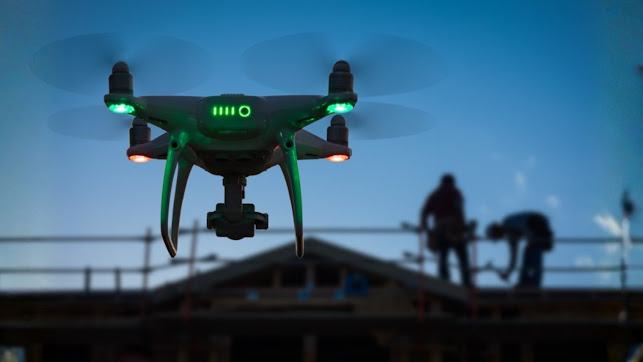
The Growing Complexity of Construction Oversight
Construction oversight today involves far more than periodic site supervision. You are often managing multiple variables at once, including:
- Multi-phase project timelines across distributed teams
- Increasing regulatory and safety compliance requirements
- Budget constraints and cost control pressures
- Real-time reporting expectations from clients and stakeholders
Roof areas introduce additional complexity. They are:
- Difficult to access without specialized equipment
- Associated with higher safety risks during manual inspections
- Often inspected less frequently due to logistical challenges
As a result, small issues—such as membrane damage, drainage problems, or installation inconsistencies—can go unnoticed until they escalate into costly repairs.
Improving visibility into these high-risk areas is essential for maintaining control over project outcomes.
What Drone Roof Inspections Actually Deliver
Drone roof inspections use unmanned aerial systems (UAS), commonly known as drones, equipped with high-resolution cameras and sensors to capture detailed imagery of roof structures.
Unlike traditional methods, these inspections provide:
High-Frequency Data Collection
Drones allow you to inspect roofs more frequently without interrupting ongoing work. This supports continuous oversight rather than periodic checks.
High-Resolution Visual Data
Captured imagery provides detailed visibility into surface conditions, material placement, and installation quality.
Scalable Coverage
Large or complex roof areas can be assessed quickly, regardless of accessibility constraints.
Digital Documentation
Inspection data is stored digitally, making it easy to review, compare over time, and share across teams.
These capabilities shift inspections from being occasional and reactive to continuous and data-driven. This transition reflects the broader role of drone construction monitoring in modern projects, where consistent aerial data collection supports ongoing visibility and more informed decision-making.
Enhancing Construction Oversight Through Better Visibility

One of the most immediate benefits of drone-based inspections is improved site visibility.
Real-Time Progress Monitoring
You can track installation progress without needing physical access to every area. This is particularly useful on large commercial sites where roof areas span thousands of square meters.
Improved Coordination Across Teams
Aerial data can be shared with contractors, engineers, and stakeholders, ensuring alignment on current site conditions.
Reduced Information Gaps
Traditional reporting often relies on written notes and limited photographs. Drone imagery provides a more comprehensive and objective view of the site.
According to industry research, improved site visibility can significantly reduce miscommunication and coordination errors, which are among the leading causes of project delays.
Early Risk Detection and Mitigation
Risk management is central to construction oversight. Delays, defects, and safety incidents can all impact timelines and budgets.
Drone inspections support early risk detection in several ways:
- Identifying installation errors such as misaligned materials or incomplete sealing
- Detecting drainage issues including water pooling that can compromise structural integrity
- Monitoring structural indicators like cracks or deformations
- Reducing safety risks by limiting the need for manual roof access
Studies suggest that early detection of construction defects can reduce rework costs by up to 30%, highlighting the value of timely inspections.
By identifying issues earlier, you can take corrective action before problems escalate—improving both safety and cost outcomes.
Data-Driven Decision Making in Construction Projects
Construction is increasingly becoming a data-driven industry. Drone inspections contribute valuable datasets that support more informed decisions.
Objective Site Records
Drone imagery provides unbiased documentation that can be used for audits, compliance checks, and dispute resolution.
Trend Analysis Over Time
Repeated inspections allow you to track changes and identify patterns, such as recurring defects or gradual wear.
Improved Reporting Accuracy
Visual data enhances reporting quality, making it easier to communicate findings to stakeholders.
Integration with Digital Tools
Drone data can be integrated into building information modeling (BIM) systems and project management platforms, supporting more connected workflows.
In North America, where digital construction practices are expanding, this integration is becoming increasingly important for maintaining project efficiency and accountability.
Cost Implications and Operational Efficiency
Beyond visibility and risk management, drone inspections also offer measurable efficiency gains.
- Reduced inspection time: Drone surveys can cut inspection time by up to 70% compared to manual methods
- Lower labor requirements: Fewer personnel are needed, and specialized access equipment is often unnecessary
- Prevention of costly repairs: Early detection reduces the likelihood of major issues later
- Minimized project delays: Faster inspections mean fewer disruptions to construction schedules
These efficiencies contribute directly to improved budget control and overall project performance.
Practical Applications Across Construction Phases
Drone inspections can be applied throughout the construction lifecycle:
Pre-Construction Assessment
Initial surveys help identify existing site conditions and potential challenges.
Active Construction Monitoring
Regular inspections ensure that work is progressing according to plan and specifications.
Quality Assurance and Compliance
Detailed records support compliance with safety and construction standards.
Post-Construction Evaluation
Final inspections verify project completion and identify any remaining issues.
For example, many large commercial construction projects in North America now use aerial monitoring during active construction to track roofing progress and detect inconsistencies before project completion. This reflects a broader industry shift toward continuous oversight rather than end-stage inspection.
How Construction Teams Can Implement Drone Inspections Effectively
If you are considering integrating drone inspections into your projects, a structured approach can improve outcomes:
- Start with inspections at key project milestones
- Standardize data capture for consistent comparisons over time
- Integrate aerial data into existing project management systems
- Ensure teams are trained to interpret visual data accurately
- Establish clear protocols for data storage and analysis
Addressing these factors early helps maximize the value of drone-based insights.
Challenges and Considerations
While the benefits are significant, there are practical considerations to keep in mind:
Regulatory Compliance
Drone operations must follow aviation regulations, which vary across regions in North America.
Data Management
Large volumes of visual data require proper organization, storage, and analysis.
Skill Requirements
Effective use of drone data depends on trained operators and analysts.
Weather Limitations
Drone flights can be affected by environmental conditions such as high winds or rain.
Understanding these challenges allows for more effective implementation and long-term success.
The Future of Drone-Enabled Construction Oversight
The role of drones in construction is expected to expand as technology evolves.
Integration with Artificial Intelligence
AI is increasingly being used to analyze drone data, enabling automated detection of defects and anomalies.
Advanced Imaging Technologies
Thermal and multispectral sensors provide deeper insights into material performance and structural integrity.
Increased Industry Adoption
As costs decrease and capabilities improve, drone usage is becoming more widespread across construction sectors.
Alignment with Digital Transformation
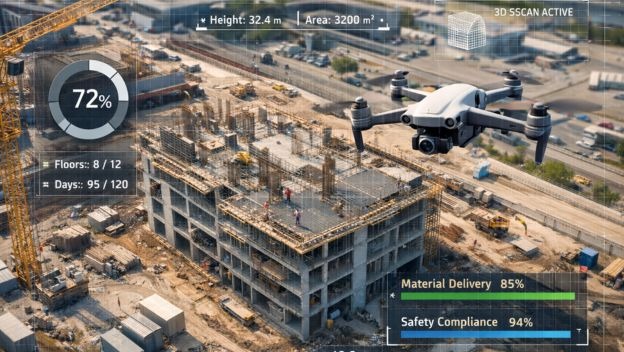
Drone inspections support broader trends such as digital twins, connected job sites, and smart construction practices.
These developments suggest that drone-based inspections will become a standard component of modern construction workflows.
Construction oversight and risk management are evolving in response to increasing project complexity and rising performance expectations. Traditional inspection methods, while still relevant, are no longer sufficient on their own.
Drone roof inspections provide a practical, scalable way to improve visibility, detect risks earlier, and support data-driven decision-making. By integrating aerial data into everyday workflows, construction teams can enhance both efficiency and control.
As the industry continues to adopt digital tools and data-driven practices, technologies that deliver accurate, timely, and actionable insights will play a central role. Drone-based inspections are a clear example of this shift, helping construction professionals manage risk more effectively and maintain stronger oversight across every stage of a project.



TOP STORIES
View AllRECOMMENDED

.png)

