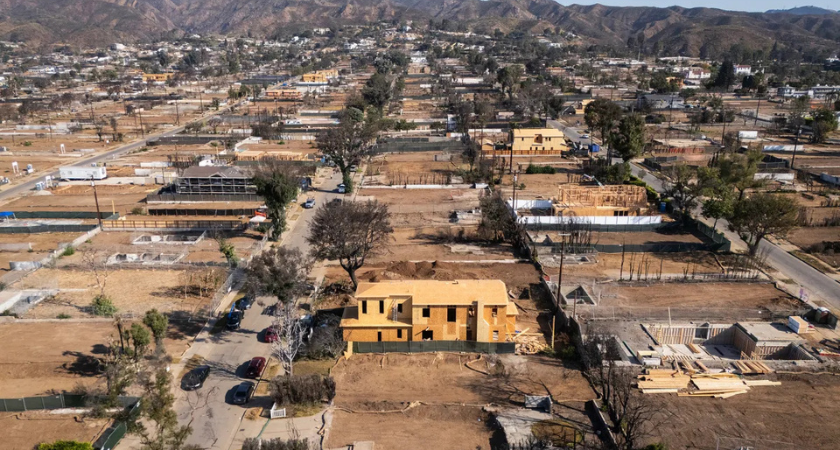
One year after a devastating firestorm tore through parts of Los Angeles County, the pace of rebuilding is showing signs of progress — though for many displaced homeowners, the recovery still feels painfully slow.
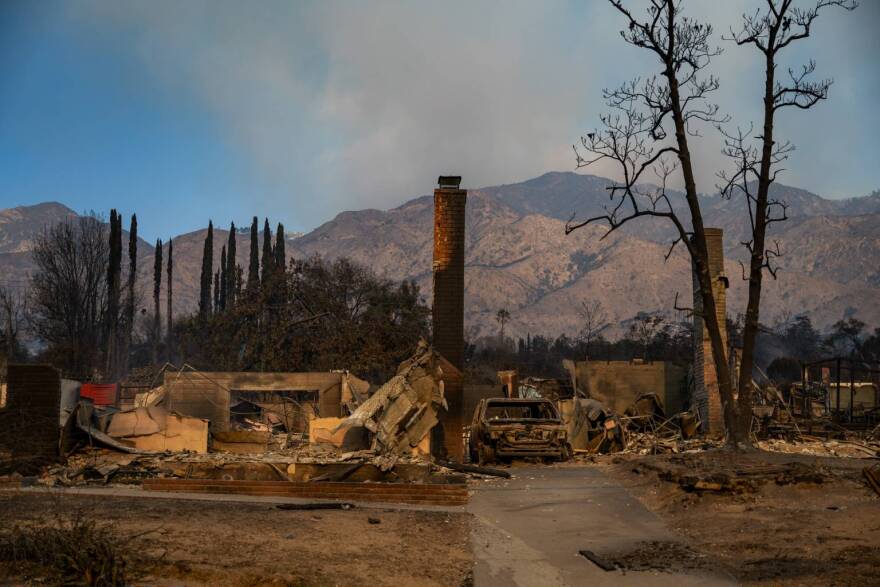
In the immediate aftermath of the January fires, state and local leaders pledged to accelerate reconstruction in a region already known for high housing costs and lengthy permitting timelines. Since then, burned structures and toxic debris have largely been cleared, rebuilding permits have been filed and contractors hired, and scattered signs of new construction have begun to emerge across affected neighborhoods.
As of this week, more than 2,600 residential rebuilding permits have been issued in the Palisades and Altadena, representing roughly one in five of the nearly 13,000 homes destroyed. An additional 3,340 permits remain under review. While that pace has frustrated many residents eager to return home, historical comparisons suggest Los Angeles is moving faster than most post-disaster recoveries.
In a statement marking the first anniversary of the fires, Gov. Gavin Newsom described the permitting numbers as “historic.” According to his administration, local governments — including the City and County of Los Angeles, Malibu and Pasadena — approved permits for single-family homes and accessory dwelling units “three times faster” than the average pace during the five years before the disaster.
Rebuilding after wildfires has historically been slow across California. Of the more than 22,500 homes destroyed in five major fires between 2017 and 2020, fewer than 40% had been rebuilt by 2025, according to a Los Angeles Times analysis. Similar patterns have played out nationally, with reconstruction permitting rates remaining low a year after major fires in places like Maui, Paradise, Redding and Boulder, Colorado, according to the Urban Institute.
Despite Los Angeles’ relatively strong permitting numbers, permits alone do not guarantee completed homes.
“People can pull permits, but you know, if they don’t have their costs sorted out — we’ve had folks abandon their plans,” said Devang Shah with Genesis Builders, which offers pre-approved, fixed-price rebuild options in Altadena. Using permits as a sole measure of recovery, he cautioned, may be misleading.
Much of the recent progress has been driven by emergency regulatory changes enacted in early 2025. Both Newsom and Mayor Karen Bass ordered expedited permitting for like-for-like rebuilds, allowing homeowners to reconstruct properties that match the original footprint and design. Los Angeles County also launched a self-certification pilot program for simpler projects, while the governor temporarily waived select building code requirements to reduce rebuilding costs.

“We’ve got planning approvals in three days that would have normally taken three months,” said Tim Vordtriede, an architect who lost his own home in Altadena. He added that the county has “done a remarkable job at making things as efficient and streamlined as a bureaucratic entity can.”
In response to widespread displacement, Vordtriede co-founded the Altadena Collective, which provides discounted design services, permitting guidance and contractor referrals to fire survivors. He and his partners also launched Collective OR, a nonprofit aimed at helping inexperienced homeowners navigate negotiations with architects and builders.
Los Angeles’ scale and economic resources may also be accelerating recovery compared to smaller communities hit by wildfire.
“We have access to a really good supply chain, there’s a lot of capital, there’s a lot of infrastructure,“ said Ben Stapleton, director of the U.S. Green Building Council California.
That advantage stands in contrast to places like Paradise, where fewer than one in five homes destroyed in the 2018 Camp Fire have been rebuilt, according to Colette Curtis, the town’s recovery and economic development director.
“It’s impossible to say, ‘they were here by this date so we should also be there,’” Curtis said. “The data set is just too variable.”
Another factor aiding Los Angeles’ recovery is its concentration of architectural and construction expertise. In Altadena, architects Cynthia Sigler and Alex Athenson launched the Foothill Catalog, a collection of pre-approved architectural and structural plans designed to speed approvals and cut costs. Athenson said the approach can reduce total development costs by at least 10%, particularly for homeowners on fixed incomes.
“Ultimately, we’re providing a system for more efficient, affordable housing development,” Athenson said. “I’m excited about proving it in Altadena, and then seeing where it goes beyond.”
So far, Los Angeles County has approved more than two dozen of the catalog’s plans, with discussions underway to expand the model to the Palisades. As rebuilding continues, policymakers and industry professionals say the lessons learned could reshape housing construction in California long after the last fire-damaged home is replaced.
Originally reported by Ben Christopher in Cal Matters.