Researchers at the University of Washington are advancing a new frontier in sustainable construction by embedding living organisms into building materials.
.webp)
The approach, known as engineered living materials, integrates fungi and bacteria into structural components to enhance durability, reduce carbon emissions and potentially allow buildings to repair themselves over time.
The work comes as the construction industry faces growing pressure to curb emissions. Globally, building construction and operations account for roughly 40% of greenhouse gas emissions, driving interest in low-carbon alternatives to steel, concrete and other energy-intensive materials.
Alshakim Nelson, a professor of chemistry at the University of Washington, said the research aims to fundamentally rethink how structures interact with their environment.
"We potentially could have a building that would be producing its own anti-corrosive coatings, or could actually capture CO2 instead of emit CO2, could potentially self-heal, all due to the actions of the microorganisms that reside within these materials," Nelson said.
Rather than relying solely on inert materials, the team is designing composites that contain active biological systems. Fungi can provide structural reinforcement through fibrous networks, while certain bacteria are capable of mineralization processes that strengthen materials or seal cracks.
In some applications, engineered microbes could capture carbon dioxide from the air and store it within the material matrix, effectively transforming buildings into carbon sinks.
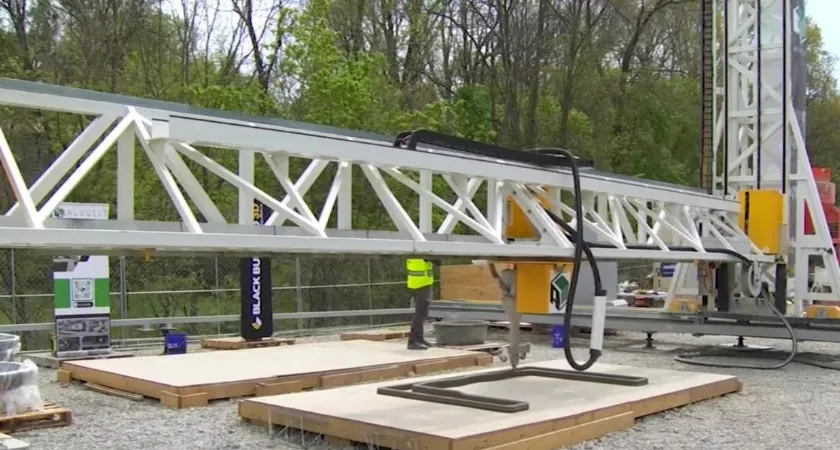
Students involved in the research will demonstrate how they are using 3-D printing with water-based resin to fabricate these living materials at a public exhibition titled “Engineered Living Materials for the Built Environment.”
The exhibition will highlight projects such as living wall systems that can consume waste oil to generate biofuels or produce heat for buildings — merging waste management with energy generation.
The showcase will also feature collaborative research from the University of Texas at Austin and the University of California-Davis, reflecting a growing national effort to explore biologically integrated construction systems.
Beyond emissions reductions, living materials may help buildings adapt to climate stressors. Self-healing capabilities could extend the lifespan of infrastructure exposed to moisture, temperature swings and corrosion — common challenges in coastal and variable climates.
Nelson explained that humans already benefit from symbiotic relationships with microorganisms in agriculture, medicine and environmental systems. The goal is to extend that partnership into the built environment.
"But then, maybe even come up with some of their own ideas of what could be done if we integrate these types of organisms into the built environment," Nelson said.
If successful, such innovations could reduce maintenance costs, improve resilience and lessen dependence on fossil fuel–based construction inputs.

As cities adopt stricter carbon reduction targets, contractors and developers are exploring alternative materials that align with sustainability mandates. Engineered living materials could complement mass timber, low-carbon concrete and recycled steel in a broader portfolio of climate-friendly solutions.
The integration of biology into construction also opens new interdisciplinary career pathways, blending chemistry, engineering, architecture and environmental science.
While the technology remains in development, researchers say early prototypes show promise in balancing structural performance with environmental benefits.
By combining 3-D printing, renewable materials and microbial science, the University of Washington team is positioning living building materials as a potential cornerstone of climate-responsive construction — redefining how buildings are designed, built and maintained in the decades ahead.
Originally reported by Non Stop Local in NBC Right Now.