An Alabama Senate committee on Wednesday approved legislation that would exempt certain K-12 and higher education construction projects costing less than $750,000 from state inspections, a move supporters say could reduce costs and delays but critics warn may compromise safety.
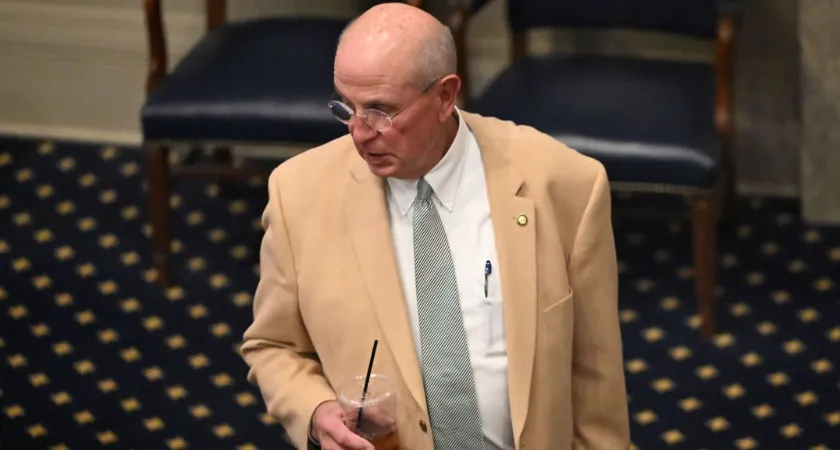
The Senate Finance and Taxation Education Committee voted 11–2 to advance Senate Bill 88, sponsored by Sen. Larry Stutts, R-Tuscumbia. The bill would prohibit the Division of Construction Management (DCM) within the Alabama Department of Finance from conducting inspections on qualifying school construction projects under the $750,000 threshold for Americans With Disabilities Act (ADA) and fire and safety compliance.
.webp)
“I was approached by several people in the education community in my area about the cost of construction and delays in construction when the Department of Construction Management gets involved in a project,” Stutts told the committee.
While DCM generally does not inspect school projects below $750,000, current law still requires reviews for ADA and fire and safety compliance—requirements SB 88 would eliminate for “covered” projects.
Sens. Roger Smitherman, D-Birmingham, and Kirk Hatcher, D-Montgomery, voted against the bill. Sen. David Sessions, R-Grand Bay, abstained.
Stutts argued that smaller projects are being subjected to unnecessary oversight despite being handled by licensed professionals.
“We have qualified architects, we have qualified contractors. And when they get involved and are building relatively small projects, we don’t need somebody else to come inspect behind them and be in the middle of the process,” Stutts said.
Ryan Hollingsworth, executive director of School Superintendents of Alabama, spoke in support of the bill, noting that the Legislature has previously raised the threshold for inspections on K-12 projects.
He said lawmakers exempted most school construction projects under $500,000 from DCM inspection in 2021 and later increased that limit to $750,000 in 2022.
“This bill would take it back to the 2021 version and raise the $500,000 up to $750,000 with no required requirement to submit,” Hollingsworth said. “So we operated on that 2021 version for about a year, maybe a little longer. I’m not aware of issues that came up during that time. I never heard of those.”
Opponents of the bill cautioned that eliminating inspections could lead to unintended consequences, particularly in rural areas with limited local oversight.
Alec Whaley, a general contractor based in Troy, said some counties rely solely on the DCM for safety inspections.
“I would hate for there to be an unintended consequence. It would be an effort to try to save some money in missing something and not having that peer review, and some children get hurt,” Whaley said.
.webp)
Scott Williams, an architect speaking on behalf of the American Institute of Architects, said the current inspection process is effective and not overly burdensome.
“We have a great process. We don’t feel that it’s horribly expensive. It’s not time consuming. If I organize my projects, I’ve got the building commissions reviews, I’ve got the building commissions inspections, all of it timed out pretty good,” Williams said.
When asked by Sen. Donnie Chesteen, R-Geneva, about the scope of projects affected, Williams said most projects under $750,000 involve renovations and reiterated concerns about safety risks.
“The process of doing some work on an existing building opens up situations that you were not aware of when your program was initially started,” he said.
Smitherman echoed those concerns, emphasizing the stakes involved.
“If because the paramount decision and those pride decisions did not make the top priority, the safety and well being of the young people who are going to be affected by the projects, if they are not up to standard is simply this, we can’t bring them back if they’re dead,” Smitherman said.
Sen. Vivian Davis Figures, D-Mobile, said she voted for the bill after weighing safety concerns against funding pressures facing public schools.
“When we can give charter schools and tax credits to people who already had decided to send their children to private schools, you’re trying to find ways to make up for the money you’re not getting because we’re not adequately funding you, which is our first priority,” Figures said. “So of course, I’m always about safety, but I also know that there will be inspectors. And as the contractor said, so many of these projects are small projects,” she said.
If approved by the full Legislature, SB 88 would take effect on Oct. 1. The bill now moves to the Alabama Senate for further consideration.
Originally reported by Andrea Tinker in Alabama Reflector.