Texas is a hot spot for natural disasters, from hurricanes to tornadoes to floods. And a newly released survey shows that as the weather becomes more severe, Texans’ concerns about recovery increase.
According to The Home Depot Foundation, 75% of Texans report challenges with rebuilding or long-term recovery, which is a direct result of a shortage in skilled labor. Industry experts say increased enforcement of federal immigration laws, along with the state of education for workers in the construction industry, are contributing factors.
.webp)
"We are seeing a clear trend where disaster-impacted communities are experiencing delays in long-term recovery and the rebuilding process, with the lack of available labor being one of the primary issues,” said Erin Izen, executive director of The Home Depot Foundation.
As fewer people are interested in working in carpentry, plumbing, HVAC and electrical fields, the gap between older professionals and a new generation of workers is widening, according to the foundation. Disasters that damage homes and other buildings, meanwhile, keep coming.
"I believe it is a very big issue, as we like contractors for our rebuilding services," said William Porter, director of long-term recovery at Team Rubicon, a veteran-led humanitarian organization. "It is difficult at times, of both how immediate after the disaster and also in certain locations, to get qualified contractors to do the work."
Post-disaster recovery varies with a weather event’s intensity and scope. Without proper assistance, the process can be much slower.
"Each timeline is so unique and has so many different challenges associated with it, but I think if you were one of the people impacted by a disaster, your answer would be as soon as possible," Izen said. "So that’s what we are trying to do is remove the barriers to be able to rebuild, regardless of the location."
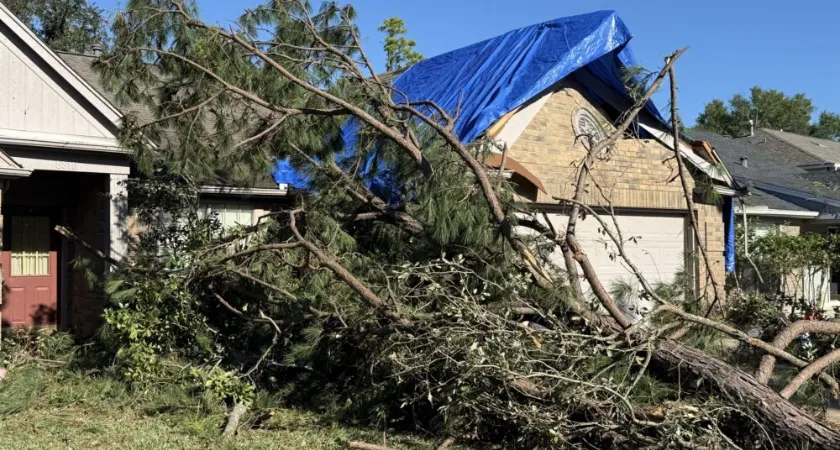
Texas has endured back-to-back years of extreme weather, including Hurricane Beryl, destructive spring tornadoes and repeated flooding across the Gulf Coast. Recovery from these events often requires thousands of electricians, roofers, framers and heavy-equipment operators, yet contractors across the state report they cannot hire fast enough to meet demand.
Local governments and nonprofit relief groups say the shortage is most visible in rural counties and low-income neighborhoods, where homeowners wait months for repairs. Insurance payouts and federal aid may be available, but without crews to perform the work, rebuilding timelines stretch indefinitely.
Under the Trump administration, ramped-up immigration enforcement also has affected the construction industry.
According to Edward Brady, CEO of the Home Builders Institute, immigrants account for 25%-35% of the skilled trades workforce. He says immigrants' fear of being detained or deported has prompted some to leave their jobs or leave the country entirely.
"This is no judgment on policy," Brady said. "It is the reality of what is happening."
Brady argues that people without legal status, who have been in the country providing skilled labor, should have the opportunity to become U.S. citizens so they can continue to provide their services.
"Certainly, any immigration policy and changing policy will affect that workforce," Brady said.
.webp)
The workforce gap also persists due to limited interest among younger generations and insufficient opportunities in schools, according to The Home Depot Foundation.
A common concern among leaders in the skilled trade world is the stigma associated with a career in construction. Izen said many Americans are taught that the only viable career paths require four-year degrees.
"There are over 300,000 open jobs today, and that is expected to balloon to 4.1 million openings in the next 10 years as 40% of current construction workers retire by 2031," Izen said. "There's this generational shift as the older workers retire. There's not young people coming in behind them to take their place."
To help shore up the skilled trade workforce, some leaders in the field are targeting opportunities for the younger generation and seeking change in the education system. Brady argues there has not been adequate opportunities to integrate skilled trades training into high school or community college curriculum.
"The federal government and state governments put a lot of money into higher education," Brady said. "We need to make sure there's a proportional investment in alternatives to higher education."
Advocates say addressing the crisis will require a mix of short- and long-term strategies. Industry groups are urging expanded apprenticeship programs, faster credentialing for licensed trades and incentives for displaced workers to enter construction fields. Nonprofits involved in disaster relief are also asking for streamlined visa pathways for experienced tradespeople willing to assist after major storms.
Without intervention, experts warn the gap could widen just as climate projections show more frequent severe weather for the Gulf Coast. For thousands of Texas families still living under tarps or in temporary housing, the shortage is no longer an abstract economic issue—it is a barrier to returning home.
Originally reported by Anna Y Monroe in Houston Public Media.
.png)


.png)