As the Alaska Department of Transportation and Public Facilities prepares to build a new airport for the Northwest Alaska town of Noatak, the agency says it will need to build a 67-mile ice road for three consecutive winters in order to transport supplies.
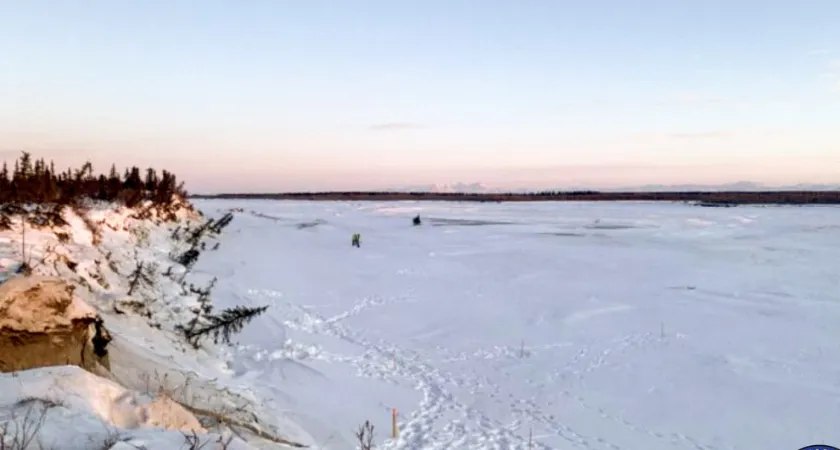
The department laid out its plans in a public notice published Tuesday. They call for a route that would connect the DeLong Mountain Transportation System — a permanent road — to Noatak between October and March.
“The route is expected to be 25’ to 30’ wide with some sections being as wide as 50’. The proposed route minimizes stream crossings and would use ice bridge construction to cross five channels, including Kiyak Creek,” the department wrote. “The proposed route requires no ground disturbance or permanent cut and fill on slopes and would be safe for proposed equipment travel.”

Noatak’s existing airport is located next to its namesake river, and erosion threatens the runway and other critical infrastructure.
“The continued erosion jeopardizes the existing airport and therefore also jeopardizes the Noatak community which relies on safe and reliable air transportation service,” the department wrote in its plan.
If the ice roads are approved this spring, the first would be built in early winter 2026, something a department official called an “admittedly ambitious construction goal.”
The current airport is to the east of Noatak, between the town and the river. The new airport, which will be to the west of Noatak, is expected to be finished in 2028.
Building major infrastructure in Arctic regions requires approaches rarely used elsewhere in the United States. Traditional gravel or paved haul roads are impossible across vast stretches of tundra and wetlands, particularly when heavy equipment must reach communities with no year-round road access. Ice roads — constructed by compacting snow and flooding surfaces to create thick frozen corridors — have long been used to supply mines and villages across northern Alaska and Canada.

Transportation planners say the proposed Noatak route follows this same model, allowing trucks to carry fuel, aggregate, and construction materials only during the coldest months. The seasonal nature of the corridor means every winter must be carefully choreographed, with crews racing against spring thaw to complete deliveries before the surface weakens.
For Noatak’s roughly 600 residents, air service is more than a convenience — it is the community’s primary connection to medical care, groceries, mail, and regional travel. The existing riverside airstrip has faced years of erosion from shifting channels and melting permafrost, problems that have intensified with warmer temperatures and stronger seasonal flooding.
State officials warn that without relocation, the runway could become unsafe long before a replacement is ready. The new site west of town was selected to place critical infrastructure farther from the river and on more stable ground, though reaching that site requires the complex ice-road strategy now under review.
Local leaders are expected to weigh in during the permitting process this year. If approvals move forward, contractors could begin marking the first winter route as early as October, launching one of the longest temporary haul roads ever attempted in Northwest Alaska.
Originally reported by James Brooks in Alaska Beacon.