Construction of a long-planned barrier meant to stop invasive Asian carp from reaching the Great Lakes has run into another delay, despite a White House directive last year calling for the project to move forward quickly.
Nine months after President Donald Trump signed a memorandum urging federal agencies to “achieve maximum speed and efficiency” to block the fish from entering Lake Michigan, the key Illinois construction effort has been paused and remains under administrative review, according to lawmakers from Michigan and Illinois.
Democratic senators from both states are pressing federal officials to resume the project and release funds that Congress has already approved. In a Jan. 15 letter to the White House Office of Management and Budget and the U.S. Army Corps of Engineers, the lawmakers warned that the pause could disrupt future contract awards and increase costs for the project, which has been years in the making.
“The federal investment is currently on hold without justification, and additional contracts for the project cannot be awarded due to the funding pause,” the senators wrote.
They also cautioned that continued delays could raise the risk of invasive carp breaking into the Great Lakes system.
“The current pause and review could increase the cost and slow the final completion date of (the project), increasing the likelihood that invasive carp could enter the Great Lakes. If invasive carp were to become established in the Great Lakes, they would outcompete existing fish populations, permanently damage ecosystems, and significantly impair the $7 billion Great Lakes economy.”
The letter was signed by Michigan Sens. Gary Peters and Elissa Slotkin, along with Illinois Sens. Dick Durbin and Tammy Duckworth. The project has historically drawn support from both parties due to the potential economic and ecological damage linked to an invasive carp spread.
Neither the White House nor the Army Corps provided answers this week about when the pause was implemented or when it might end.
The latest delay adds to years of stop-and-start progress for the $1.15 billion Brandon Road Lock & Dam project in Joliet, Illinois, which Congress authorized in 2020 after extensive scientific research, planning and engineering.
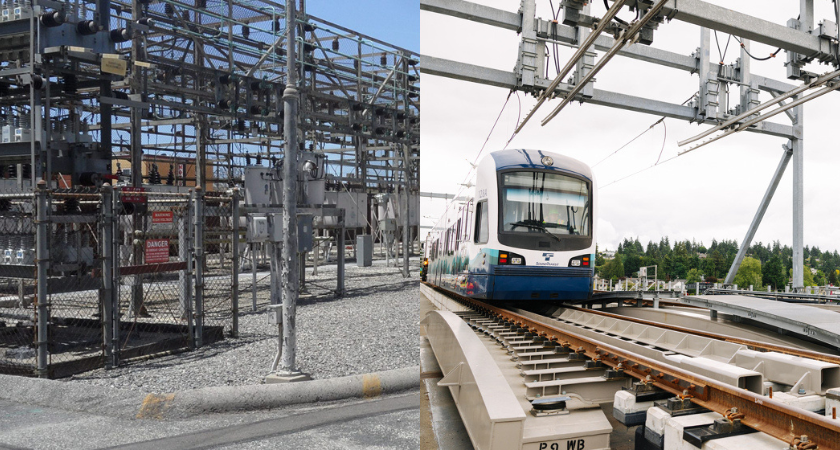
In the meantime, Asian carp remain held back by electrical barriers farther downriver — a system widely seen as imperfect and unreliable over the long term.
State and federal officials reached an agreement in 2024 allowing construction to move forward, with funding set for the first phase of work. That plan included $274 million in federal funding and $114 million in state funding, with most of the federal allocation coming from the Bipartisan Infrastructure Law signed under former President Joe Biden.
Michigan Gov. Gretchen Whitmer raised concerns about the carp threat in meetings with Trump last year, and the president referenced the issue publicly in April.
.webp)
“We're also working on a certain fish that's taken over a beautiful lake called Michigan, right? And that's a tough one,” Trump said. “They jump out of the water. They jump at the fishermen. I mean, I've never seen anything like it.”
At the time, Trump acknowledged the complexity and price tag of a permanent solution.
“It's sort of a bipartisan thing. When you get it right down there, it's a very expensive thing,” Trump said. “I said, "Well, but we have to save Lake Michigan." Because these fish—they eat everything in the way, including the other fish. They eat everything."
The following month, Trump issued a directive signaling support for the Brandon Road effort and instructing agencies to speed up permitting and environmental approvals “as quickly as possible.”
But later in the year, political tensions resurfaced, after Trump suggested he might withhold funding depending on whether Illinois Gov. JB Pritzker formally requested help, according to reported comments.
Brandon Road is considered one of the most important choke points for preventing invasive carp from moving from the Mississippi River watershed toward Great Lakes waterways. Scientists and officials have warned that if carp spread into the region, they could threaten native fish populations and disrupt the aquatic ecosystem.
Plans for the project include multiple layers of deterrence and control measures, including:
Construction is expected to take six to eight years once fully underway.
Lawmakers argue that delays are costly, both financially and environmentally, as the project has already gone through more than a decade of planning.
With future contract work potentially affected, they are urging the federal government to act quickly to avoid further escalation in costs — and reduce the risk of Asian carp entering the Great Lakes.
Originally reported by Melissa Nann Burke in PHYS. Org