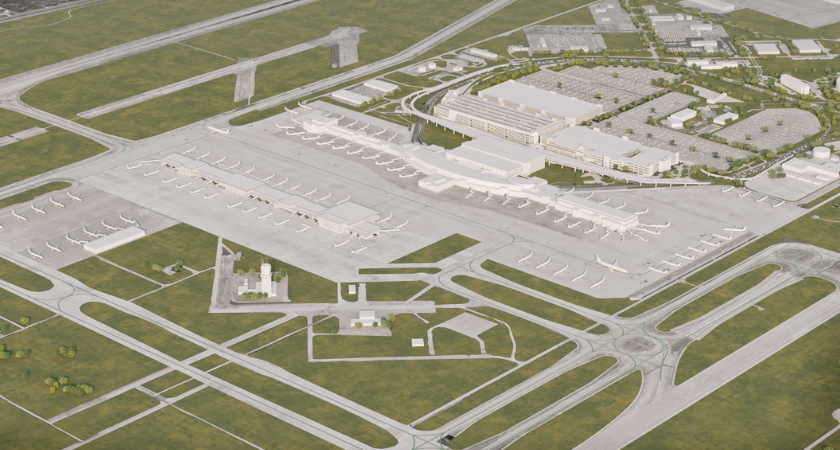
AUSTIN, Texas — Austin-Bergstrom International Airport (AUS) has finalized new multi-year Airline Use and Lease Agreements and Signatory Cargo Agreements, establishing the long-term financial and operational framework needed to advance the airport’s multi-billion-dollar expansion program.
The agreements set the terms under which passenger airlines and cargo operators will conduct business at AUS over the next decade, providing the revenue foundation necessary to support airport operations and fund major capital projects. Chief among those projects is the construction of 32 new airline gates, part of the airport’s broader Journey With AUS expansion initiative.
.jpg)
The finalized agreements govern how rates and charges are calculated for airport-owned assets such as runways, gates, ticket counters, baggage systems, aircraft parking positions, and operational facilities. These fees generate a significant portion of airport revenue and directly support AUS’s ability to issue and repay airport revenue bonds used to finance large-scale development.
Signatory airlines and cargo partners include Southwest Airlines, Delta Air Lines, United Airlines, American Airlines, Alaska Airlines, FedEx, and UPS. Under the agreements, these carriers commit to operating at AUS for 10 years while funding their proportional share of capital projects through a cost-recovery structure. Airlines and cargo companies that are not signatories will continue operating under standard per-use industry practices.
The agreements support several key components of the airport’s long-term development strategy:
A new concourse featuring 26 gates, expanded ramp operations, and facilities designed to accommodate long-term passenger growth. Southwest Airlines will serve as the anchor tenant with 18 gates, United Airlines will occupy five gates, and three gates will be available for common domestic use.
A comprehensive redevelopment of the airport’s front door, including a redesigned curbside experience, a new pedestrian bridge connecting parking garages and the Rental Car Facility, an expanded baggage claim hall, a centralized TSA checkpoint, upgraded airline ticket counters, and new amenities such as concessions, a mobility lounge, and meet-and-greet areas.
A pre-engineered facility adding six new gates to provide operational flexibility, support construction phasing, and accommodate irregular operations such as off-schedule and diverted flights. The concourse will feature bus transportation to the Barbara Jordan Terminal, gate hold rooms, restrooms, passenger amenities, and new concession offerings.
The existing Barbara Jordan Terminal facilities will be redeveloped into a modernized post-security Concourse A. Delta Air Lines will serve as the anchor tenant with 15 gates, American Airlines will have nine gates, Alaska Airlines will have one gate, and eight common-use gates will support both domestic and international operations. All international flights will operate from Concourse A.
Campus-wide utility upgrades, including a new Central Utility Plant, will expand heating and cooling capacity and strengthen electrical, IT, storm drainage, water quality, and deicing systems to support current and future airport growth.
As project scope has expanded to meet rising passenger demand and airline operational needs, Austin Aviation plans to seek additional spending authority from the Austin City Council. Airport officials estimate the program budget will increase from an initial $4 billion, 20-gate plan to more than $5 billion for 32 gates as designs are finalized.
The expansion is funded through airport cash reserves, current and future airport revenues, revenue bonds, and Federal Aviation Administration grants. No local Austin taxpayer dollars will be used.
“Today marks a historic moment for our airport, our city, and the Central Texas community. This agreement reflects years of partnership, thoughtful negotiations, and shared vision with our airline partners. Their commitment provides the financial foundation we need to modernize our facilities, transform customer experience, and build the infrastructure needed to support Central Texas’ continued growth for generations to come. AUS would not be where it is today without the collaboration and investment of our airlines, and we are deeply grateful for their trust and partnership as we shape the future of air travel in Central Texas.”
“I’m proud to have been here when this airport first opened, and I’m proud to stand here again as we usher in a new era for aviation in Central Texas. The expansion we commit to today will define the expansion of the future—supporting travelers, strengthening our economy, and preparing Austin for the decades of growth ahead. We are grateful to the airlines for believing in Austin, investing in Austin, and helping us build what comes next.”
“This expansion program represents a tremendous economic opportunity for Austin—not only through the trades and construction jobs created during the buildout, but also through long-term jobs in concessions, airport operations, and airline services after the program is complete. We thank our airline partners for their continued investment in our community and for helping create a stronger, more connected Central Texas.”
Airport officials say the agreements position AUS to meet projected regional growth while improving capacity, resiliency, and the overall passenger experience for years to come.
Originally reported by Austin Texas.