.webp)
As Minnesota’s 2026 legislative session begins, local leaders across the state are urging lawmakers to pass a long-awaited bonding bill to fund critical infrastructure projects.
Communities from Greater Minnesota to the Twin Cities are seeking a combined $3.19 billion in state support. However, even the most optimistic projections suggest the final package could total closer to $1 billion — and there remains a possibility that no bonding bill passes at all.
Among those advocating strongly for action is New Ulm Mayor Kathleen Backer, who emphasized the urgency of state support during a Coalition of Greater Minnesota Cities press conference.
“This is not a situation where this is a want,” Backer said. “This is a need, a very basic need.”
Backer and other city leaders argue that projects such as replacing aging lead pipes and upgrading water and wastewater systems simply cannot move forward without state borrowing authority.
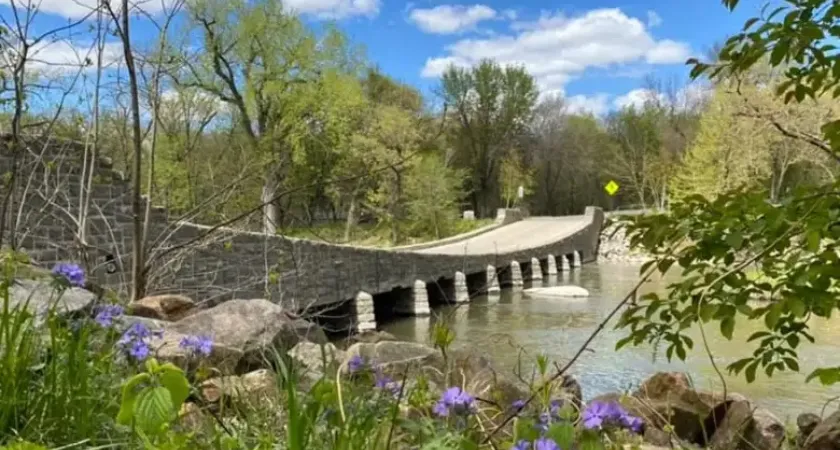
One example of the types of projects under consideration is preservation work for the Ramsey Park Swayback Bridge in Redwood Falls, along with sewer and water main upgrades in communities like New Ulm.
Despite political divides, some legislative leaders are expressing early optimism.
Sen. Sandra Pappas, DFL-St. Paul, chair of the Senate Capital Investment Committee, said she hopes strong working relationships across party lines will help the bill advance. She noted that bonding bills historically benefit rural Minnesota in particular.
“Bonding bills are heavily slanted toward rural Minnesota,” she said. “That’s where a lot of our colleges and universities are. That’s where our parks are. I really think it’s an advantage for rural Minnesota that we do a bonding bill every year.”
Bonding bills authorize the state to borrow money through general obligation bonds, allowing local governments to access state-backed funding rather than shouldering debt alone.
Sen. Karin Housley, R-Stillwater, ranking minority member on the Senate Capital Investment Committee, also voiced guarded hope.
“We all know the needs, so we are hoping it can all come together,” said Housley. “But you never know how the session will go.”
Senate Minority Leader Mark Johnson, R-East Grand Forks, identified bonding as one of his top priorities, though he acknowledged competition among districts for inclusion in the final package.
“we each have projects in our district we particularly like,” he said.
Rep. Luke Frederick, DFL-Mankato, co-vice chair of the House Capital Investment Committee, said bipartisan cooperation last year gives him confidence.
“I’m hopeful that we can get it done, and I’ll say this: My House Republican colleagues earned a lot of respect because they showed up in good faith (last year),” he said. “I disagreed with them, sure, but they showed up in good faith.”
While early signals suggest cooperation, history and math present obstacles.
Bonding bills require a three-fifths majority — 60% support — in both chambers. With the Minnesota House split 67-67 and the Senate narrowly controlled 34-33 by the DFL, bipartisan backing is not optional; it is essential.
Craig Johnson, a lobbyist with the League of Minnesota Cities, warned that political pressures could complicate negotiations.
“It always is (difficult) because of the super majority, because it’s an election year and because no one wants to say the other side got a victory,” he said. “It gets dicey.”
Frederick cautioned against allowing unrelated policy debates to derail infrastructure funding.
“I think that if we can look at a bonding bill as a thing that benefits all Minnesotans regardless of political ideology, then we can have a realistic shot of getting a bonding bill done,” he said. “If we let politics or some unrelated policy thing that somebody wants to hold the bonding bill hostage for, then it won’t happen.”
Debates over Minnesota’s Paid Family Medical Leave program, fraud prevention efforts and immigration enforcement priorities could complicate negotiations if attached to bonding discussions.
Advocacy groups such as the League of Minnesota Cities and the Coalition of Greater Minnesota Cities say project backlogs continue to grow.
“Our priority will be to make sure those pots of money that cities have access to for needed infrastructure get the funding necessary to get the projects that are already cleared by the state ready to go,” Craig Johnson said.
Bradley Peterson, executive director of the Coalition of Greater Minnesota Cities, urged lawmakers not to delay action.
“There’s a lot of demand that we know; there’s a lot of big ticket things like water and wastewater that need attention,” he said. “I think that as the legislative session progresses we would urge them to remain focused on passing a bonding bill. Don’t leave it until the very very end.”
.jpg)
Gov. Tim Walz has proposed a $907 million capital budget that emphasizes agency funding pools over project-specific earmarks, an approach that could influence negotiations as lawmakers shape a final package.
Still, uncertainty looms.
“We’ll see if they have the political muscle to get one through,” Craig Johnson said. “The needs are clear and defined.”
For cities across Minnesota, the stakes are high. Infrastructure systems continue to age, construction costs rise and communities wait to see whether lawmakers can navigate politics to deliver long-promised investment.
Originally reported by Brian Arola in Minn Post.