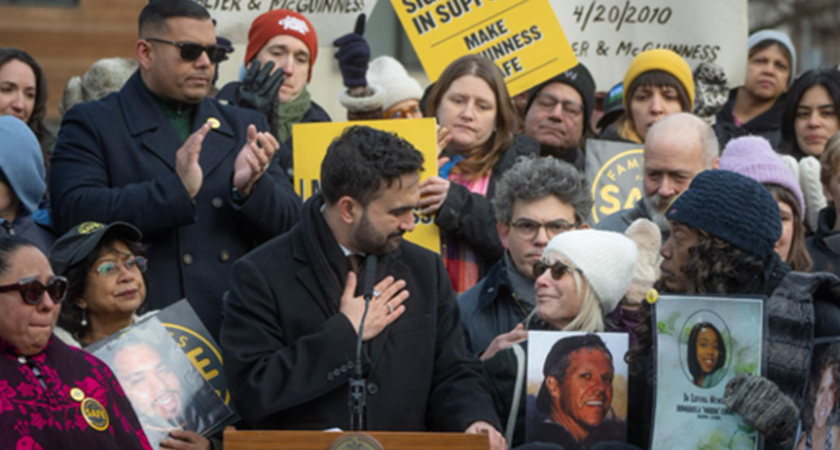
Construction is underway on a major street redesign project in North Brooklyn that city officials say will reshape safety conditions along one of the borough’s most heavily traveled transportation corridors.
New York City Mayor Zohran Mamdani and the New York City Department of Transportation announced the launch of construction activities to complete the redesign of McGuinness Boulevard, a project that has been debated for years amid competing concerns over traffic flow, freight access and pedestrian safety.
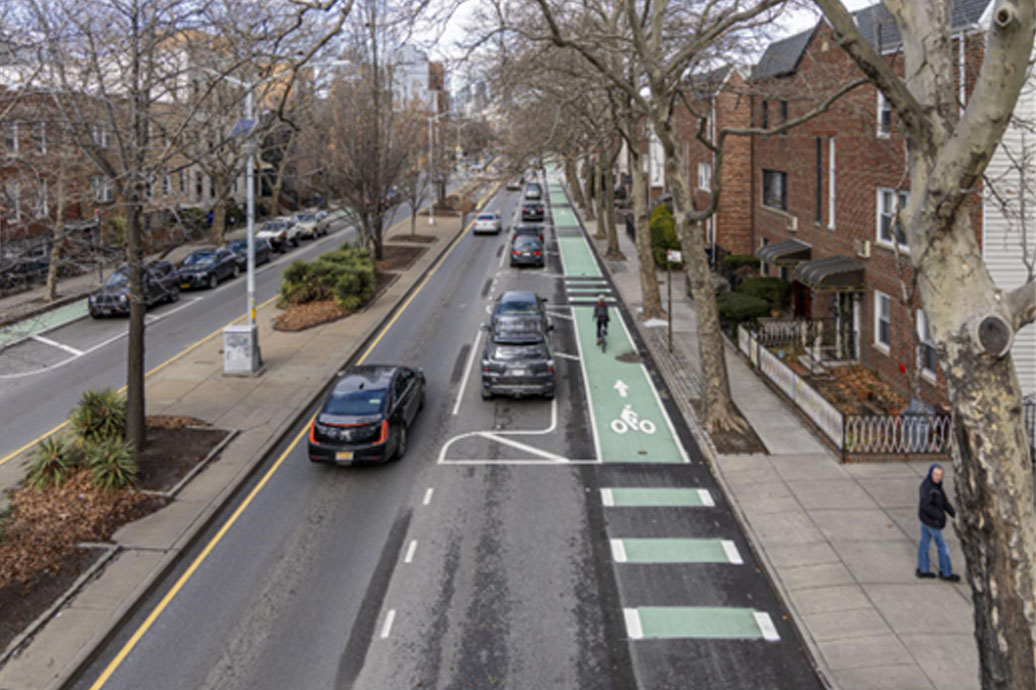
The work will extend protected bike lane infrastructure along the full corridor between Meeker Avenue and the Pulaski Bridge, creating a continuous north-south connection between Brooklyn and Queens. The project is expected to wrap up by early fall, according to city officials.
Under the redesign, the boulevard will include one travel lane in each direction, curbside parking and loading areas, and parking-protected bike lanes running the length of the corridor. The city also plans to shorten pedestrian crossing distances and introduce traffic-calming features intended to slow turning vehicles and reduce speeding behavior.
For contractors and infrastructure owners, the project reflects a broader shift in urban transportation investment priorities toward multimodal corridor upgrades that combine roadway reconstruction, traffic management and cyclist safety enhancements within constrained urban footprints.
McGuinness Boulevard serves as a key commuter and logistics route in Brooklyn while also supporting thousands of daily cyclists during peak travel seasons. The corridor redesign adds to a growing pipeline of municipal transportation projects focused on protected bike lane construction and roadway reconfiguration in dense urban environments.
The project also demonstrates how local governments are increasingly advancing safety-oriented redesigns through phased implementation strategies rather than full corridor reconstruction programs. That approach can reduce overall disruption while allowing agencies to modify existing streets using lane reallocation, pavement markings, barrier systems and curbside redesign work.
For construction firms specializing in transportation infrastructure, roadway striping, traffic control systems and urban streetscape improvements, these types of projects continue to create demand for specialized delivery capabilities tied to active transportation and Vision Zero initiatives.
City transportation officials cited prior New York City street redesigns that produced measurable reductions in severe traffic injuries and fatalities, reinforcing the growing use of corridor redesigns as a public safety strategy rather than solely a mobility initiative.
The McGuinness Boulevard project also highlights the increasing political and community influence behind urban street safety investments. Advocacy groups and neighborhood organizations had pushed for years to advance the redesign after multiple serious traffic incidents along the corridor.
For construction owners and public agencies, the project signals continued momentum behind investments that integrate transportation safety, cycling infrastructure and pedestrian accessibility into future urban capital improvement programs.
Originally reported by New York City Government.