

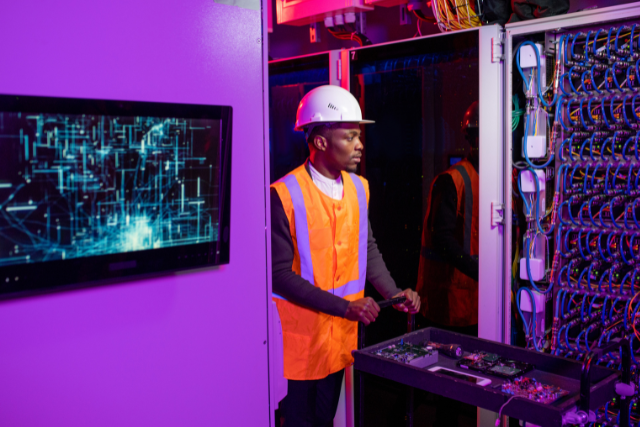
The recent commitment to AI data centers is staggering. The five largest American cloud providers have pledged $650 to $700B USD to expand this infrastructure in 2026 alone. Most recently, Amazon announced its “Titus” initiative, ambitiously aiming to build new, redesigned data centers for complex AI hardware in just eight months.
To put that into perspective, small enterprise data centers take 12-18 months from planning to commission, while larger facilities run 18-36 months. The construction industry, meanwhile, still relies heavily on manual, disconnected processes - methods that regularly produce internal communication gaps, inaccurate data and disjointed workflows. The result: 91.5% of large projects exceeding $1B USD go over budget, and only 25% of construction projects finish within 10% of their original deadlines.
With major cloud providers ramping up builds, and companies like Amazon setting timelines that defy convention, the question isn’t just whether the industry can keep up - it’s whether it can do so profitably.
Tight Timelines Are Compounding an Already Stretched Industry
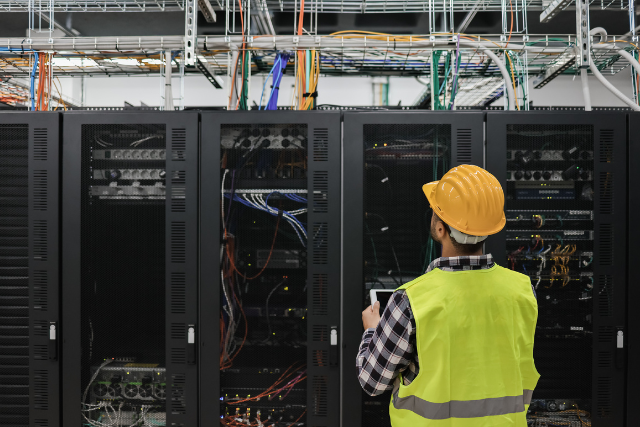
The construction industry was already grappling with a labor shortage before the data center boom began. The sector is currently short roughly 350,000 workers every month. Nearly 60% of construction workers report regular burnout, and 1 in 4 routinely exceed a 40-hour work week.
Preconstruction teams are being asked to do more with less - and over shorter timespans. Teams that still rely on manual or siloed methods for takeoff, estimating and planning are operating at a margin of error the market no longer tolerates.
Data center projects don’t just need more workers, they require hard-to-find specialists: electricians, pipefitting technicians, structural laborers, and cable installers. When roles can’t be filled, contractors are forced to stretch the same specialist across multiple scopes rather than bring in dedicated experts. As timelines tighten and workers absorb more, critical errors become inevitable.
The Data Center Boom Demands a New Workflow
Today’s AI data centers aren’t just large - they’re highly engineered mechanical and electrical ecosystems, with zero tolerance for error and a record need for speed. Like the hyperscale cloud facilities of the 2010s, they require intense trade coordination and sophisticated buildouts. Unlike those projects, however, they come with timelines that leave no room to catch mistakes after the fact.
Amazon’s Titus initiative may be setting a new industry standard: build it in under a year. That means an inaccurate estimate or a flawed takeoff doesn’t just cost time, it can cost the entire project. The mistakes that come with manual planning don’t just risk a lost bid; they risk a won bid that drains profit from day one.
The answer isn’t to hire as many workers as possible. It’s to equip the skilled contractors, electricians, estimators and builders already in the field with tools that can keep pace - AI-accelerated takeoff, integrated estimating and workflows that move as fast as the market demands.
The $273B Estimating Risk
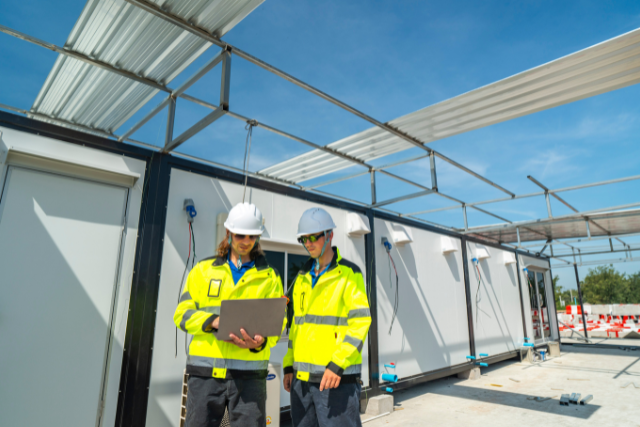
Preconstruction is the single highest-leverage investment a project team can make. The decisions made during takeoff and estimating determine whether a project will be buildable, on time, and profitable. Errors at this stage don’t stay contained:
Bid exposure: An inaccurate estimate can swing a bid 5 to 15%. On a project like Meta’s $27 billion data center, that’s not a rounding error – it’s a profit risk.
Financial losses: Estimating errors cost U.S. construction teams more than $273 billion annually.
Scope disputes. The average scope dispute costs $340,000 per project. Seventy-two percent of those disputes originate in preconstruction – not in the field.
Smarter Tools, Smarter Builds
The opportunity to digitize preconstruction is real – and it’s now. Capturing it requires an honest look at the manual processes contractors and subcontractors still rely on, and a recognition that those methods weren’t built for this moment.
If projects move at the speed Amazon’s Titus initiative demands, estimators can’t afford to spend hours counting doors and fixtures or untangling spreadsheets. Those manual tasks pull focus from the work that actually drives project success: coordinating with specialized electrical teams, validating scope, catching conflicts before they hit the field.
The most immediate need is accurate, fast, AI-accelerated takeoff and estimating. Digitized tools mean fewer manual errors, faster bid cycles, and data that flows from ideation to the field – connected, not siloed.
The construction industry has been asked to power the AI world. It’s time to use AI to do it.


TOP STORIES
View AllRECOMMENDED
.png)
.png)

