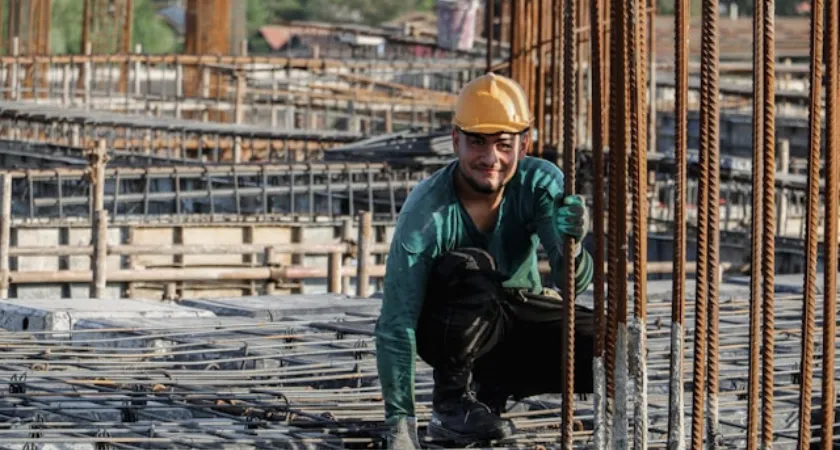
Construction employment increased across much of the United States over the past year, but California moved in the opposite direction, posting one of the sharpest declines in the nation, according to federal data reviewed by the Associated General Contractors of America (AGC).
Between December 2024 and December 2025, California’s construction workforce fell by 19,800 jobs — a 2.2 percent decline. Only New York, Washington, Nevada, and New Jersey experienced steeper losses either numerically or proportionally. Nationwide, 34 states and the District of Columbia added construction jobs, led by Texas (+15,700 jobs, 1.8 percent) and Hawaii (+3,400 jobs, 8.7 percent).
.webp)
For the month of December alone, the picture remained challenging. Twenty states and D.C. recorded job gains, while 26 states saw declines. California lost 5,000 jobs in December, representing a 0.6 percent decrease. Minnesota posted the largest monthly drop both in total jobs (-9,900) and percentage terms (-6.6 percent), while Arizona and Montana reported the strongest monthly improvements.
“Although a majority of states added construction employees over the year, employment has stalled in the latest month,” said Ken Simonson, AGC chief economist. “Too many projects have been postponed or canceled due to lack of funding, financing costs, or policy uncertainty about tariffs and immigration enforcement.”
Economists say California’s downturn reflects a combination of high borrowing costs, slowing private development, and uncertainty surrounding major infrastructure programs. Several highway and transit projects have been delayed as agencies await clarity on long-term federal funding commitments.
.webp)
Industry leaders warn that the expiration of the current federal surface transportation authorization on September 30 is weighing heavily on contractor confidence. Without a new multiyear bill, many firms are hesitant to expand payrolls or invest in equipment.
“Contractors need to know that highway funds will keep flowing before they can commit to hiring or retaining essential workers,” said AGC CEO Jeffrey D. Shoaf. “It’s imperative that Washington provide that certainty by working now on the specifics of the next surface transportation bill.”
The AGC also pointed to broader economic headwinds affecting California more acutely than other regions. Higher commercial vacancy rates, a pullback in warehouse development, and slower renewable energy permitting have all contributed to weaker demand for skilled trades.
The latest figures underscore how uneven the post-pandemic construction recovery has become. States such as Texas, North Carolina, and Ohio continue to benefit from manufacturing expansions and population growth, while coastal markets including California, Nevada, and New York face tighter budgets and softer private investment.
Labor analysts note that many California contractors are struggling to balance two opposing pressures: a long-term shortage of skilled workers and short-term gaps in project pipelines. Apprenticeship enrollments remain strong, but companies are cautious about adding permanent staff until funding conditions stabilize.
Originally reported by CNN Staff Writer in CNN.