SACRAMENTO, Calif. — California lawmakers are advancing a first-of-its-kind proposal to address the state’s housing shortage by stepping into an unexpected role: providing insurance support for factory-built housing projects.
A new legislative package led by Assemblymember Buffy Wicks and a bipartisan group of lawmakers aims to accelerate adoption of off-site construction methods, which proponents say could deliver faster, safer and more affordable housing. Central to the proposal is Assembly Bill 2166, which would create a state-backed guarantee to support insurers and lenders working with factory-built housing developers.
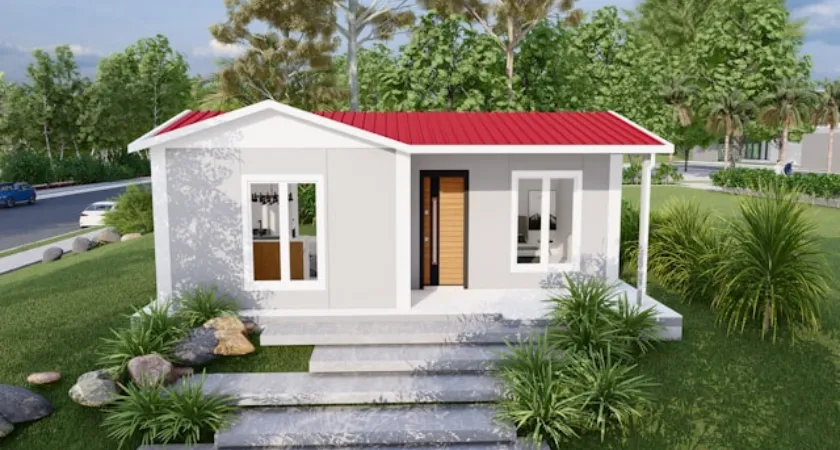
Factory-built housing — where units are constructed in a controlled facility and transported to job sites — has long been viewed as a potential solution to rising construction costs and labor shortages. However, the industry has struggled to scale due to financial and regulatory barriers.
“This is the first time I have seen something like this be suggested, drafted and potentially implemented by a state for housing,” said Tyler Pullen, a researcher at the Terner Center for Housing Innovation at the University of California, Berkeley.
The proposed legislation seeks to address one of the industry’s most persistent challenges: access to surety bonds. These financial instruments protect developers and lenders by guaranteeing that projects will be completed, even if a contractor fails.
Under the bill, the state would act as a reinsurer, stepping in to cover a portion of losses in extreme cases if a bonded project fails. Lawmakers hope that this added layer of security will encourage insurers to underwrite more projects, ultimately unlocking capital and expanding the use of factory-built construction.
“This could be one of the highest impact things, but it has a lot of open questions,” Pullen said.
Industry stakeholders say factory-built housing is caught in a “self-reinforcing cycle” that limits growth. Developers are often hesitant to work with newer factory operators without bonding, while insurers are reluctant to provide bonds to companies without a proven track record.
The result is a stalemate that prevents newer manufacturers from gaining the experience needed to establish credibility.
A bonded project is one that “puts the developers and the lenders at ease,” said Michael Merle, business development director at modular builder Autovol. “If any portion of the project fails, they are not going to be holding the bag.”
By backing insurers, the state hopes to break this cycle, allowing factories to secure more projects, build a track record and eventually lower costs through scale.
Supporters argue the proposal mirrors other government-backed financial programs. Federal entities such as the U.S. Department of Veterans Affairs, along with Fannie Mae and Freddie Mac, guarantee mortgages to expand access to housing finance. Similarly, the Small Business Administration guarantees surety bonds for small businesses.
“The housing factory surety guarantee idea is ‘super innovative,’” said Jan Lindenthal-Cox, chief investment officer at the San Francisco Housing Accelerator Fund. “This is what’s needed if you really want to scale the industry.”
Despite enthusiasm, some industry participants question whether the proposal targets the right challenges.
“Who are we incentivizing?” said Ryan Cassidy, vice president of real estate at Mutual Housing California. “We’re incentivizing developers whose only go/no-go is whether the factory stays in business. To me, that’s a developer who is probably not very savvy.”
.webp)
Others suggest direct subsidies or funding for projects may be more effective than insurance guarantees.
There are also concerns about the potential financial risk to taxpayers. The bill does not yet specify how much liability the state would assume or what conditions would trigger payouts.
Still, supporters argue the program could be temporary, helping the industry reach a level of maturity where private insurers and developers no longer require state support.
“The state can support the early adopters while the factory-built housing industry builds up its reputation,” Pullen said. “This is a problem that could eventually be solved in the private market.”
The bill is expected to receive its first legislative hearing later this month, where lawmakers will further debate its structure and potential impact.
Originally reported by Ben Christopher in Kpbs.