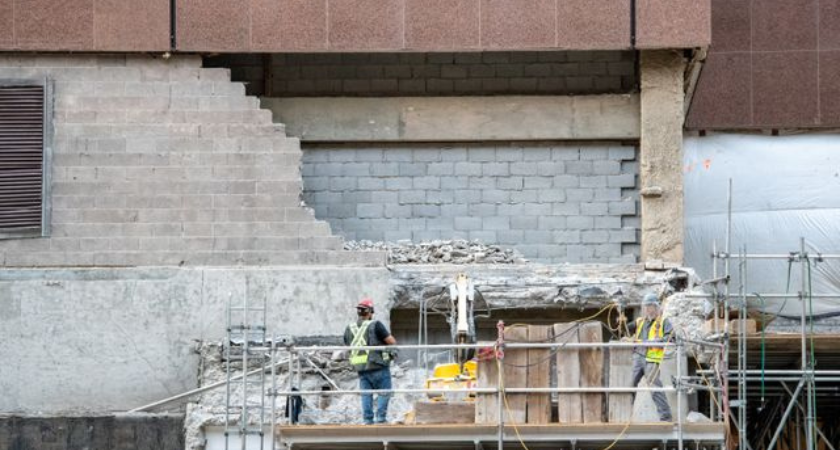
Sacramento, CA — Updated safety requirements governing confined spaces on California construction sites officially took effect Jan. 1, marking a significant shift in how employers must identify, evaluate, and communicate hazards during construction and demolition work.
.jpg)
The revisions to the state’s construction safety orders were approved in September by the California Occupational Safety and Health Standards Board and the Office of Administrative Law. The changes expand employer responsibilities related to confined space identification and ongoing monitoring throughout the life of a project.
Under the updated rules, employers are now required to ensure that a “competent person conduct an initial survey” of the worksite to identify any confined spaces before work begins. Cal/OSHA defines a competent person as “one who is capable of identifying existing and predictable hazards in the surroundings or working conditions which are unsanitary, hazardous or dangerous to employees, and who has authorization to take prompt corrective measures to eliminate them.”
In addition to the initial evaluation, the revisions require employers to have a competent person inspect work areas with sufficient frequency to identify newly created or newly discovered confined spaces as construction progresses.
A new provision also requires employers to notify both employees and the controlling contractor when confined spaces are discovered or created as a result of construction or demolition activity. This requirement is intended to improve communication and coordination among multiple employers operating on the same site.
.jpg)
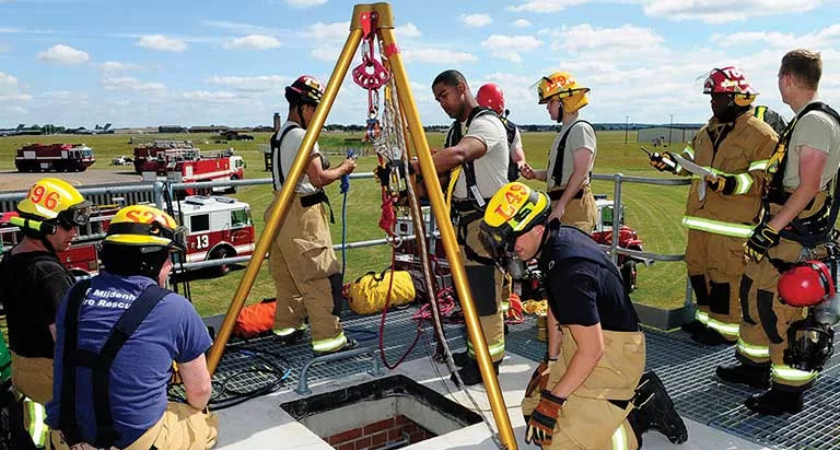
The updated regulations further clarify employer obligations related to permit-required confined spaces. A competent person must identify each confined space that qualifies as permit-required through consideration, evaluation, and testing.
When one or more permit-required spaces are identified, employers must notify exposed workers by posting danger signs or by communicating the hazard’s existence and location through equally effective means. The controlling contractor and employees’ representative also must be informed of each permit-required space.
The revisions include updated definitions intended to reflect evolving workplace hazards. Notably, the regulations now specify that a hazardous atmosphere may be caused by airborne combustible dust that exceeds 20% of the minimum explosive concentration, aligning construction standards more closely with broader industrial safety guidance.
Safety professionals note that the updated rules place greater emphasis on preplanning, documentation, and continuous hazard evaluation, particularly on complex or multi-employer construction sites. Contractors may need to adjust safety programs, training protocols, and site inspections to ensure compliance with the revised requirements.
The changes apply statewide and are now enforceable under Cal/OSHA, reinforcing California’s ongoing focus on reducing serious injuries and fatalities associated with confined space hazards in construction.
Originally reported by Safety and Health Magazine.