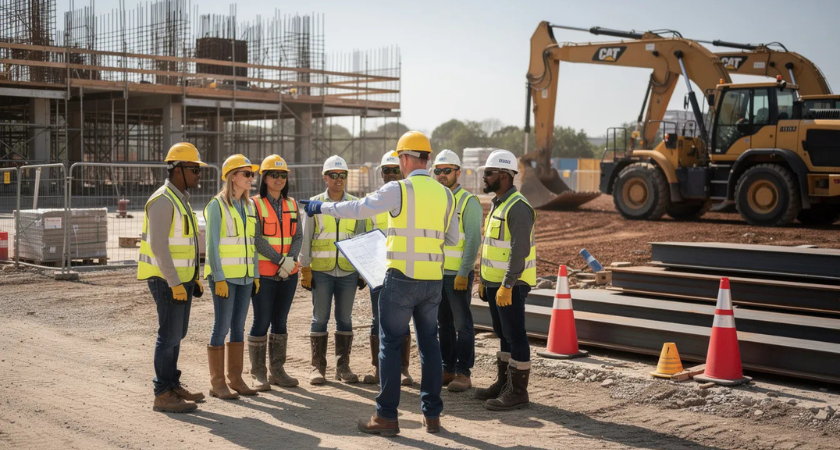
Mental health is becoming a growing operational concern for contractors across Central Texas as construction firms contend with labor shortages, aggressive project schedules and rising workforce burnout tied to the region’s continued growth.
ABC Central Texas is now urging member companies to expand mental health support programs after new industry data highlighted the construction sector’s elevated exposure to stress-related risks, including anxiety, depression, substance misuse and suicide.
The organization recently promoted a stand-alone employee assistance program offered through ABC Insurance Trust and TELUS Health, positioning the initiative as both a workforce support tool and a business continuity strategy for contractors operating in one of the nation’s fastest-growing construction markets.
Industry data cited by the organization indicates construction workers face disproportionately high mental health challenges compared with the broader U.S. workforce. Contractors are also increasingly linking mental health concerns to safety performance, absenteeism, turnover and productivity losses on active jobsites.
The issue has become more pronounced across Central Texas, where rapid development along the Austin-San Antonio corridor continues to intensify schedule pressure, overtime demands and workforce strain for contractors and subcontractors.
Construction firms historically emphasized physical safety metrics such as incident prevention, fall protection and equipment training. However, more employers are beginning to integrate behavioral health initiatives into broader safety and workforce management programs.
Industry groups have increasingly warned that fatigue, chronic stress and untreated mental health conditions can contribute to workplace incidents, impaired decision-making and higher turnover among skilled trades workers.
ABC Central Texas said contractors are showing greater interest in confidential counseling access, crisis support and supervisor awareness training as part of their workforce retention strategies.
The TELUS Health employee assistance program promoted by the organization includes 24-hour counseling access, virtual support options and crisis intervention services. According to the organization, the program is structured as a stand-alone benefit rather than being tied directly to traditional medical insurance enrollment, allowing contractors to extend access to project-based workers, apprentices and field personnel who may not participate in employer health plans.
The construction industry has faced increasing scrutiny over worker mental health in recent years, particularly as labor shortages continue to pressure firms to retain experienced superintendents, foremen and skilled craft professionals.
For construction owners and contractors, mental health support is increasingly being viewed as a workforce stabilization tool rather than solely an employee benefit expense.
Replacing experienced field leadership or skilled trades workers can create significant recruiting, onboarding and productivity costs for contractors already struggling with labor availability. Companies are also facing growing pressure to demonstrate stronger workforce support programs as part of broader safety and corporate responsibility initiatives.
Contractors in Texas and across the U.S. are increasingly incorporating wellness programs, peer-support systems and supervisor training into standard operational practices to reduce burnout and improve retention.
ABC Central Texas said member firms can access discounted pricing for the TELUS Health program through a limited-time enrollment initiative tied to Mental Health Awareness Month.
For owners, developers and general contractors, workforce mental health is becoming directly tied to project execution risk. Burnout, fatigue and workforce instability can affect schedules, productivity, quality control and safety performance across large-scale projects.
As competition for labor remains intense, contractors that invest in workforce support systems may gain an advantage in recruiting and retaining skilled employees while also reducing operational disruptions tied to turnover and absenteeism.
The growing integration of mental health resources into construction safety culture also signals a broader shift in how contractors are managing workforce risk in an increasingly demanding construction environment.
Originally reported by ABC Central Texas.