
It was the fall of 1985, just weeks before Brian T. King completed his Building Construction degree at the University of Florida, when a professor offered a blunt warning about the profession he was about to enter.
“When you tell people you are a contractor, most of them will immediately assume that you are dishonest and can’t be trusted.”
The professor, himself a retired contractor, was addressing what he believed was a deep-rooted image problem. Now, 40 years later, King — founder and CEO of Design-Build firm A M King — reflects on how far the industry has come and how far it still must go.
January 2026 marked four decades since King began his career, prompting him to consider whether that perception still lingers.
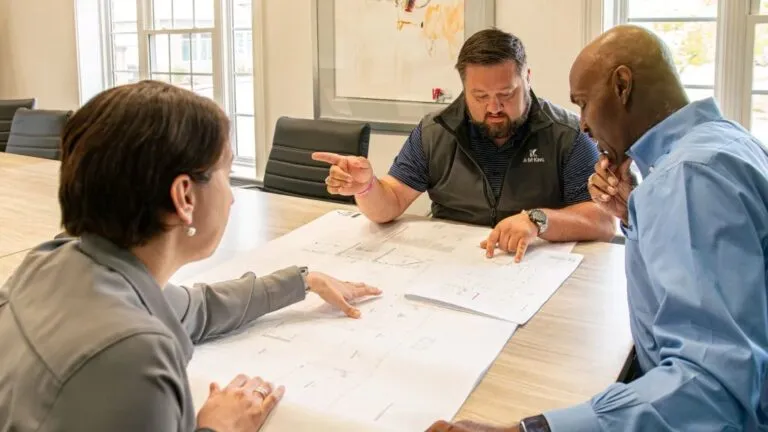
In the 1980s, construction looked very different. Internships meant manual labor in the field, technology was scarce, and many superintendents advanced without formal degrees. Long hours and harsh jobsite environments were considered standard.
King recalls the early warnings he received.
“I remember hearing that a career in construction required working long hours and tolerating demanding jobsite environments, that compliments would be few and far between, and criticism was to be expected.”
He was also cautioned about the type of people he might encounter.
“Regarding the concept of character, I was told I would be dealing with my fair share of unscrupulous individuals. Construction, it was explained to me, would be a tough career.”
Yet his personal experience did not fully match that stereotype.
“With few exceptions, the individuals I worked with and for were of high character. They took pride in their personal integrity, always told the truth regardless of the consequences, had a tremendous work ethic, and demanded high expectations from colleagues and co-workers.”
Still, the public image was another matter. Because contractors manage large financial flows, many owners, architects and subcontractors viewed them with suspicion.
“My college professor’s words were ringing true. Whether right or wrong, from multiple perspectives, there was a character issue.”
King began noticing improvement only a few years into his career. The language of the industry shifted toward collaboration and team building, and new delivery methods such as Design-Build encouraged earlier cooperation.
“Contractors, designers, and subcontractors realized that by working together, beyond their individual silos, they could deliver projects more successfully.”
He also observed that bad actors were increasingly pushed aside.
“Those individuals who exhibited behaviors associated with low character were less tolerated in our industry, considered toxic in many companies, and found themselves on the outside looking in.”
King attributes the shift to three forces: a desire for professionalism, the rise of construction education, and the financial cost of unethical behavior.
On education, he notes:
“Today, there are more than 100 universities in the United States offering construction management degrees… individuals working in today’s construction industry are the best trained and most highly educated in history.”
Citing author Adam Grant, he emphasizes the business impact:
“Character skills enable you to transcend that tendency to be true to your principles. It’s not about the traits you have, it’s about what you decide to do with them. Talent sets the floor, but character sets the ceiling.”
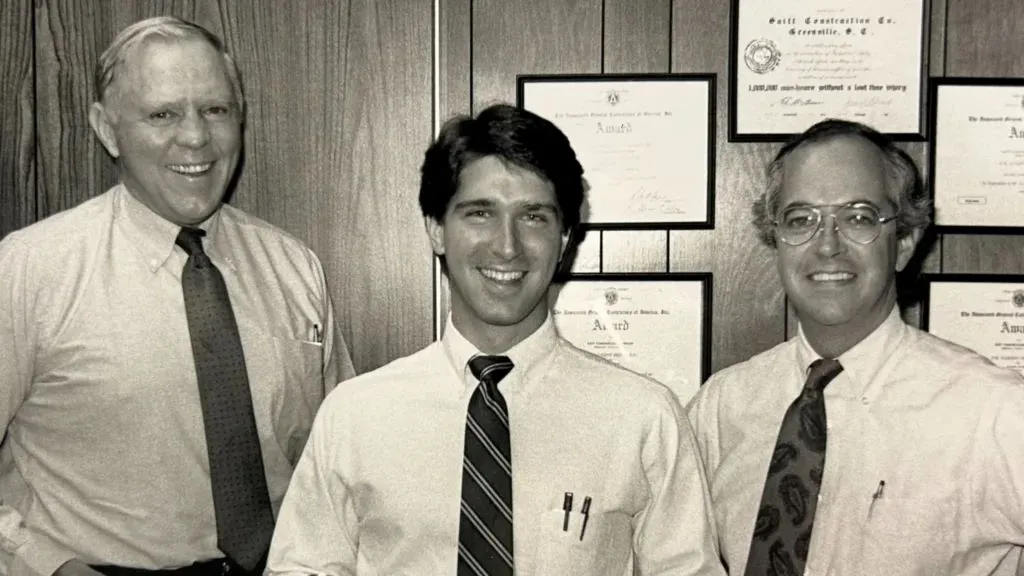
Drawing on decades of leadership, King says most crises he managed were not caused by lack of technical skill.
“Rarely was that problem a result of incompetence or a lack of talent. In virtually every case, the issue stemmed from a lack of character, either from someone within my team, or from outside the company.”
His conclusion is stark:
“Excluding material defects, the vast majority of problems that occur in construction can be attributed to a lack of individual character.”
So has the industry truly changed? King believes it has.
“I see an industry of well-educated men and women who strive to be professional and deliver good work.”
He also sees stronger relationships across project teams.
“I see collaboration and trust among the design, contractor and subcontractor teams, which has improved projects and businesses.”
Most importantly, he senses a cultural reset.
“I further see an industry where character is meaningful, important, and necessary for success.”
For those entering construction today, King offers cautious optimism.
“Construction is still a tough career. But for those entering the construction industry today, my perception is that they are entering a field where character is embraced and expected.”
He hopes the next generation will continue reshaping the industry’s reputation.
“My hope is that through their actions and work, they will further endeavor to maintain that perception.”
Originally reported by Brian T. King, Founder and CEO, A M King in Ground Break Carolinas.