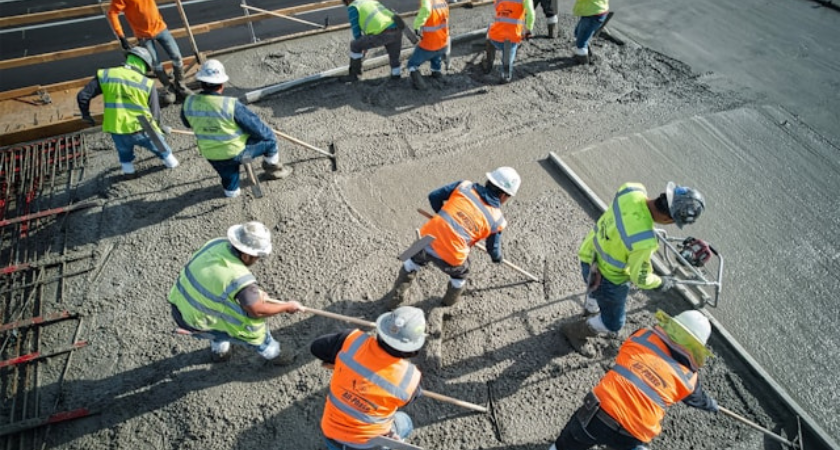
As federal immigration enforcement actions intensify across the country, industries that rely heavily on foreign-born labor are beginning to grapple with renewed uncertainty. Among the most affected is the U.S. construction sector, where immigrant workers remain a foundational part of jobsite productivity, skilled trades staffing, and long-term project delivery. This dependence is especially visible in Colorado, where immigrants account for 21.4% of the entire construction workforce—a share that underscores both regional labor needs and larger national employment trends.
.jpg)
Industry experts note that immigrants play a vital role in nearly every segment of construction, from residential and commercial building to infrastructure repair and maintenance. The widening labor gap, combined with the ongoing push for housing development and public works expansion, means that any disruption in the availability of foreign-born workers could have measurable impacts on project schedules and costs.
Across the country, the share of foreign-born workers in the construction sector has been rising steadily for more than a decade. After dipping during the Great Recession, immigrant participation rebounded strongly—reaching 26% of the national construction workforce in 2023. That growth represents an increase of more than 435,000 foreign-born workers since 2009, bringing the national total close to 2.9 million.
Industry roles that require rigorous physical labor or highly specialized craftsmanship are often the most reliant on foreign-born employees. Nationally, drywall and ceiling installers (56.9%), painters and paperhangers (50.2%), and roofers (50.0%) all have majority-immigrant workforces. Conversely, managerial and administrative construction positions tend to have smaller shares of foreign-born employees.
Colorado’s construction industry employs 244,420 workers, according to the most recent analysis from Construction Coverage. Of that total:
This places Colorado below high-immigrant-concentration states like California (41.5%), Texas (40.2%), and Florida (37.9%), but well above many Mountain West and New England states where immigrant labor represents less than 5% of the construction workforce.
.jpg)
Colorado’s construction sector continues to face persistent labor shortages fueled by rapid growth in housing demand, the expansion of transportation infrastructure, and increased investment in commercial development. These factors amplify the importance of immigrant labor to the state’s economic growth and construction capacity.
National trends show that several major metro areas rely even more heavily on foreign-born construction workers. Cities such as Miami (66.2%), Los Angeles (53.7%), Washington, D.C. (51.7%), and Houston (51.4%) each report majority-immigrant construction workforces. These metro-level patterns highlight both long-standing immigration settlement regions and the large-scale building activity that requires sustained labor availability.
Construction leaders warn that intensified immigration enforcement may pose challenges for states and cities undergoing rapid development. Potential labor shortages could translate into slower project delivery, higher construction costs, and added pressure on housing markets already grappling with affordability constraints.
Despite shifting political dynamics, the long-term trend suggests a steadily increasing reliance on foreign-born workers within the construction industry. As Colorado continues its growth trajectory—from new housing to infrastructure upgrades—the role of immigrant labor will remain central to meeting statewide building goals.
The analysis originates from Construction Coverage, which examined data from the U.S. Census Bureau to better understand immigrant contributions across states and metros.
Originally reported by The Daily Sentinel.