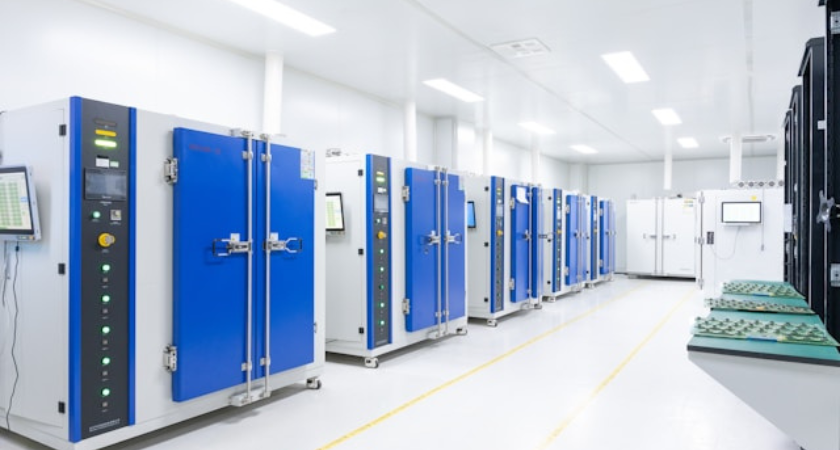
As demand for artificial intelligence continues to surge, data centers have emerged as one of the fastest-paced and most complex segments of the construction industry, forcing contractors to rethink how projects are planned, staffed, and delivered.
.avif)
According to industry projections from Deloitte, power demand for AI-driven data centers in the United States could increase more than thirtyfold by 2035, accelerating the race among hyperscalers and colocation developers to bring new capacity online. That urgency has fundamentally changed expectations for contractors, who are now being asked to deliver massive, high-density facilities in delivery windows as short as 12 to 14 months.
In some cases, developers are deploying temporary server structures while permanent buildings are still under construction, allowing AI training and data processing to begin months earlier than traditional project timelines would allow. The approach underscores a clear industry message: early compute delivery provides a competitive market advantage, and contractors are expected to make it happen.
Meeting these aggressive schedules requires rapid mobilization of large workforces, often in remote locations with limited access to skilled labor. Contractors may deploy more than 150 tradespeople in the first week, scale to 500 workers within two months, and eventually peak at 1,000 to 5,000 craft professionals over the life of a project.
These sites often require contractors to build full operational ecosystems from the ground up, including temporary housing, expanded logistics networks, and carefully sequenced material deliveries. At the same time, the technical demands of data centers continue to grow. Mechanical rooms are denser, electrical systems carry unprecedented loads, and cooling infrastructure must meet strict redundancy requirements. Overhead spaces are tightly packed with piping, conduit, cable tray, and structural elements, leaving little to no margin for error.
Speed does not reduce the need for accuracy—it amplifies it. Even minor layout errors, such as misplaced embeds or sleeves, can trigger cascading delays across multiple trades and disrupt entire data halls. In high-density mechanical and electrical environments, a single conflict can stall progress across the jobsite.
To mitigate these risks, contractors are placing greater emphasis on:
The goal is to eliminate surprises, reduce rework, and keep field crews moving without interruption.
To achieve this level of coordination, contractors are increasingly adopting connected construction workflows that integrate design, fabrication, layout, installation, and quality control into a single digital ecosystem. At the core of this approach is the Common Data Environment (CDE)—a centralized, continuously updated source of truth that replaces fragmented workflows built around static documents and disconnected systems.
Within a CDE, models, drawings, layout data, RFIs, scans, and field updates are shared in real time. Design intent flows directly into fabrication, fabrication progress informs scheduling, and field scans validate installation accuracy before the next trade mobilizes. This circular workflow improves predictability, reduces conflicts, and strengthens coordination across all phases of construction.
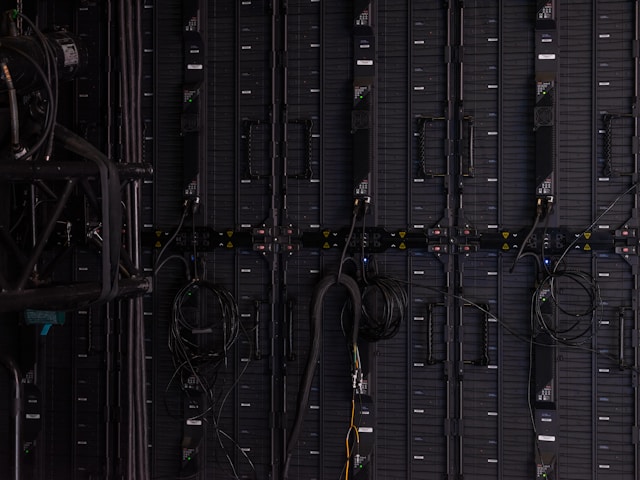
Contractors are leveraging connected workflows in several critical areas to support rapid data center delivery:
Integrated architectural, structural, mechanical, electrical, and plumbing models allow teams to resolve conflicts early, reducing congestion and uncertainty once construction begins.
Robotic total stations and laser scanners extend model precision into the field, enabling crews to set anchor bolts, sleeves, and embeds within tight tolerances while verifying installed work before downstream trades arrive.
Fabrication software connected directly to coordinated models supports sequencing, quality control, and just-in-time delivery. Real-time visibility into shop progress helps contractors align deliveries with actual site readiness, minimizing material handling and storage challenges.
Tablets and mobile devices give field crews instant access to the latest drawings, models, and installation instructions. Updates propagate immediately, allowing teams to respond quickly to changes and maintain momentum on compressed schedules.
Data centers now represent one of the most demanding project types in construction, and the lessons learned are reshaping expectations across the industry. Contractors that embrace connected workflows are not only better equipped to deliver AI-driven infrastructure—they are building capabilities that will define competitive performance, predictability, and coordination across all construction sectors in the years ahead.
Originally reported by Duane Gleason in Contractor Mag.