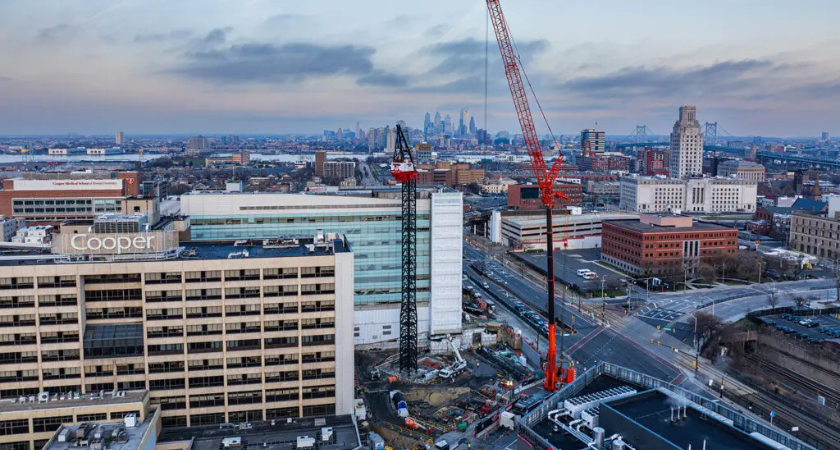
Construction teams working on Cooper University Health Care’s Project Imagine in Camden, New Jersey, have entered a significant new phase of development as the large-scale healthcare expansion moves into vertical construction and structural steel operations.
The project recently progressed beyond initial sitework and deep foundation activities, with crews now focused on concrete placement, foundation wall construction and core structural systems.
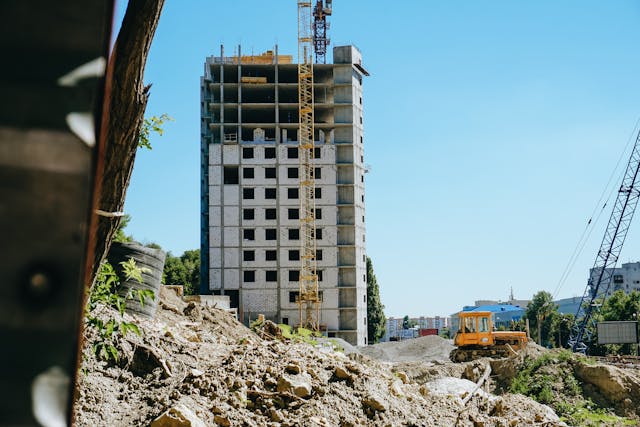
Among the completed milestones are elevator core slabs and stormwater tank mat slabs, while work continues on pile caps and additional foundational infrastructure supporting the future medical tower.
The next stage of the project includes large-scale steel erection operations supported by a newly installed tower crane system. Project teams mobilized a 750-ton hydraulic crane, along with two supporting cranes, to assemble the tower crane that will oversee the high-rise construction phase.
According to project officials, the crane structure will extend roughly 420 feet above street level and feature a reach of approximately 220 feet, allowing crews to manage complex steel installation activities across the expanding hospital campus.
The healthcare expansion is expected to incorporate nearly 5,000 structural steel components fastened with more than 150,000 connection bolts during construction.
The work is being managed through a joint venture between Torcon and P. Agnes, firms with significant experience in healthcare and institutional construction throughout the Northeast.
For contractors and healthcare owners, Project Imagine reflects continued momentum in hospital infrastructure investment as providers expand capacity, modernize facilities and upgrade clinical environments to meet rising patient demand and evolving care delivery standards.
Large healthcare construction projects have remained active despite broader market uncertainty, supported by long-term demographic trends, aging infrastructure and demand for advanced treatment facilities. Complex hospital developments also continue to generate opportunities for specialty contractors involved in structural systems, mechanical infrastructure, medical technology integration and life-safety construction.
Projects of this scale typically require highly coordinated sequencing due to ongoing hospital operations, urban site constraints and extensive regulatory requirements tied to healthcare occupancy and safety standards.
Industry observers note that crane mobilization and structural steel installation often mark a major turning point in large institutional projects, signaling accelerated schedule activity and increased workforce deployment onsite.
For healthcare systems and construction owners, the rapid advancement of Project Imagine underscores continued confidence in long-term capital investment strategies tied to regional healthcare growth and modernization.
Source: Torcon.