
Large-scale data center developments, airport expansion projects, and continued progress on major mixed-use sites across the Twin Cities are expected to define Minnesota’s construction landscape in 2026, according to industry surveys and project updates.
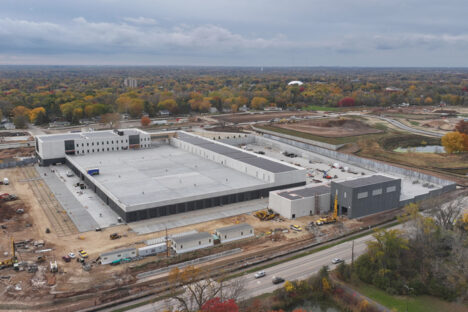
Contractors responding to a recent Associated General Contractors of Minnesota survey expressed the strongest optimism for technology-related construction, particularly data centers. Seventy-six percent of respondents said they expect the technology and data center segment to expand in 2026, making it the fastest-growing construction sector in the state. In contrast, only 6% of respondents anticipated growth in the commercial office sector, while health care, heavy civil and infrastructure, and senior housing posted moderate expectations.
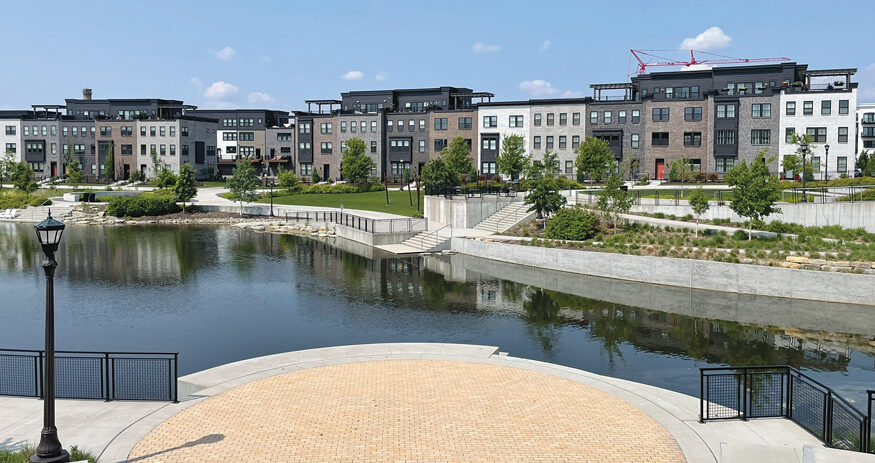
Beyond technology-driven projects, construction activity will remain steady at Minneapolis–St. Paul International Airport and across several multi-year mixed-use redevelopments in St. Paul and the broader metro area. Projects such as Highland Bridge and The Heights are expected to reach new milestones as housing, retail, infrastructure and public spaces continue to take shape.
Among the most closely watched technology developments is the proposed Monticello Tech/Frattalone data center campus. Planned on a 550-acre site south of 85th Street and east of Highway 25, the project carries an estimated cost of between $2.5 billion and $5 billion. Frattalone Development has said the project could generate 200 to 500 full-time jobs and more than 1,000 construction jobs over five to 10 years, citing the site’s proximity to an Xcel Energy power plant and existing power infrastructure. While no formal applications have yet been submitted, the scale of the project positions it as a major driver of future construction activity.
Mixed-use redevelopment remains another dominant theme across the metro. In Plymouth, work continues at The Boulevard redevelopment of the former Prudential campus, a 75-acre site planned for housing, retail and commercial uses. Several openings and construction phases are scheduled throughout 2026, including retail buildouts, affordable housing construction and pre-leasing for new residential buildings.
In St. Paul, Highland Bridge — the $1 billion-plus redevelopment of the former Ford Motor Co. plant — will see continued work on housing and retail projects at multiple blocks. New multifamily buildings, senior housing, retail space, childcare facilities and structured parking are all part of the next phase, reinforcing the project’s role as one of Minnesota’s largest urban redevelopments.
At The Heights redevelopment on St. Paul’s East Side, public infrastructure will be fully completed in 2026, including utilities, roads, sidewalks and lighting. Housing construction will continue alongside completion of Xcel Energy’s Saint Paul Service Center and additional Habitat for Humanity homes.
Additional large-scale redevelopment is planned in Blaine’s 105th Avenue Redevelopment Area, where Scheels is preparing to build a 250,000-square-foot store alongside multifamily housing, a stadium, hotel, parking ramp and entertainment-focused development. City officials expect vertical construction to begin in the spring.
Transportation infrastructure will also remain a major construction focus. At Minneapolis–St. Paul International Airport, the $263 million Terminal 2 north expansion will continue through 2026 and into 2027, adding airline gates, passenger seating, restrooms and concession areas. Meanwhile, MnDOT and the Wisconsin Department of Transportation are preparing to launch construction of the $1.8 billion Blatnik Bridge replacement, a major interstate project connecting Duluth and Superior.
Higher education and innovation-related development will advance at the Minnesota Innovation Exchange, or “The MIX,” near the University of Minnesota campus. Mortenson Construction has obtained city entitlements for the first building, and site preparation work is expected to move forward.
“We at UMFREA are looking forward to performing demolition work on the site to make it ready for a potential groundbreaking in 2026,” said Pat Mascia, managing director of the University of Minnesota Foundation Real Estate Advisors. “We are also working on our phase 1 public realm design for city approval in the spring of 2026.
“In the meantime, the Mortenson/CBRE team is beginning to heavily market the building to prospective tenants that will help us create an innovation ecosystem at The MIX that will leverage our region’s and the University’s many strengths and allow Mortenson to kick the project off.”
Redevelopment near Allianz Field at United Village is also expected to gain momentum, with new restaurants, office space, a boutique hotel and public amenities scheduled to open or advance in 2026.
McGuire said some “pretty exciting things” are happening at United Village.
“I think everybody will be very happy with what they see there and how it fits into the community,” he said.
Collectively, these projects highlight how Minnesota’s 2026 construction outlook is being shaped by technology infrastructure, transportation investment and long-term mixed-use redevelopment, even as some traditional sectors face slower growth.
Originally reported by Brian Johnson in Finance-Commerce.