Senate Democrats have suspended bipartisan permitting reform negotiations following the Trump administration’s decision to halt construction on all offshore wind projects currently under development in the United States.
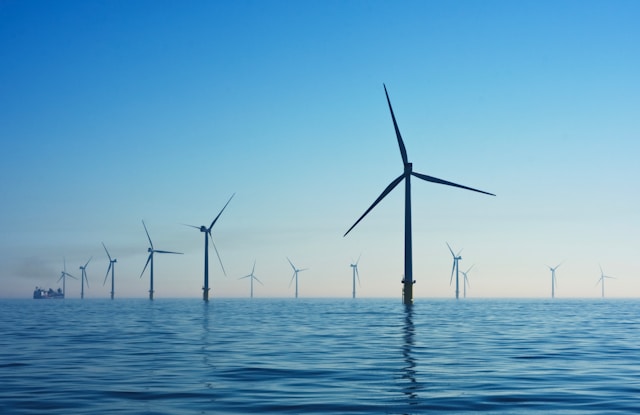
The pause affects five offshore wind projects totaling roughly 7 gigawatts of capacity and prompted an immediate response from Democratic leaders involved in the negotiations. The decision to walk away from talks was announced Dec. 22, just days after the U.S. House passed a permitting reform bill.
“The illegal attacks on fully permitted renewable energy projects must be reversed if there is to be any chance that permitting talks resume,” Sens. Sheldon Whitehouse, D-R.I., ranking member of the Senate Environment and Public Works Committee, and Martin Heinrich, D-N.M., ranking member of the Energy and Natural Resources Committee, said in a statement. “There is no path to permitting reform if this administration refuses to follow the law.”
The senators warned that the administration’s actions would have long-term consequences for consumers and the energy system.
“The Trump administration will own the higher electricity prices, increasingly decrepit infrastructure, and loss of competitiveness that result from its reckless policies,” they said.
The permitting talks unraveled shortly after the House approved the Standardizing Permitting and Expediting Economic Development Act, known as the SPEED Act. The legislation proposes revisions to the National Environmental Policy Act, including provisions designed to limit agencies from revisiting permits after they have been issued.
While framed as a broad permitting reform effort, the bill includes language that critics say disproportionately targets offshore wind. In addition to halting offshore projects, the Trump administration has also effectively stalled new solar and wind development on federal lands.
Whitehouse and Heinrich said negotiations could have produced meaningful reforms to improve permitting timelines and efficiency.
“But any deal would have to be administered by the Trump administration,” the senators said. “Its reckless and vindictive assault on wind energy doesn’t just undermine one of our cheapest, cleanest power sources, it wrecks the trust needed with the executive branch for bipartisan permitting reform.”
Despite the breakdown, the senators acknowledged the efforts of their Republican counterparts.
Whitehouse and Heinrich thanked Sens. Shelley Moore Capito, R-W.Va., and Mike Lee, R-Utah, chairs of the relevant Senate committees, for their “good-faith efforts to negotiate a permitting reform bill that would have lowered electricity prices for all Americans.”
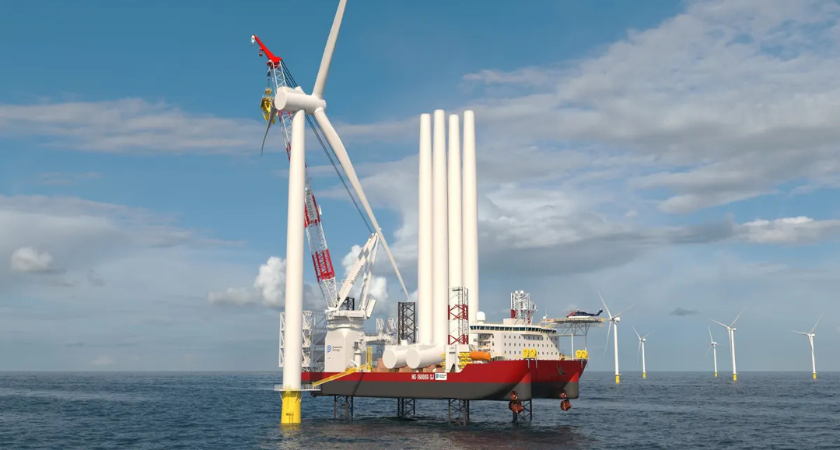
The administration’s 90-day construction halt applies to five offshore wind projects already under development: the 2.6-GW Coastal Virginia Offshore Wind project; New York’s 2-GW Empire Wind and 924-MW Sunrise Wind; the 800-MW Vineyard Wind 1 project off Massachusetts; and the 700-MW Revolution Wind project off Rhode Island.
The administration cited undisclosed national security concerns as the basis for the freeze, a move that has raised alarm among renewable energy developers, utilities, and state officials who argue the projects were fully permitted and vetted.
Energy analysts warn that delaying or canceling large-scale offshore wind projects could worsen grid reliability challenges and place additional pressure on electricity prices, particularly as demand grows from electrification and data center expansion.
With midterm elections approaching and trust between congressional Democrats and the executive branch deteriorating, the outlook for comprehensive permitting reform appears increasingly uncertain. Industry observers say the collapse of talks could leave both renewable and conventional energy projects navigating a permitting system that remains slow, complex, and politically charged.
Originally reported by Ethan Howland, Senior Reporter in Utility Dive.