The long-running renovation of the Federal Reserve’s headquarters in Washington, D.C., has intensified into a political and legal flashpoint after the Justice Department issued grand jury subpoenas tied to the project, Federal Reserve Chair Jerome Powell confirmed on Jan. 11.
The renovation — which now carries a projected cost of $2.5 billion, up from an initial estimate of $1.9 billion — has fueled months of friction between the White House and the central bank. Powell characterized the DOJ inquiry as part of broader political pressure from the Trump administration, which has repeatedly criticized the project’s scope and price tag.
.webp)
Any finding of mismanagement or fraud, as alleged by some Trump administration officials, could provide grounds to attempt Powell’s removal — a possibility that comes amid the president’s ongoing frustration with interest rate policy.
Critics of the renovation have focused on certain design elements they characterize as excessive, including green roofs and elevator modifications. The Federal Reserve has countered that the soaring costs reflect the realities of building underground in one of Washington’s most geologically complex areas — land that was once swamp near the Potomac River’s Tidal Basin.
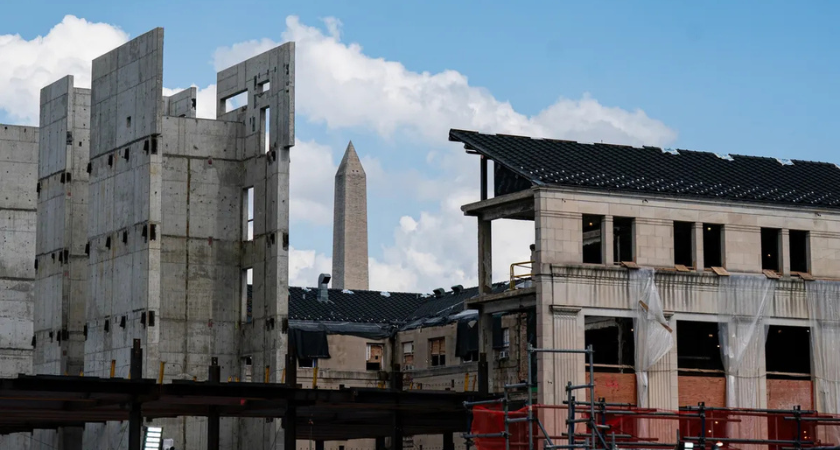
The project encompasses the renovation and expansion of the 1937 Marriner S. Eccles Federal Reserve Board Building and an adjacent 1931 federal building, both of which had never undergone a comprehensive overhaul. Since 2023, costs have climbed more than 30%, driven by structural challenges, regulatory oversight, and inflation in construction materials.
Foundation work proved so difficult that contractors were awarded a 2025 honor for “excellence in the face of adversity” by the Washington Building Congress.
Administration officials, however, have pointed to what they describe as luxury features. In a July 10 letter, Office of Management and Budget Director Russell Vought labeled the project an “ostentatious overhaul” that includes “rooftop terrace gardens,” “VIP dining rooms and elevators” and other amenities. Federal Housing Finance Agency Director Bill Pulte, a frequent Powell critic, played a key role in pushing for the DOJ investigation.
Powell has pushed back against claims of excess, saying the project has been mischaracterized. In a July 17 response to Vought, Powell said the gardens were simply green roofs and that elevator changes were designed to improve accessibility for people with disabilities.
In a statement and video released Jan. 11, Powell said the DOJ’s actions “should be seen in the broader context of the administration’s threats and ongoing pressure.”
The renovation also includes extensive safety and modernization upgrades, such as asbestos and lead removal, replacement of outdated mechanical systems, and compliance with post–Sept. 11 federal security standards.
“No one in office wants to do a major renovation of a historic building during their term in office,” Powell said in congressional testimony last June. “We decided to take it on because, honestly, when I was the administrative governor, before I became chair, I came to understand how badly the Eccles Building really needed a serious renovation. It never had one. It was not really safe and it was not waterproof.”
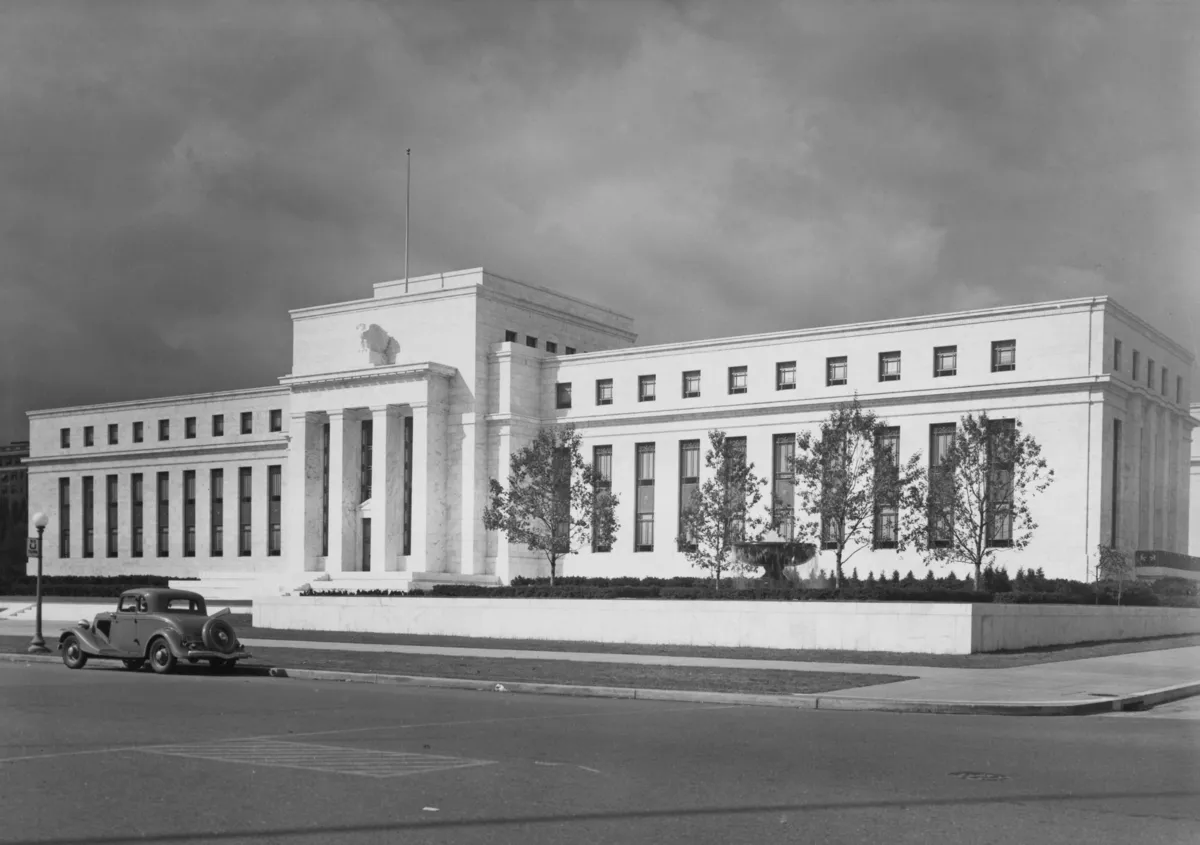
Some of the most expensive elements of the project are hidden below ground. The renovation includes converting an existing parking garage beneath the Eccles Building into office space, adding four underground floors beneath a five-story expansion of the East Building, and constructing a new 318-space parking garage under the south lawn.
According to the Fed, builders encountered a higher-than-expected water table, complicating excavation. Specialty contractor Berkel and Company Contractors was required to lower the building’s foundation slab more than 20 feet while supporting the structure above — a process involving roughly 1,000 micropiles.
Similar underground construction challenges have driven up costs for other major Washington landmarks, including the Smithsonian’s National Museum of African American History and Culture and the National September 11 Memorial and Museum.
A 2021 report from the Federal Reserve’s Office of Inspector General found no evidence of fraud or waste, though it recommended improvements in project documentation and contractor reporting. The report concluded that the Fed complied with applicable government and industry standards.
The renovation is being led by Fortus, a joint venture between engineering firm Arcadis and Washington-based architecture firm Quinn Evans, both of which specialize in complex, high-profile restoration projects.
Design changes over the years — including a shift toward increased use of white marble following federal design mandates during the Trump administration — also contributed to delays and cost escalation.
During a 2021 review, General Services Administration official Mina Wright described the process as unusually contentious.
“They’ve been really put through their paces,” Wright said. “They’ve had some hostile criticism at one point that was unjustified.”
Originally reported by Kriston Capps in Bloomberg.