.png)
The average construction CFO spends 11 hours per week on administrative tasks that artificial intelligence could handle in minutes. While competitors focus on chasing workers they'll never hire, the finance leaders attending Acumatica Summit 2026 in Seattle are taking a different approach: using AI to make their existing teams more productive.
More than 3,000 attendees will gather at the Seattle Convention Center January 25-28, and the agenda reflects a clear priority. AI-powered sessions dominate the breakout schedule, particularly those addressing construction industry challenges where margins are tight and errors are expensive.
For CFOs managing project-based accounting, certified payroll compliance, and job costing across multiple locations, these five sessions offer practical solutions to problems that have plagued the industry for decades.
When: Monday, January 26, 1:30 PM - 2:30 PM
Presented by: Lumber
Session Type: Partner Solution Session
The construction finance role is being rewritten, and this session examines exactly how. Lumber presents a framework for understanding what "intelligent back office" actually means in practice, moving beyond buzzwords to concrete operational changes.
The session addresses three specific areas. First, it outlines how construction back offices are shifting from paper trails and manual data entry to predictive insights that flag issues before they become problems. A project accountant who once spent hours reconciling timecards against job costs now oversees a system that validates entries automatically and alerts them only to exceptions requiring human judgment.
Second, the session identifies new skills finance leaders need to develop. When AI handles routine tasks, finance teams shift from processors to analysts. The ability to interpret AI-generated insights, understand when to override system recommendations, and communicate financial implications to project managers becomes more valuable than speed at data entry.
Third, Lumber demonstrates how integrating workforce management with AI-powered job costing creates competitive advantages. Construction companies using these integrated systems report faster project closeouts, more accurate work-in-progress reporting, and improved cash flow because they can bill clients faster with supporting documentation the system generates automatically.
For construction CFOs, this session provides a roadmap for transformation. The presenters use real customer examples, showing how companies similar in size and complexity have implemented these changes. Attendees leave with specific actions they can take, rather than abstract concepts about digital transformation.
Lumber will be at Booth #617, "The Lumber Lodge," throughout the Summit. CFOs who book one-on-one meetings during the conference are entered to win Ray-Ban Meta AI Glasses. | Pre-book a meeting with Lumber Experts
When: Tuesday, January 27, 2:45 PM - 3:45 PM
Session Type: Two-Hour Workshop
Led by: Acumatica Product Team
This two-hour workshop moves beyond presentations to hands-on experience. Participants work directly with AI Studio, Acumatica's low-code framework for creating automated workflows without programming knowledge.
The workshop structure walks through five stages of automation. Action invocation covers how to trigger automated processes, either manually or through workflow rules. Prompt generation demonstrates how to gather relevant data from business entities and populate predefined templates. Participants see how the system sends prompts to AI services, processes responses, validates outputs against business rules, and applies changes to relevant records.
For construction CFOs, the value lies in practical applications. The workshop includes examples specific to construction operations, such as automating invoice categorization by cost code, validating timecard entries against prevailing wage requirements, and generating variance explanations when project costs exceed budgets by predefined thresholds.
Attendees configure actual automations during the session using sample data that mimics real construction scenarios. They define which fields an automation should update, specify data sources it should consider, and set conditions that trigger the automation. The testing interface lets administrators preview automation behavior before enabling it for production use.
The workshop addresses a critical barrier to AI adoption in construction companies. Traditional ERP customization required programming expertise and IT department involvement, creating bottlenecks. Finance teams that wanted automated processes had to submit requests, wait for development resources, and hope the final product addressed their actual needs. AI Studio changes this dynamic by putting configuration capabilities directly in the hands of business users who understand the processes being automated.
Click here to attend the session
When: Tuesday, January 27, 1:30 PM - 2:30 PM
Session Type: Core Product Session
Led by: Acumatica Technical Leadership
Summit's Product Roadmap session consistently ranks among the most attended. The session provides early insight into upcoming features and capabilities, allowing CFOs to plan technology investments strategically.
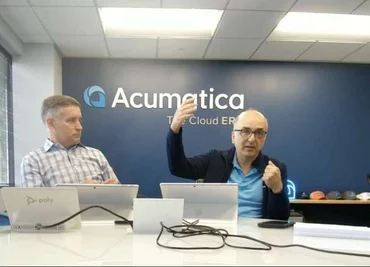
For 2026, the construction-specific roadmap focuses heavily on AI-enabled capabilities. Acumatica Chief Product Officer Ali Jani typically leads this session alongside key technical decision-makers, sharing information about features scheduled for release throughout the year.
Construction finance leaders attending this session learn about improvements to project billing, enhanced work-in-progress reporting tools, and new automated compliance checks for certified payroll. The roadmap session also covers upcoming enhancements to change order management, subcontractor payment processing, and retention tracking.
What makes this session valuable is the opportunity for direct interaction. Attendees can ask questions about specific features, provide feedback on planned capabilities, and influence development priorities. Acumatica's product team uses these sessions to gauge customer interest and adjust roadmaps based on community input.
The session also addresses AI integration plans. Attendees learn which processes will receive AI-powered automation in upcoming releases, how data privacy protections will work, and what training resources will be available when new features launch.
For CFOs planning annual budgets and multi-year technology strategies, this information proves crucial. Knowing what capabilities are coming helps finance leaders decide whether to invest in custom development for current needs or wait for native features in upcoming releases.
Click here to attend the session
When: Monday, January 26 (specific time TBA)
Session Type: Construction-Specific Track
Led by: Acumatica Construction Team
Project billing represents a critical pain point in construction finance. Delays in billing mean delays in cash collection, which affects everything from vendor payments to project funding. This session examines how AI-powered tools reduce billing cycle times while improving accuracy.
The session focuses on new reporting capabilities and interactive work-in-progress tools that leverage AI. Traditional WIP reporting required accountants to manually review project costs, verify percentages of completion, and reconcile billing schedules against actual progress. The process consumed days at month-end and often delayed invoicing while project teams gathered supporting documentation.
AI-enabled WIP tools automate much of this process. The system analyzes project transactions, compares actual costs against budgets, calculates completion percentages based on predefined formulas, and flags variances requiring review. When unusual patterns appear—such as cost codes suddenly exceeding budgets or labor hours spiking on specific phases—the system alerts project accountants before running final billing.
The session demonstrates these tools using real project scenarios. Attendees see how the system handles common situations like cost transfers between phases, change orders affecting billing schedules, and retention calculations. The interactive format allows participants to ask questions about specific billing challenges their companies face.
For construction CFOs, faster billing cycles directly impact cash flow. Companies that bill within days of month-end rather than weeks see measurable improvements in days sales outstanding and working capital requirements. When AI handles routine validation and calculation tasks, finance teams focus on high-value activities like client communication and variance analysis.
When: Tuesday, January 27 (specific time TBA)
Session Type: Technical Deep Dive
Led by: Acumatica Engineering Team

Construction projects generate thousands of transactions monthly. A single large project might involve hundreds of workers, dozens of vendors, and multiple subcontractors. Each transaction creates an opportunity for error, and small mistakes compound into significant financial impacts.
This session examines how AI-powered anomaly detection identifies unusual patterns in real time. The system continuously scans transactional data to flag irregularities that might indicate errors, fraud, or process breakdowns.
For construction companies, common anomalies include vendor invoices significantly higher than historical averages, material costs exceeding typical ranges for specific cost codes, labor hours that don't align with project schedules, and timecard entries showing employees at multiple locations simultaneously.
The session covers how the system learns from company-specific data patterns. Construction companies have different norms based on their work types, geographic locations, and business models. A framing subcontractor's material costs per square foot differ from an electrical contractor's. The AI system develops baselines unique to each company, improving accuracy over time.
Attendees learn how to configure detection thresholds, route alerts to appropriate reviewers, and track resolution of flagged items. The system provides tools for investigating anomalies, including transaction histories, pattern analysis, and comparison views showing how flagged items differ from normal ranges.
Chief Engineering Officer Miten Mehta described these capabilities as "on-demand data scientists" that automatically find patterns human reviewers would take hours to spot. For construction CFOs managing multiple projects simultaneously, this capability provides a safety net. The system works constantly in the background, ensuring unusual activity gets attention before it affects project profitability or client relationships.
The session includes case studies from construction companies that have implemented anomaly detection. Attendees hear about specific errors these systems caught, the financial impact of early detection, and lessons learned during implementation.
Construction faces unique pressures in 2026. Labor shortages continue, with the industry needing 499,000 new workers to meet project demand. Wages have increased 4.2% year-over-year. Material costs remain volatile. Project margins stay thin, typically in the 2-5% range for commercial work.
In this environment, operational efficiency becomes a competitive advantage. Companies that reduce administrative overhead, improve billing accuracy, and catch errors early operate with lower costs and better cash flow than competitors still relying on manual processes.
AI automation addresses these challenges directly. When systems handle routine validation, calculation, and reporting tasks, finance teams focus on analysis and decision support. When AI flags unusual patterns automatically, companies avoid costly mistakes. When integrated systems eliminate duplicate data entry and manual reconciliation, project closeouts happen faster.
The sessions at Summit 2026 provide practical guidance for implementation. Rather than theoretical discussions about AI capabilities, these sessions show working systems solving real construction finance problems. Attendees see demonstrations, ask questions about their specific situations, and learn from peers who have already implemented these tools.

CFOs planning to attend these sessions should prepare in advance. Review current pain points in your finance operations. Identify specific processes where errors occur frequently or manual work consumes excessive time. List questions about how AI might address these challenges in your specific operating environment.
Download the official Summit mobile app before arriving in Seattle. The app allows you to view the full agenda, add sessions to your personal schedule, and receive notifications about room changes or updates. Many popular sessions fill quickly, so planning your schedule early ensures you get into priority sessions.
Consider bringing members of your finance team to Summit. When multiple people from your organization attend, you can divide sessions to cover more ground. Project accountants, payroll administrators, and controllers each have different priorities and will benefit from different sessions. Coordinating attendance ensures your team captures the maximum value from the event.
Book one-on-one meetings with solution providers before the conference. The Summit Marketplace features more than 100 exhibitors, many offering construction-specific solutions that integrate with Acumatica. Scheduled meetings ensure you have dedicated time to discuss your company's specific needs rather than competing for attention in a crowded booth.
For construction CFOs specifically, connect with Lumber at Booth #617. Their team provides detailed demonstrations of workforce management integration with Acumatica, showing exactly how the intelligent back office concepts from their session work in practice. Pre-booking a meeting enters you in the drawing for Ray-Ban Meta AI Glasses and guarantees you receive focused attention on your company's requirements.
The value of Summit extends beyond formal presentations. Networking opportunities throughout the event connect you with other construction CFOs facing similar challenges. Casual conversations during breaks, meals, and evening events often provide insights as valuable as scheduled sessions.
The Women in Tech Luncheon on Tuesday brings together hundreds of attendees for inspiration and community building. Even if you're not the primary target audience, the event features speakers and panelists who share perspectives on technology leadership that benefit all attendees.
The Summit Celebration Party on Tuesday evening provides a relaxed atmosphere for deeper conversations. Many attendees cite the relationships formed at these social events as highlights of their Summit experience. When you're evaluating whether to implement new technology or change existing processes, having relationships with peers who've already made similar decisions proves invaluable.
The Hackathon, running January 24-25, offers another networking opportunity. Even if you're not participating directly, attending the judging session on Sunday shows what's possible when developers, consultants, and business users collaborate to build AI-powered solutions. Last year's winning project created automation that extracted sales orders from customer emails, demonstrating capabilities that many CFOs didn't realize were possible.

The real value of Summit emerges in the weeks following the event. CFOs who attend sessions, collect information, and then return to business as usual see limited benefit. Those who create action plans and begin implementation see measurable improvements.
Before leaving Seattle, schedule a debrief meeting with your team for the week after you return. Review session notes, compare observations, and identify top priorities for your organization. Create a shortlist of three to five specific improvements you want to implement in the next 90 days.
For AI automation initiatives, start small. Select one high-impact process where automation delivers clear benefits and implement it first. Accounts payable invoice processing works well as an initial project because benefits are measurable—fewer data entry hours, faster approval cycles, reduced payment errors. Success with this first project builds organizational support for broader automation initiatives.
Maintain connections you made at Summit. Exchange contact information with peers from other construction companies. Join Acumatica's online community portal to continue conversations and access resources. Many Summit attendees find that the relationships they build become ongoing sources of advice and support long after the conference ends.
The transformation from manual data entry to AI-powered decision support is underway. Construction finance teams that adapt to this new reality gain competitive advantages through lower operating costs, faster cash conversion, and better information for business decisions.
Summit 2026 represents a snapshot of this transformation. The five sessions highlighted here address immediate operational challenges while pointing toward the future of construction finance. CFOs who attend these sessions position themselves and their organizations at the forefront of industry change.
Registration remains open at https://summit.acumatica.com/. With early bird pricing ended, standard registration costs $1,895 and includes access to all keynotes, breakout sessions, the Summit Marketplace, networking events, and meals throughout the conference.
For construction CFOs evaluating whether to attend, consider the alternative. While you're working through manual processes and fighting daily fires, competitors are implementing AI automation that reduces their operating costs and improves their financial performance. The question isn't whether to adopt these technologies—it's whether you'll lead the change or struggle to catch up later.
Register for Acumatica Summit 2026 in Seattle (January 25-28) to see these AI capabilities in action and connect with the construction finance leaders defining the industry's future.