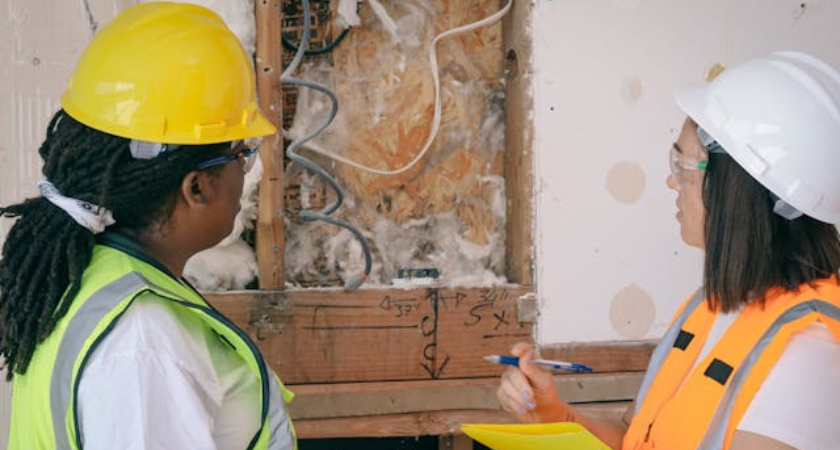
Young workers — including many with college degrees — are increasingly eyeing careers in construction and other skilled trades as they search for stability, solid wages and protection from artificial intelligence, according to a new survey.
Six in 10 Gen Zers plan to pursue jobs in construction, electrical, HVAC, plumbing, building maintenance and manufacturing, among other trades, according to the survey of 1,250 respondents born between 1997 and 2012 by Resume Templates.
.webp)
“Many young adults are questioning whether college debt is worth it and are instead exploring blue-collar careers that offer solid income, skill development, and long-term security,” says Julia Toothacre, chief career strategist at Resume Templates.
The results mark a sharp shift from attitudes measured just a year ago. A 2025 Harris Poll found fewer than 40% of Gen Z respondents interested in the trades, largely because many were unfamiliar with the opportunities.
“Only 38% of Gen Z says skilled trades offer the best job opportunities today” and “only 36% strongly agree skilled trades offer a faster and more affordable path to a good career,” that Harris Poll report said when it was released last summer.
For young workers who go into the trades, they should find opportunity as well as employers ready to train them, reports show.
There will be openings for roughly 150,000 construction workers and 80,000 electricians each year for the next several years, according to U.S. Bureau of Labor Statistics data.
Employers — helped by state and federal resources as well as private-industry money — are stepping up with apprenticeship and other types of programs. A representative sample from last year shows a range of programs companies are offering:
In their hunt for workers, business competitors are joining forces to get information out to younger workers and offer training.
“Why pretend that the problem that Lowe’s is facing is so unique from the problem that Home Depot is facing?” Dane Linn, senior vice president of corporate initiatives for the Business Roundtable, said last year when his organization launched a skilled-trades workforce initiative.
The initiative brings together about 150 companies to collaborate on training in four industries: building maintenance, construction, energy solutions and manufacturing.
“An electrician is an electrician,” said Linn. “They all go through the same training. So what does that look like to train individuals at scale? And I think that’s what we’re solving for.”
Based on its survey findings, Resume Templates says Gen Zers are looking to the trades mainly for job security, skill fit and earnings potential. “This data suggests Gen Z’s interest in the trades is rooted more in practical outcomes like stability, fit, and pay than in purely personal preference,” the survey report says.
The threat AI is posing to white collar employment might be one of the reasons half of Gen Zers with a college degree are also planning to pursue opportunities in the trades, according to the survey.
“Unlike many corporate jobs, [trade jobs are] not likely to be replaced by AI,” Toothacre said in the report.
Workforce experts say the cultural narrative around four-year degrees is shifting rapidly. Rising tuition, student loan burdens and layoffs in tech and finance have made traditional office careers feel less secure than they did a decade ago. At the same time, wages in construction and advanced manufacturing have climbed as contractors struggle with chronic labor shortages.
Many states have expanded dual-enrollment and career-technical education programs that allow high school students to earn industry credentials before graduation. Florida, Texas, Ohio and Arizona have all increased funding for apprenticeship pipelines tied directly to contractors and facility operators.
Contractors report that younger workers are also drawn to the visible impact of trade careers. Building a bridge, wiring a hospital or installing climate-control systems offers tangible results that desk jobs often lack. Modern worksites are also becoming more technology-driven, using drones, digital twins and automated equipment — appealing to a generation raised on devices.
.webp)
Despite the optimism, challenges remain. Outreach groups say misconceptions about the physical demands of the trades and lack of awareness in high schools still deter many students. Women make up less than 11% of construction workers, and diversity advocates argue that recruitment must reach beyond traditional networks.
Still, analysts say the latest survey could signal a turning point. If even a portion of the 60% follow through, the influx would represent the largest generational shift into the trades in decades — potentially easing the labor crunch that has delayed infrastructure, housing and energy projects nationwide.
Originally reported by Robert Freedman, Lead Editor in Construction Dive.