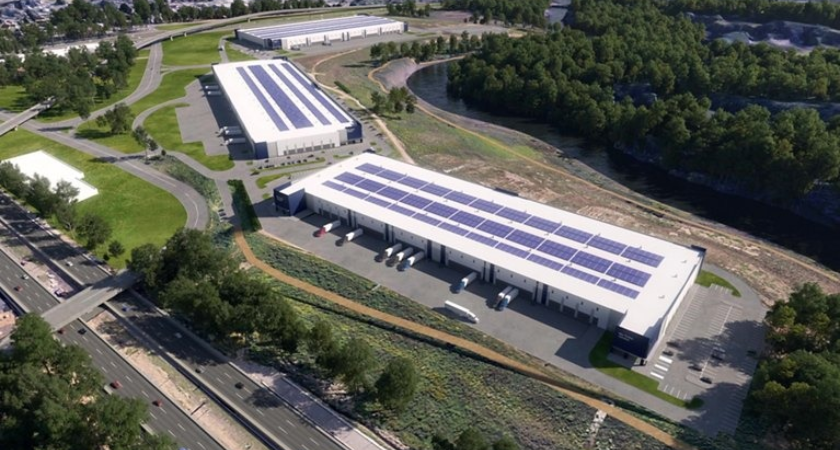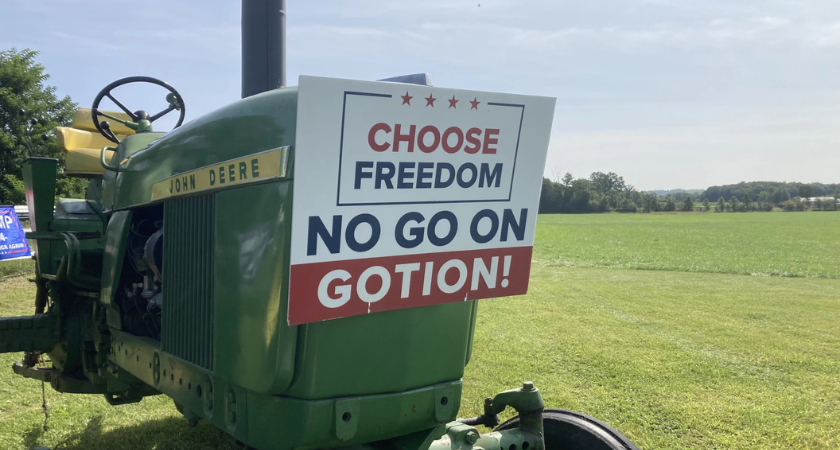
A legal dispute over the halted construction of a proposed electric vehicle battery plant near Big Rapids is intensifying, with the company behind the project now seeking damages against a small mid-Michigan township.
Gotion, a Chinese tech company that had planned to build a $2.4 billion EV battery manufacturing facility in Green Charter Township, filed new court arguments this week asking for fiscal damages. The move comes after state economic development officials previously clawed back subsidies and as the project remains stalled amid a years-long legal fight.
According to the new filing, Gotion argues that the township’s actions amounted to a contract breach that has ultimately made the project impossible to complete.
The legal battle centers on a lawsuit between Green Charter Township and Gotion over access to the local water supply — a necessity for battery manufacturing. The township revoked Gotion’s access, which led to construction being paused and the case working its way through court.
In its latest filing, Gotion said the township’s opposition has rendered the plant “no longer viable.” The documents were submitted after a judge asked whether the legal fight still matters if the facility will likely never be built.
Green Charter Township’s legal team has taken the opposite position, arguing the case should be dismissed because the company’s development intentions have shifted.
In a separate filing, township attorneys argued “Gotion no longer intends to develop the plant and soon will not own the Gotion property. This court can afford no real relief.”
The proposed facility became one of Michigan’s most divisive economic development projects in recent years, drawing sustained protests from residents and political opposition from Republican lawmakers.
Local critics raised concerns about the company’s public ties to the Chinese Communist Party and questioned what the project could mean for regional safety and governance.
U.S. Rep. John Moolenaar, R-Caledonia, has been among the project’s most vocal opponents and criticized Gotion’s legal action.
“The people of Mecosta County, and the State of Michigan have thoroughly rejected it, but it is still trying to hold the town hostage," Moolenaar said. "The CCP-affiliated company will stop at nothing to build a plant that no one wants."
A recurring concern among some opponents was the plant’s location roughly 100 miles south of Camp Grayling, the nation’s largest National Guard training base. Republicans warned the site could become a hub for surveillance and intelligence-gathering tied to military activity — claims that fueled even more backlash in the region.
As the fight has continued, Green Charter Township leaders say the case is draining resources and adding financial pressure to a small community.
Township Supervisor Jason Kruse told WCMU the mounting legal fees have become one of the most difficult consequences of the dispute.
“It's just terrible to watch the amount of money that's chewed up," Kruse told WCMU. "That could have just gone to other township projects."
Last year, Mecosta County provided $193,987 from marijuana tax revenue to help the township cover legal expenses — funding officials say was needed to keep up with escalating costs.
The Michigan Economic Development Corporation has also stepped back from the project financially. Officials are seeking $23 million back after determining the company failed to meet progress benchmarks required to maintain state support.
The project had originally been approved for up to $270 million in state subsidies, but state officials later moved to reclaim a portion of those funds, adding another layer of financial uncertainty as the development stalled.
Gotion’s legal team has not yet responded publicly to requests for comment.
With the project’s future increasingly unclear, the court dispute may determine whether either side is responsible for damages and whether the case can continue if the plant does not move forward.
For Green Charter Township, leaders say the priority is limiting financial exposure and moving ahead after years of uncertainty. For Gotion, the latest filing signals the company may pursue compensation for a development it now says can no longer proceed.
Originally reported by Alvin (AJ) Jones in radio. WCMU.